Toyota Expands EVs While Other Automakers Pull Back
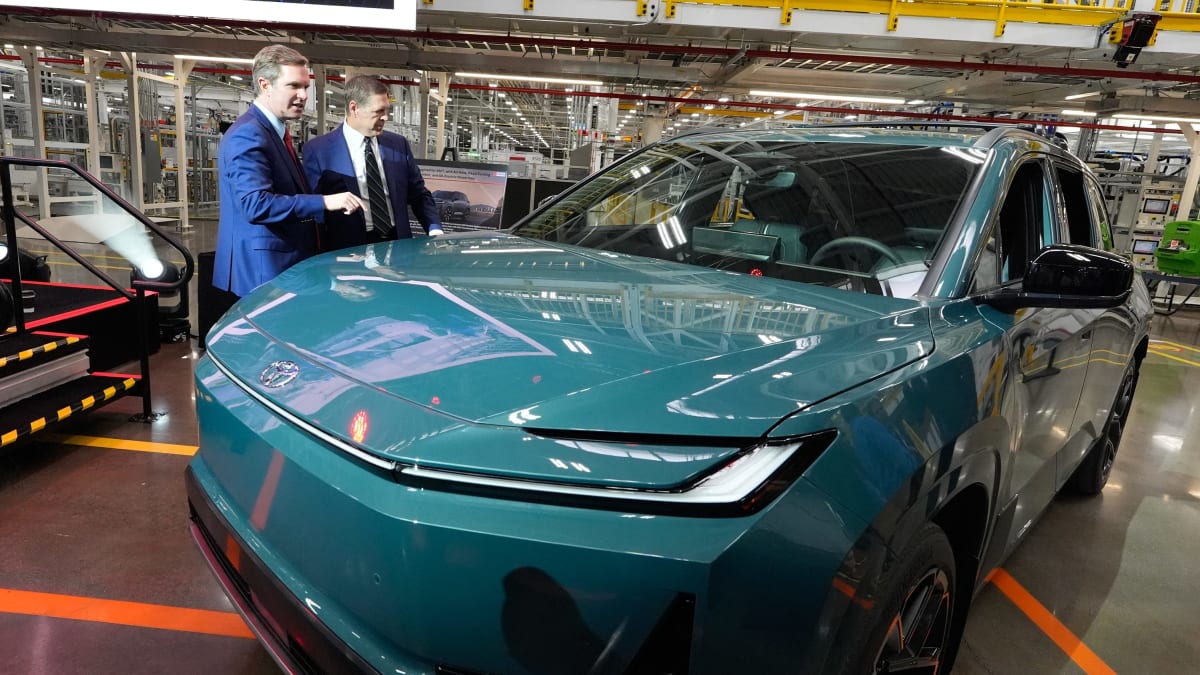
While competitors scale back electric vehicle production, Toyota is charging ahead with seven battery-powered models launching by 2027. The world's largest automaker says it's simply following customer demand with a strategy that once made it the target of criticism.
Just two years after environmental groups labeled Toyota a laggard on electric vehicles, the Japanese automaker is now outpacing nearly everyone in the industry.
Toyota plans to offer seven fully electric models across its main brand and Lexus luxury line by 2027, including a new Highlander SUV. That's more battery-powered options than almost any other manufacturer at a time when Ford, Honda, Lamborghini, and Rolls-Royce are pumping the brakes on their EV plans.
The timing couldn't be more striking. Ford is converting its F-150 Lightning from fully electric to an extended range model. Honda just canceled three planned EVs. Tesla is ending production of its Model S and Model X to focus on robots instead.
Meanwhile, Toyota's bZ electric crossover has quietly become the third best-selling EV in America through February 2026. The company recently started offering discounts to meet growing demand.
"Toyota is accelerating when most are slowing down," says Stephanie Valdez Streaty from Cox Automotive. Only Mercedes-Benz comes close with six electric models currently available.
Toyota insists it hasn't changed course at all. The company says its multi-path strategy of offering gasoline, hybrid, plug-in hybrid, battery electric, and fuel cell vehicles has remained consistent even when critics attacked it.
"Some of our competitors are chasing that pendulum that's swinging back and forth," explains Rick Gezelle, Toyota's senior program manager of sustainability. "We're not pivoting on our plans that we had in place, which were not very popular just a few years ago."
The Ripple Effect
Toyota's steady approach is reshaping the EV landscape beyond its own showrooms. By proving that patience and customer focus can win over rushing to market, the automaker is demonstrating that the path to electric transportation doesn't require abandoning other technologies overnight.
The company's success is also validating hybrid technology as a bridge solution. While pure EVs make sense for some drivers, Toyota's portfolio approach recognizes that charging infrastructure, driving patterns, and personal needs vary widely across different markets and communities.
Environmental groups remain cautious but acknowledge the shift. "This is an opportunity for Toyota to go from EV laggard to EV leader," says Adam Zuckerman of Public Citizen's Climate Program.
Toyota proves that sometimes the tortoise really does beat the hare.
More Images
Based on reporting by Google News - Electric Vehicle
This story was written by BrightWire based on verified news reports.
Spread the positivity!
Share this good news with someone who needs it