Toyota Robots Learn Factory Jobs on Real Production Lines
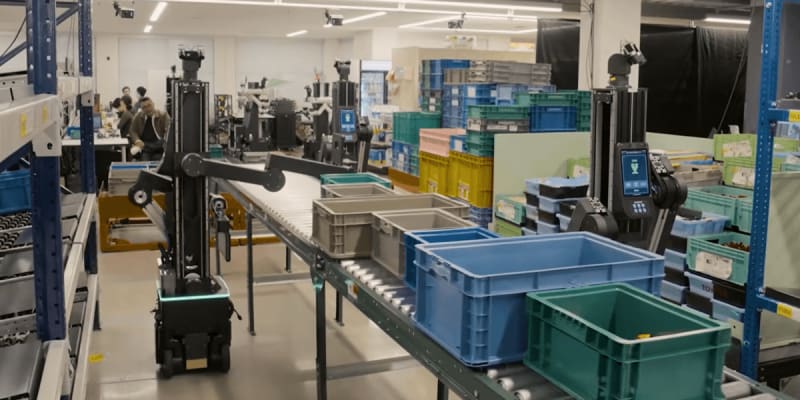
Toyota is training the next generation of autonomous robots by letting them learn on real factory floors, marking a major step toward smarter manufacturing. The robots are mastering tasks like sorting crates on conveyor belts through hands-on experience.
Toyota is taking a bold new approach to robot training by putting machines to work in actual factories, where they learn by doing real manufacturing tasks.
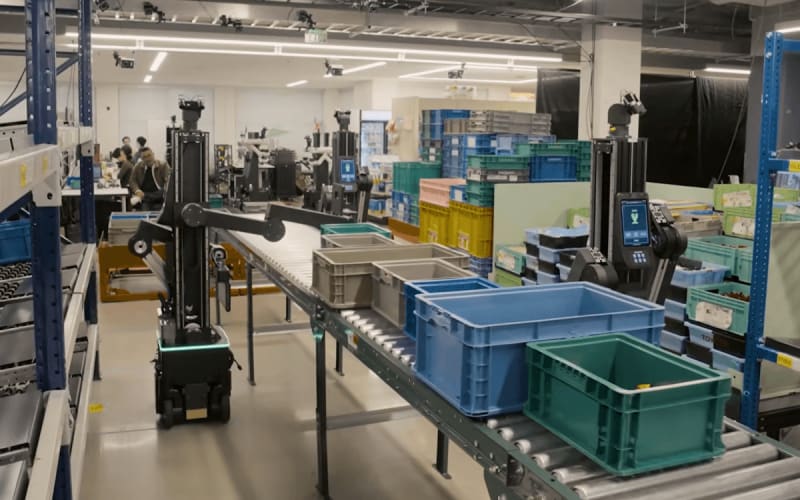
Scientists at Toyota Research Institute have partnered with Toyota Manufacturing to deploy autonomous robots directly on production floors. Instead of training in simulated environments, these robots are learning to handle real-world challenges like sorting crates on warehouse conveyor belts and managing factory workflows.
The breakthrough lies in letting robots learn through experience rather than extensive pre-programming. As they work alongside human employees, the machines adapt to the unpredictable nature of manufacturing environments, from varying package sizes to unexpected obstacles. This real-world training creates robots that can handle situations programmers never anticipated.
The factory setting provides something no lab can replicate: authentic chaos. Conveyor belts speed up and slow down. Boxes arrive in different conditions. Equipment malfunctions. By navigating these daily realities, Toyota's robots are developing the flexibility needed for widespread adoption in manufacturing.
This practical approach accelerates the timeline for useful autonomous systems. Traditional robot training requires months or years of simulation before real-world deployment. Toyota's method puts robots directly where they'll eventually work, cutting development time while producing more capable machines.
The Ripple Effect
Toyota's factory-floor training program could reshape how industries approach automation. As robots become more adaptable through hands-on learning, smaller manufacturers who couldn't afford custom-programmed systems might finally access affordable automation. The ripple effect extends beyond car manufacturing to warehouses, distribution centers, and production facilities worldwide.
The implications reach workers too. Rather than replacing human employees overnight, this gradual learning approach allows time for workforce adaptation and retraining. Companies can identify which tasks robots handle best while preserving human roles that require creativity, problem-solving, and interpersonal skills.
Other robotics companies are watching closely. If Toyota's method proves successful, expect similar programs across industries from electronics to food processing. The manufacturing sector employs millions globally, and smarter robots could improve safety by handling dangerous tasks while creating new technical jobs in robot supervision and maintenance.
Toyota's robots are proving that the future of manufacturing isn't about choosing between human workers and machines. It's about creating collaborative environments where both learn and improve together on real factory floors.
More Images
Based on reporting by IEEE Spectrum
This story was written by BrightWire based on verified news reports.
Spread the positivity!
Share this good news with someone who needs it