Toyota's 7-Foot Robot Learns Basketball Using AI
A car company just showed the world a robot that taught itself to shoot hoops, and the technology behind those free throws could change how machines help humans in everyday life. More than 8,000 fans watched Toyota's CUE7 sink baskets at a professional arena in Tokyo.
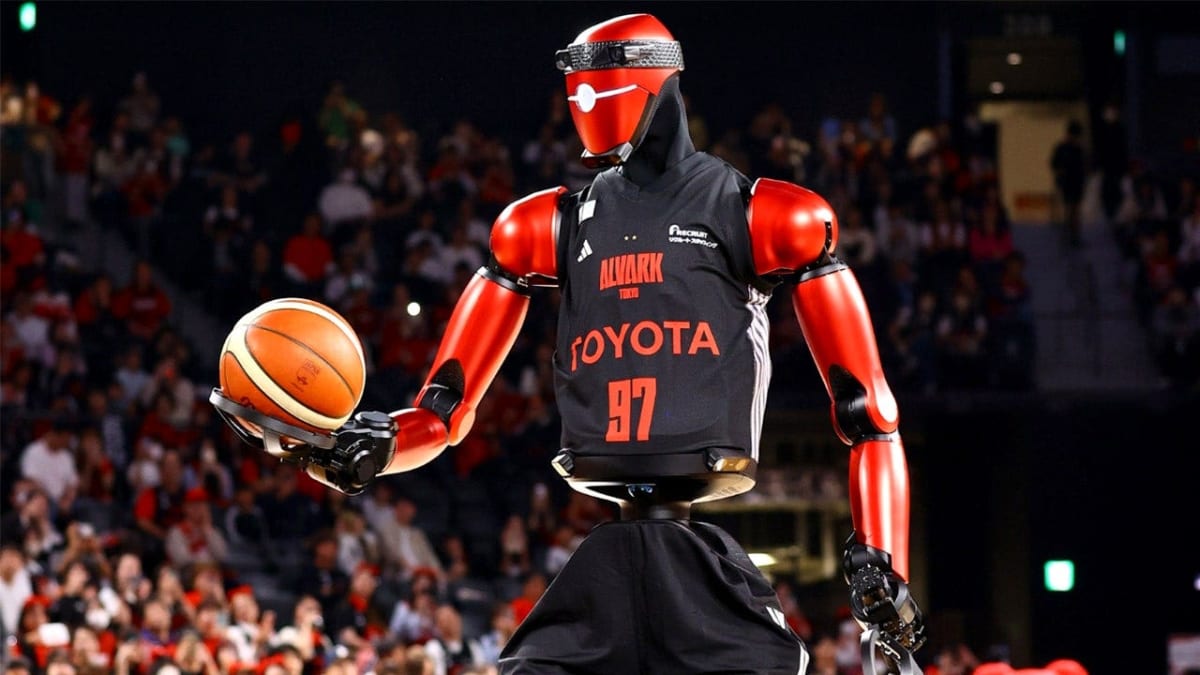
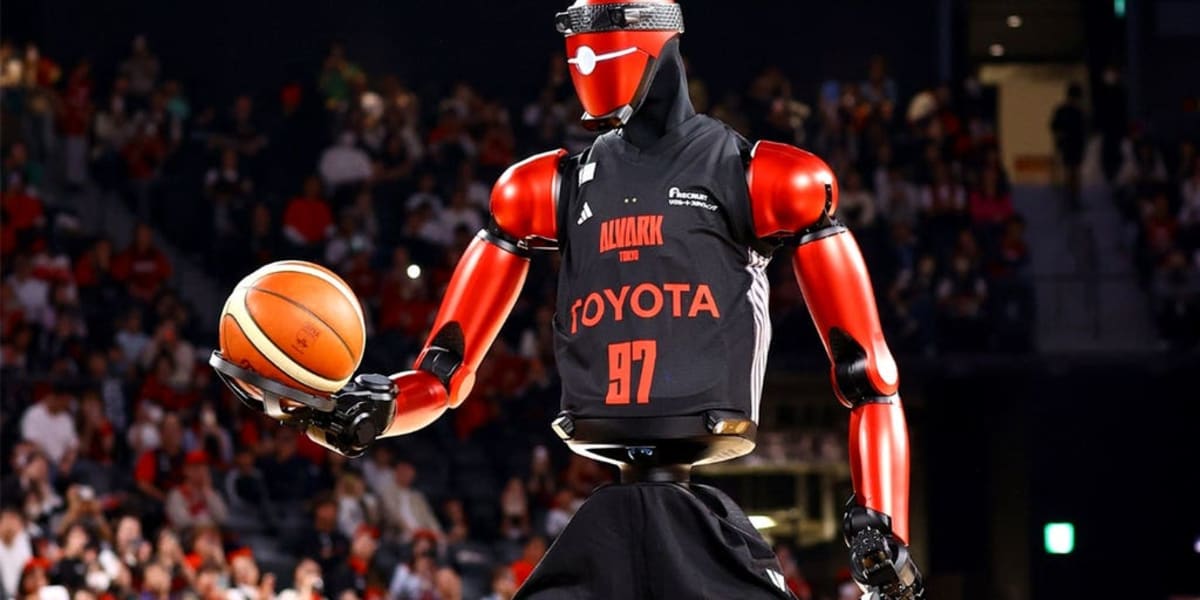
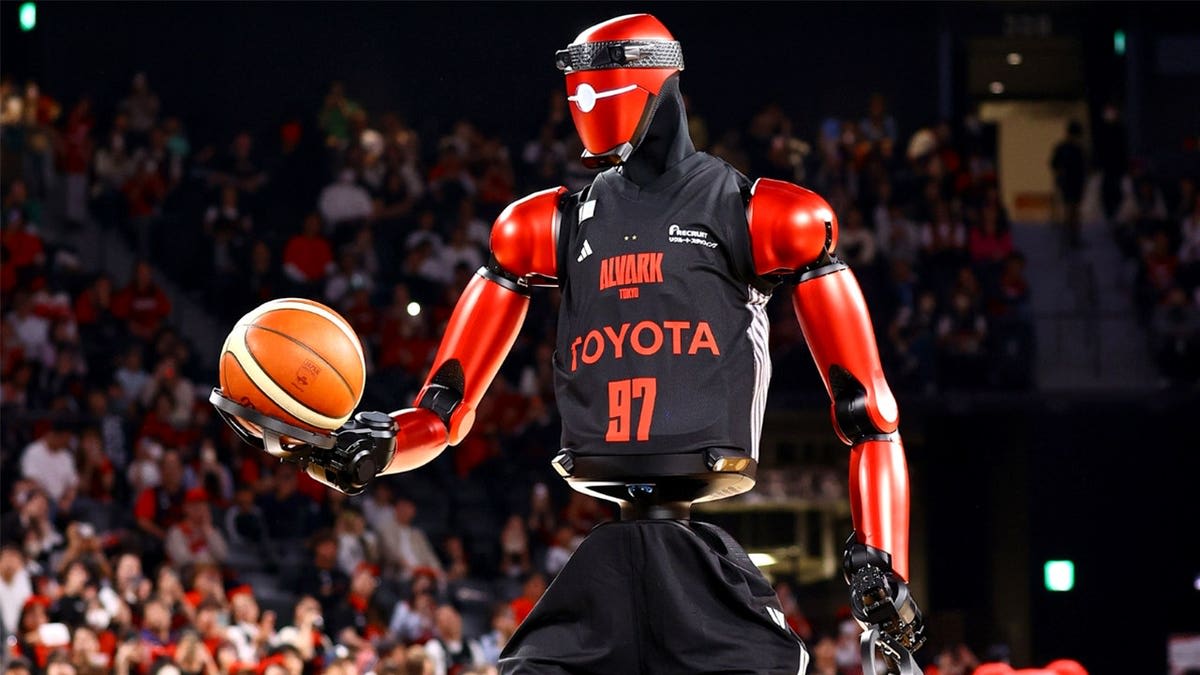
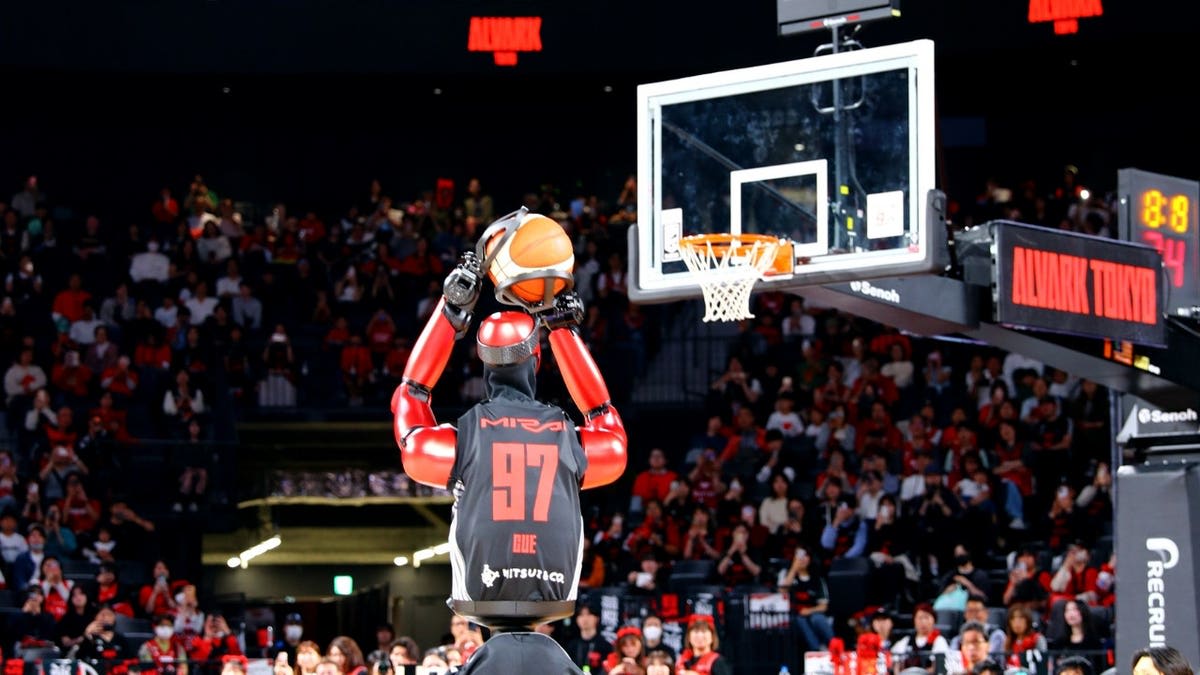
A seven-foot-tall robot stood up from its chair, dribbled a basketball, and sank a perfect free throw while thousands of people cheered. This wasn't science fiction or a movie stunt, but Toyota's newest breakthrough in artificial intelligence.
The CUE7 made its public debut at Toyota Arena Tokyo in front of 8,400 fans during halftime of a professional basketball game. The robot handled the ball with surprising grace, moving more like an athlete than a machine.
What makes this robot different from every version before it is how it learned to play. Toyota's team threw away nearly a decade of programming and started completely fresh with AI that teaches itself through trial and error.
"We discarded everything we had built up and started again from scratch," said Tomohiro Nomi, research leader for humanoid robots at Toyota's Frontier Research Center. The decision paid off in ways that go far beyond basketball.
Earlier versions of the CUE series relied on human programmers to script every single movement. The CUE3 broke a Guinness World Record in 2019 by making 2,020 consecutive free throws, and the CUE6 nailed a shot from more than 80 feet away. But each new skill required fresh code written by engineers.
The CUE7 uses reinforcement learning instead. It tries a shot, watches what happens, adjusts its approach, and tries again until it improves. The AI figures out the physics of the game on its own, just like a human player practicing at the gym.
The robot stands 7 feet 2 inches tall and weighs 163 pounds, making it 40% lighter than its predecessor. Toyota stripped it down to two wheels instead of four, which helps it move faster and more naturally. When it rose smoothly from a seated position during the demo, the crowd erupted.
The Ripple Effect
The same AI learning system that helps CUE7 play basketball is exactly what Toyota plans to use in assistive robots for everyday life. Machines that can learn from experience rather than following fixed programming could adapt to unpredictable situations in homes, hospitals, and factories.
The technology uses lidar sensors and stereo cameras to measure distance and calculate angles in real time. When CUE7 sizes up a shot, it's processing the same kind of spatial awareness that future robots might use to navigate a crowded room or hand tools to a surgeon.
Toyota powered the system using batteries adapted from its racing vehicles and trained it with human motion data. That's why the robot's movements look surprisingly fluid instead of jerky and mechanical. The AI learned to mimic how actual people move their bodies.
What started as a voluntary side project by Toyota employees in 2017 has evolved into serious research with real-world applications. The team chose basketball as a testing ground because it combines precision, timing, and adaptation to changing conditions.
"We believe it is an exceptionally valuable opportunity to validate a reinforcement-learning-based robot in the inherently uncertain environment of a basketball arena," Nomi told reporters. "Moving forward, we will continue developing robots that inspire and bring joy to people."
The crowd's applause wasn't just for a robot making baskets, but for a glimpse of machines that might soon learn to help us in ways we haven't imagined yet.
More Images

Based on reporting by Fox News Tech
This story was written by BrightWire based on verified news reports.
Spread the positivity!
Share this good news with someone who needs it