Tulane's AI Tool Spots Cancer in Minutes During Surgery
Tulane researchers are testing technology that could tell surgeons within 15 minutes whether they removed all of a patient's cancer, potentially eliminating the painful wait for results and need for second surgeries. The $22.9 million project combines 3D imaging with AI to create detailed tumor maps while patients are still in the operating room.
Imagine waking up from cancer surgery knowing with certainty that your doctor got it all. That's the future Tulane University researchers are building with a breakthrough imaging system that could transform how surgeons fight cancer.
Right now, cancer patients face an agonizing wait after tumor removal. It often takes weeks to learn whether surgeons removed all the cancer cells. If the answer is no, patients must return for another surgery, another recovery, and more anxiety.
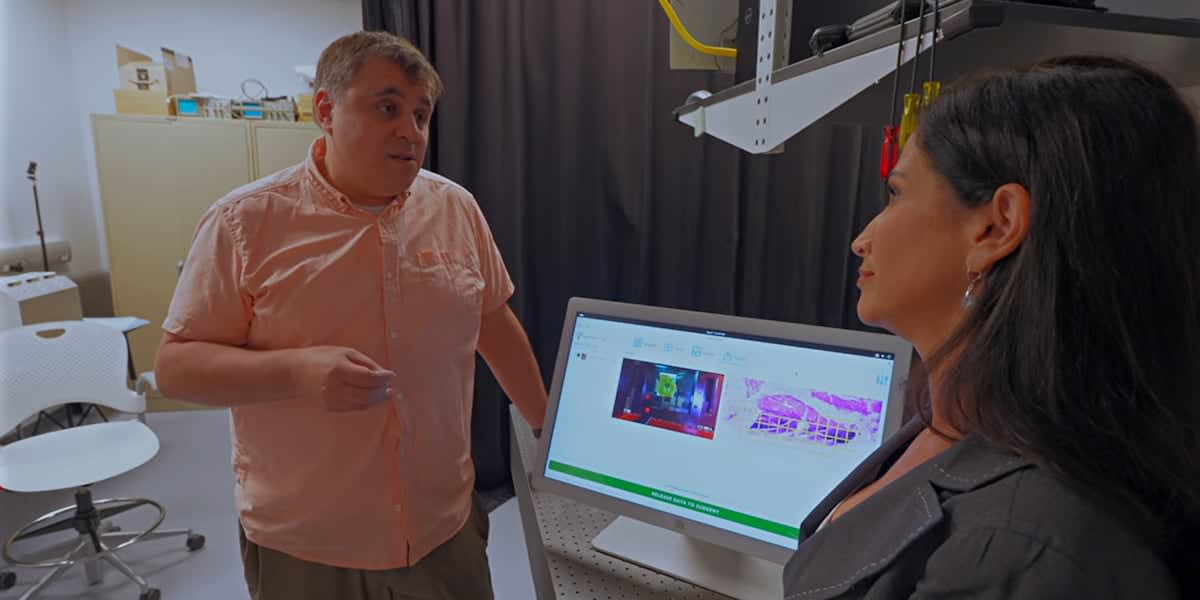
Tulane's MAGIC-SCAN technology aims to shrink that timeline from weeks to 10 or 15 minutes. The system pairs ultra-high-resolution 3D imaging with artificial intelligence to analyze entire tumors during surgery, showing doctors exactly where any remaining cancer cells might be hiding.
Dr. Quincy Brown and Dr. Brian Summa are leading the project, which received up to $22.9 million in federal funding after President Biden visited Tulane in 2024. Their team is developing AI algorithms that can scan massive amounts of visual data and pinpoint cancer at the edges of removed tissue.
Here's why that matters. When pathologists examine tissue the traditional way, they can tell you if cancer reached the edge, but pinpointing exactly where becomes difficult. It's like looking through a drinking straw instead of seeing the full picture.
MAGIC-SCAN preserves spatial information, creating a detailed map that shows surgeons the precise location of any remaining cancer. If the system detects cancer cells while a patient is still under anesthesia, the surgeon can immediately remove more tissue from that specific spot.
Why This Inspires
The technology isn't making treatment decisions yet. Researchers began clinical testing in 2025 and are comparing their results with conventional pathology to validate the system's accuracy.
Dozens of actual cancer surgery cases have been studied so far, with colorectal surgeons Dr. Jacquelyn Turner and Dr. Jennifer Silinsky contributing tissue samples. The team expects to analyze hundreds more cases before seeking regulatory approval.
Getting margins right the first time changes everything for patients. Second surgeries are harder because the body's anatomy has already been altered. They also mean additional risk, recovery time, and cost.
The collaboration extends beyond Tulane's campus. Dr. Spencer Krane and Dr. Sharon Fox at the New Orleans VA, along with Dr. Andrew Sholl of Delta Pathology, bring critical expertise in clinical research and cancer detection.
The team is currently focusing on prostate and colorectal cancers, working to prove that AI can spot cancer cells as accurately as human pathologists. But unlike traditional methods, MAGIC-SCAN could deliver answers before a surgeon even closes the incision.
For cancer patients nationwide, this New Orleans innovation represents something powerful: the possibility of leaving the operating room knowing they're truly cancer-free.
Based on reporting by Google News - New Treatment
This story was written by BrightWire based on verified news reports.
Spread the positivity!
Share this good news with someone who needs it