Tulsa Program Fast-Tracks Clean Energy Startups to Market
Rose Rock Bridge is helping energy startups solve real problems by connecting them directly with billion-dollar companies ready to test their innovations. The Tulsa program just opened applications for founders who want to turn promising tech into deployed solutions.
A Tulsa nonprofit is proving that the fastest way to bring clean energy innovations to life is by skipping the guesswork and starting with real problems.
Rose Rock Bridge connects early-stage energy startups with corporate giants like Devon Energy and Williams, companies worth over $150 billion combined. Instead of hoping technologies find a use, the program identifies actual operational challenges first, then matches startups that can solve them.
The approach is refreshingly practical. Rose Rock Bridge's innovation team works directly with corporate partners to pinpoint their biggest bottlenecks, from methane detection to robotics in oil fields. Then they tap into a network of 40 universities and energy incubators to find startups with solutions ready for real-world testing.
"We don't just chase the latest tech and hope to find a use for it," says Nishant Agarwal, Innovation Manager. The team runs technical deep dives with industry experts to define problems before sourcing technologies as direct responses.
Applications are open through April 6 for the Spring 2026 cohort. Selected startups enter a six-week virtual accelerator focused entirely on deployment readiness. Founders pitch directly to the oil and gas partners who might actually buy their technology, getting rapid feedback that transforms ideas into commercial products.
The program culminates in a showcase where four startups win up to $100,000 each in non-dilutive funding. That means founders get capital without giving up equity, plus a full year of support preparing their technology for market adoption.
Devon Fanfair, Rose Rock Bridge Manager and former Techstars Managing Director, emphasizes the practical focus. Startups aren't just learning theory, they're testing assumptions with the exact customers who might deploy their solutions within 12 months.
The Ripple Effect
Oklahoma's oil capital identity is evolving into an innovation hub. By bridging the gap between promising startups and established energy companies, Rose Rock Bridge is accelerating solutions to climate challenges that affect everyone. Technologies that might take years to commercialize through traditional funding routes can reach the field in months.
Corporate partners benefit too, gaining access to validated, field-tested innovations with clear procurement pathways. The derisked approach means breakthrough technologies reach commercial viability faster, turning energy challenges into solved problems.
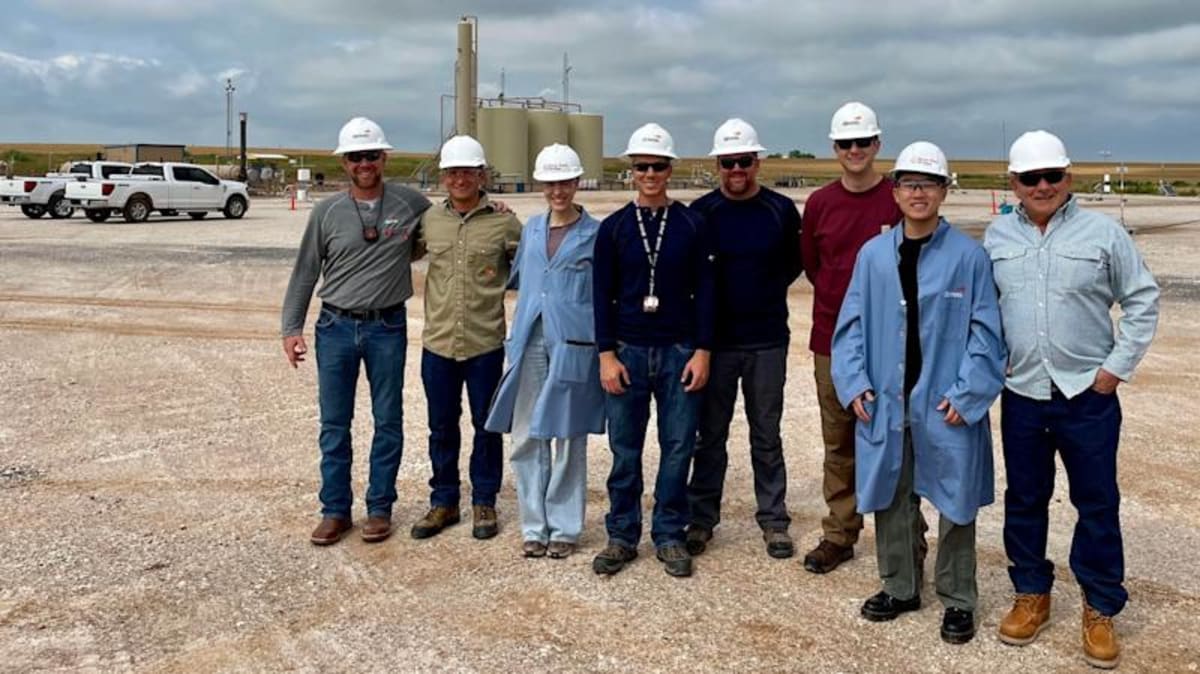
Aquanta Vision, a 2024 cohort member, recently piloted methane detection technology at a Devon Energy facility. These aren't theoretical experiments, they're solutions being deployed at scale.
Jennifer Hankins, Managing Director of Tulsa Innovation Labs, sees the program as proof that regions outside Silicon Valley can lead innovation when they leverage local strengths. Tulsa's energy expertise is becoming its superpower for building a cleaner future, one pilot project at a time.
Based on reporting by Google News - Innovation Technology
This story was written by BrightWire based on verified news reports.
Spread the positivity!
Share this good news with someone who needs it