Tunisia Gets Direct Europe Cable Link in Africa Push
A new undersea cable is now carrying data directly from France to Tunisia, opening North Africa's first high-capacity digital corridor to Europe. It's part of a continent-wide race to prevent the internet blackouts that left millions offline last year.
Tunisia just flipped the switch on something that could change how an entire region connects to the world.
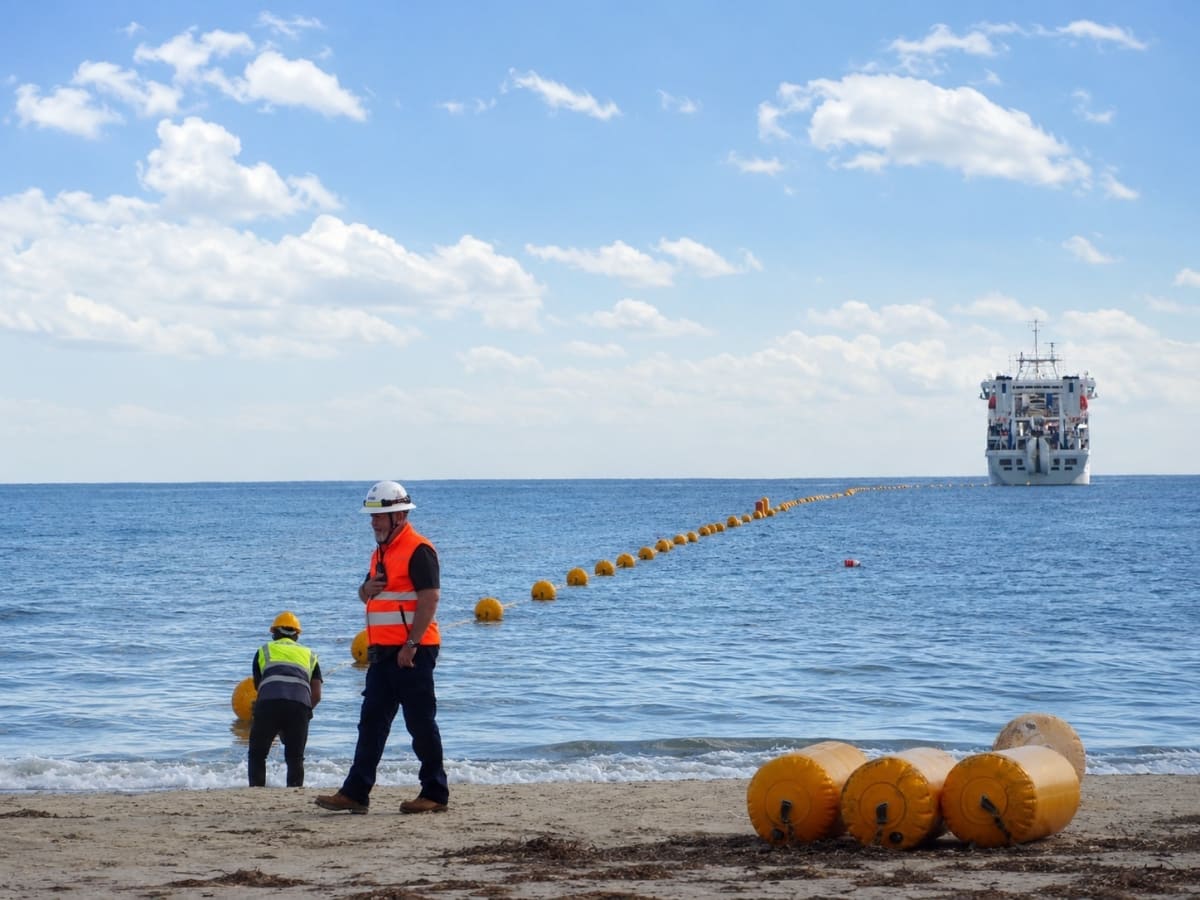
Orange launched ViaTunisia, a 1,050-kilometer undersea cable linking Marseille, France, to Bizerte, Tunisia. It's the first active segment of the massive Medusa Submarine Cable System, and it gives North Africa a direct, high-speed digital highway to Europe for the first time.
The timing couldn't be better. In March 2024, four major undersea cables were damaged simultaneously near Ivory Coast, and the internet went dark across Nigeria, Ghana, and beyond. Mobile networks froze, banks couldn't process payments, and everyday digital services collapsed.
Then East Africa got hit with fresh outages when cables connecting South Africa and Kenya failed. Houthi rebel attacks in the Red Sea damaged even more cables. Millions of people and businesses suddenly couldn't connect, work, or pay for basic services.
The problem wasn't just bad luck. Africa didn't have enough backup routes. When one cable failed, the damage spread like wildfire because there weren't enough other paths for data to travel.
The Ripple Effect
ViaTunisia is part of the solution. It's one segment of the larger Medusa network, which will eventually stretch 8,760 kilometers and connect 17 landing points across the Mediterranean. That includes France, Spain, Italy, Portugal, Greece, Cyprus, and Malta in the north, plus Tunisia, Morocco, Algeria, Libya, and Egypt in the south.
More cables mean more options. More options mean one broken link doesn't take down an entire region's internet. Orange designed ViaTunisia specifically to minimize outages and multiply route options in an area prone to natural disasters.
The European Union believed in the project enough to cover 30% of construction costs through a grant signed in December 2022. They saw what everyone else is seeing: Africa needs digital resilience, and it needs it now.
The cable race is heating up across the continent. Meta's 2Africa cable just landed in Ghana and Nigeria, offering bandwidth at half the price of older systems. Google's Equiano cable connects West Africa and Europe, and the company announced plans for four new subsea cable hubs that will serve at least 18 countries.
North Africa has historically been underserved compared to Africa's west and east coasts. ViaTunisia changes that equation.
The next challenge is getting that offshore capacity inland. Countries still need terrestrial fiber, local data centers, and affordable last-mile infrastructure to carry the bandwidth to businesses and everyday users. As one industry expert put it, "We have hundreds of terabits offshore, but we struggle to get one terabit around Nigeria."
Still, this is real progress happening at a speed Africa has never seen before, and it's giving millions of people a fighting chance at reliable connectivity.
More Images


Based on reporting by Techpoint Africa
This story was written by BrightWire based on verified news reports.
Spread the positivity!
Share this good news with someone who needs it
%2Ffile%2Fattachments%2F2995%2FP22EV_352208.jpg)