Two Companies Partner to Mine Helium-3 on the Moon
A rover company and a mining startup are teaming up to harvest a rare element from the lunar surface, with testing starting this year. As SpaceX and NASA ramp up Moon missions, the dream of extracting valuable resources from space is becoming real.
The Moon just got a lot more interesting as two space companies announced plans to mine a rare element that barely exists on Earth.
Astrolab and Interlune revealed Tuesday they're joining forces to build what they call a "harvester" that will roam the lunar surface, digging up and extracting Helium-3 from Moon dust. It sounds like science fiction, but their first test mission launches later this year.
The timing couldn't be better. SpaceX founder Elon Musk recently shifted focus from Mars to Moon activities, and NASA is now prioritizing building a lunar base over an orbiting station. That means more missions, more infrastructure, and more opportunities for companies with lunar business plans.
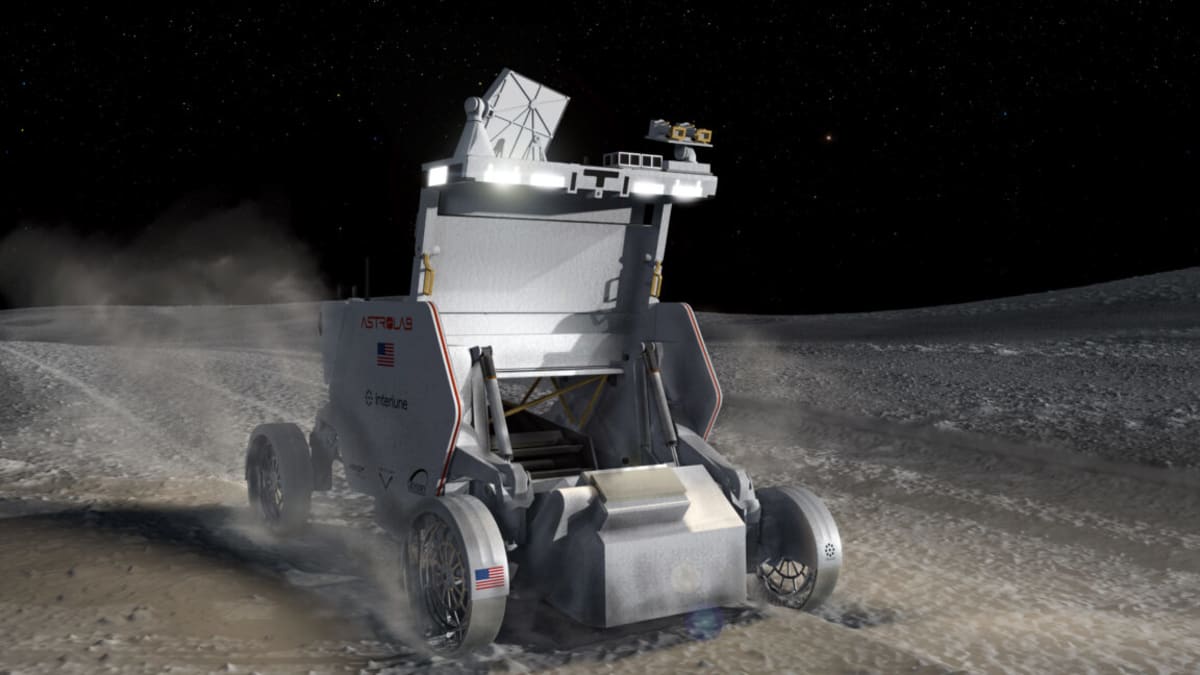
Here's how it works: Astrolab builds rovers that drive across the Moon. Their smaller FLIP rover, about the size of a go-kart, heads to the Moon later this year carrying Interlune's camera to scan for Helium-3 deposits. Their larger FLEX rover, roughly minivan-sized, will eventually carry the actual mining equipment underneath its horseshoe-shaped body.
Interlune CEO Rob Meyerson describes their vision as "a fleet of electric harvesters" that will excavate, extract, and separate Helium-3 from lunar soil. The company is working with Vermeer, an industrial equipment manufacturer, to build the harvester itself.
Why mine Helium-3? This element doesn't occur naturally on Earth and exists only in tiny amounts from nuclear weapons tests and reactors. Its most immediate use is in cryogenics for ultra-cold refrigeration, and Interlune has already secured contracts to sell thousands of liters once they can deliver it.
Why This Inspires
For decades, people have dreamed about mining resources in space. Now it's actually happening, with real rovers, real contracts, and real launch dates.
The partnership represents something bigger than one mining operation. When the world's leading space company and largest space agency both increase their lunar ambitions, it opens doors for entrepreneurs with creative ideas about what's possible beyond Earth.
Both companies are testing their harvester prototype in Houston at a new commercial space facility at NASA's Johnson Space Center. The space agency is actively encouraging these kinds of partnerships, hoping to become "one customer among many" as Astrolab founder Jaret Matthews puts it.
A FLEX rover will likely ride aboard one of SpaceX's first Starship missions to the Moon, planned for 2027 or 2028. That's not far away.
The challenge is enormous: mining material that exists in small quantities in lunar soil, refining it, and bringing it back to Earth. But having the right partners to move across the Moon and transport materials makes the impossible start to look achievable.
The Moon is about to become a much busier place, and this partnership shows what happens when optimism meets engineering.
More Images



Based on reporting by Ars Technica
This story was written by BrightWire based on verified news reports.
Spread the positivity!
Share this good news with someone who needs it