Two Friends Turn Chennai Parks Into Chess Community Hubs
Paul Vannan K and Varun A are transforming public spaces across Chennai into welcoming chess clubs where strangers connect over friendly games instead of competing for rankings. Their initiative is helping everyone from schoolchildren to retirees rediscover chess as a social hobby rather than a high-pressure sport.
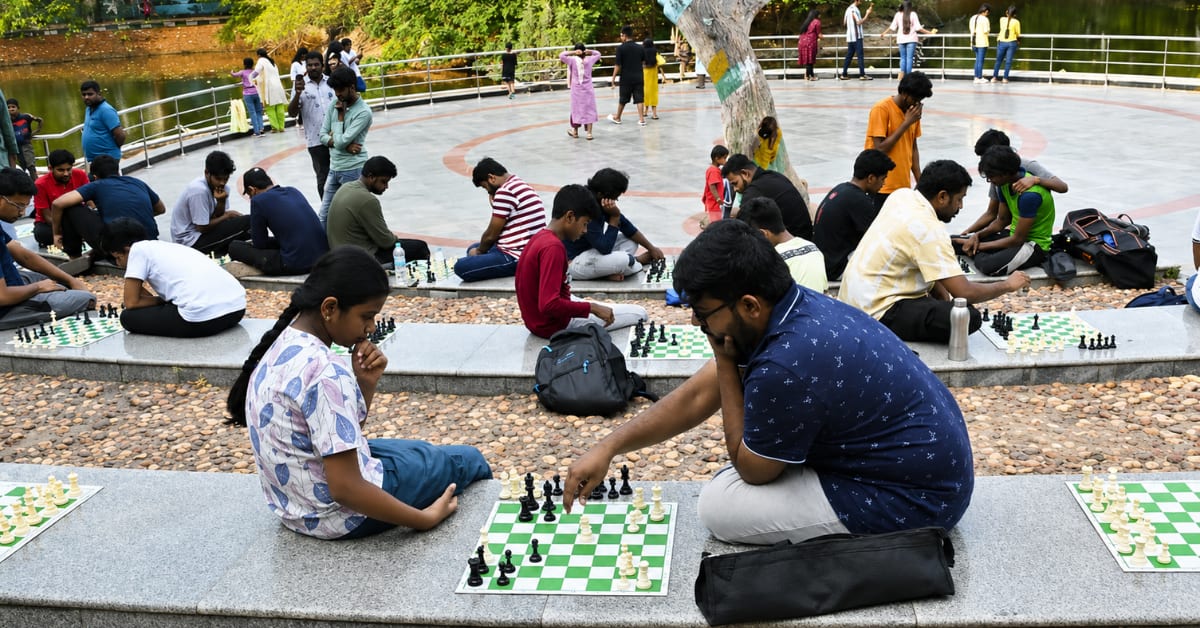
On weekend evenings in Chennai's Anna Nagar Tower Park, strangers gather around chessboards under the trees not to compete, but simply to play and connect.
Some arrive straight from work still wearing office clothes. Others are retirees revisiting a beloved hobby they abandoned decades ago, while schoolchildren in sports jerseys test their skills against adults twice their age.
This is Chennai Chess Club, started by friends Paul Vannan K and Varun A in 2023 to create something surprisingly rare in India's chess capital: casual spaces where people can enjoy the game without pressure.
In a city famous for producing world champions like Viswanathan Anand and R Praggnanandhaa, chess typically means intense coaching, competitive tournaments, and rankings. Paul noticed this gap became obvious during the pandemic when online chess exploded in popularity but offered no way for players to actually meet and build community.
Varun, who had competed in chess himself, saw the same problem. Nearly every organized chess space focused on performance and titles rather than leisure or social connection.
So they decided to change that.
The Ripple Effect
Their initiative now hosts regular gatherings across Chennai with formats like 'Chess Chai Connect,' where players meet at cafés on Sunday mornings for games over tea and coffee. Other sessions transform public parks into open chess spaces where anyone can walk in with no advance registration required.
The club provides boards and typically pairs strangers together for first-round games. As sessions progress, people naturally migrate toward others who match their skill level, chatting between moves and laughing over mistakes.
Sessions usually draw 20 to 30 participants ranging from children to working professionals to seniors. While small prizes occasionally go to top performers, the real focus stays on interaction rather than competition.
Regular attendee Shwetha R learned chess from her grandfather as a child but drifted away from the game over time. Competitive environments no longer appealed to her, but these casual sessions offered something different: a chance to reconnect with chess socially.
The gatherings give people space to talk, relax, and enjoy the game without worrying about rankings or tournament outcomes. For many, that absence of expectations becomes the main appeal.
Paul points out that online platforms let players find opponents instantly but often feel isolating because people rarely form real connections through a screen. Meeting face to face over a chessboard creates something online games cannot replicate: actual community.
What started as occasional meetups has grown into regular community activity, slowly creating room in India's achievement-focused chess culture for people who simply enjoy the game as recreation.
Now chess in Chennai looks a little different: less like training and more like connecting, one friendly game at a time.
More Images
%2Fenglish-betterindia%2Fmedia%2Fmedia_files%2F2026%2F05%2F29%2F1-2026-05-29-15-19-25.png)
%2Ffilters%3Aformat(webp)%2Fenglish-betterindia%2Fmedia%2Fmedia_files%2F2026%2F05%2F29%2F2-2026-05-29-15-35-51.png)
%2Ffilters%3Aformat(webp)%2Fenglish-betterindia%2Fmedia%2Fmedia_files%2F2026%2F05%2F29%2F3-2026-05-29-15-36-24.png)
Based on reporting by The Better India
This story was written by BrightWire based on verified news reports.
Spread the positivity!
Share this good news with someone who needs it