Two Shipping Giants Cut 3,000 Tons of CO₂ on Asian Routes
Hapag-Lloyd and Kuehne+Nagel just proved that massive cargo ships can run cleaner without slowing down global trade. Their biofuel partnership will eliminate nearly 3,000 tons of carbon emissions on busy Asian shipping lanes this year.
Two of the world's largest shipping companies just made ocean freight a whole lot greener, and it's already working.
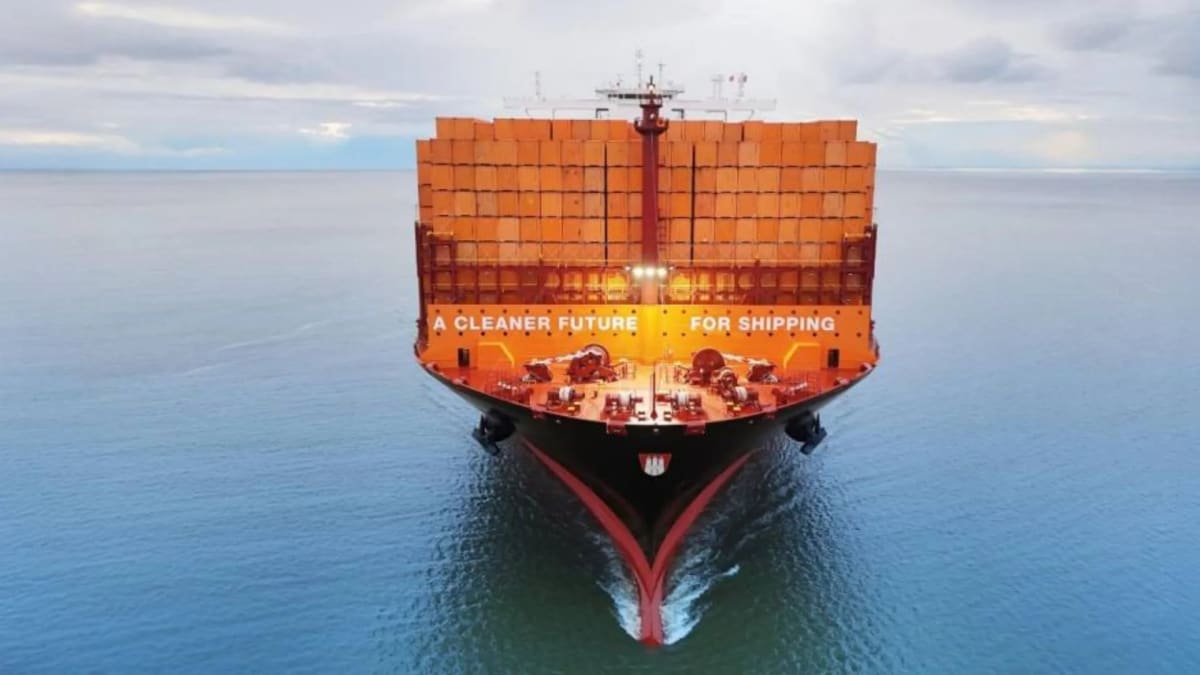
Hapag-Lloyd and Kuehne+Nagel launched a partnership in April 2026 that uses biofuels made from waste to power cargo ships traveling between East Asia and Northern Europe. The nine-month agreement will prevent 2,979 tons of carbon dioxide emissions while transporting 3,300 shipping containers across one of the busiest trade routes on Earth.
That's the equivalent of taking more than 600 cars off the road for an entire year, all without disrupting a single delivery.
The collaboration relies on Hapag-Lloyd's Ship Green program, which offers customers a practical way to shrink their carbon footprints today rather than waiting for perfect future technology. Danny Smolders, Hapag-Lloyd's Managing Director of Global Sales, emphasized that businesses can now reduce their Scope 3 emissions immediately using scalable solutions.
The fuel comes from certified waste materials, turning trash into clean ocean power. Paolo Montrone from Kuehne+Nagel pointed out that real decarbonization requires transparent operations, verifiable data, and solutions that actually make business sense.
The companies use a "book and claim" system that assigns verified emission reductions to customers even when biofuel isn't physically used on their specific shipment. This clever approach lets alternative fuels scale up across entire fleets without overhauling global infrastructure overnight.
The Ripple Effect
This partnership signals something bigger happening across ocean shipping. The maritime industry faces mounting pressure from international regulations and customer demand for sustainable supply chains, pushing major players to invest heavily in low-emission solutions.
Hapag-Lloyd operates more than 300 container ships in over 140 countries and aims for net-zero operations by 2045. Kuehne+Nagel runs 1,300 operating centers worldwide and targets complete emissions elimination across its value chain by 2050.
When industry giants commit resources to sustainable fuels and prove the model works commercially, smaller companies gain a roadmap to follow. The book and claim system especially opens doors for businesses without direct access to alternative fuels on every route.
Other logistics companies are watching closely as this partnership demonstrates that environmental responsibility and operational efficiency can coexist profitably.
The ocean freight sector moves about 90% of global trade, making these shipping lanes critical arteries for the world economy. Cleaning them up matters not just for climate goals but for proving that essential industries can transform without breaking.
More Images



Based on reporting by Google News - Emissions Reduction
This story was written by BrightWire based on verified news reports.
Spread the positivity!
Share this good news with someone who needs it