UBC Team Creates Simple Brace That Cuts Hand Tremors 73%
Canadian researchers built a lightweight wrist brace that reduces hand tremors by up to 79% without batteries, motors, or surgery. The device could transform daily life for millions living with Parkinson's and similar conditions.
Millions of people struggle to hold a coffee cup, write their name, or button a shirt because of involuntary hand tremors. A team at the University of British Columbia just developed a simple wearable brace that could change everything.
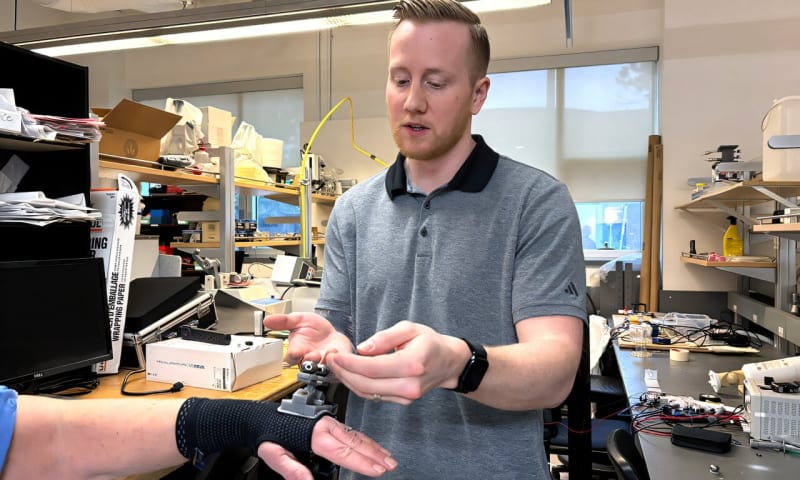
The device looks deceptively simple, but the science behind it is brilliant. Instead of fighting tremors with motors or electronics, the lightweight brace uses a passive vibration-absorbing mechanism tuned precisely to the frequency of uncontrolled shaking.
Dr. Hadi Mohammadi, a professor in UBC Okanagan's School of Engineering, has been working on this patient-centered solution since 2018. His team tested the brace using a full-scale mannequin arm designed to replicate real tremor patterns.
The results exceeded expectations. The device reduced tremors by 79% when shaking occurred in one direction and 73% when movement happened in multiple directions.
"Rather than actively driving motion, the device dampens involuntary fluctuations while allowing voluntary movement to continue largely unhindered," explains Dr. Mohammadi. Think of it like noise-canceling headphones, but for your hand.
What makes this breakthrough special is what it doesn't require. No batteries to charge, no motors to maintain, no surgery to install, and no complicated electronics that could break down or cause side effects.
Master's student Manthan Shah designed the brace to be lightweight, compact, and comfortable enough for all-day wear. That addresses one of the biggest reasons people abandon other tremor devices—they're often bulky, heavy, or awkward to use.
Why This Inspires
Hand tremors aren't life-threatening, but they steal independence and dignity from everyday moments. The psychological toll of struggling with basic tasks like eating or grooming can be devastating.
Current options are limited and imperfect. Medications offer modest relief with potential side effects, while surgery carries risks many patients can't or won't accept. Existing wearable devices often cost thousands of dollars and still restrict natural movement.
This passive brace represents a fundamentally different approach—one that works with the body rather than against it. Lab manager Dr. Dylan Goode notes the team focused on creating something "effective, wearable and practical for everyday use."
The technology isn't available yet. The next critical step involves clinical testing with real patients to evaluate comfort, real-world performance, and impact on daily activities.
If those trials succeed, the brace could reach patients across British Columbia and Canada as either a standalone treatment or complement to existing therapies. The team envisions an accessible, low-maintenance option that restores functional independence without breaking the bank.
For someone who hasn't been able to sign their own name in years, this simple piece of engineering could mean getting their life back.
More Images
Based on reporting by Medical Xpress
This story was written by BrightWire based on verified news reports.
Spread the positivity!
Share this good news with someone who needs it