UC San Diego Shows How Research Saves Real Lives
When federal research funding faced cuts in 2025, one university launched a campaign to show what's really at stake. The stories they shared remind us that behind every budget line are real people whose lives depend on scientific breakthroughs.
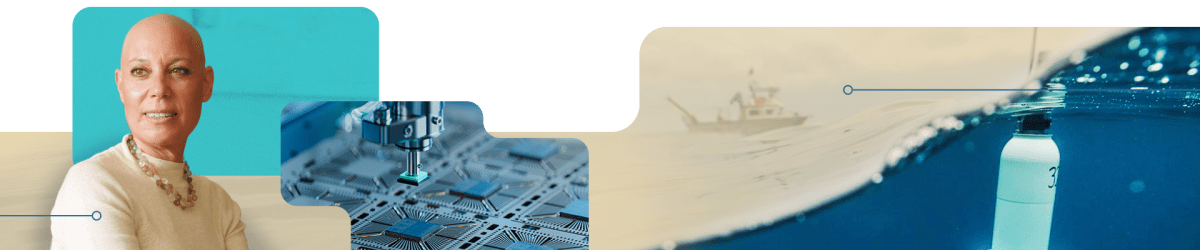
Kimberly Peters didn't set out to become an advocate. She just wanted to survive stage 4 uterine cancer.
But when federal research funding cuts threatened clinical trials in early 2025, Peters spoke up. "Patients are people. We're not a line item," she said in a video that would reach thousands. "Funding is desperately needed so that one day, we can all be survivors."
Her words became part of UC San Diego's Behind Every Breakthrough campaign, launched in March 2025 when proposed federal funding cuts put research universities in the national spotlight. The campaign had one goal: help Americans understand that federally funded research isn't some abstract academic exercise happening in distant labs.
It's the reason earthquake safety standards exist. It's why weather forecasting systems keep communities safe. It's why cancer treatments like the one keeping Peters alive continue to improve.
UC San Diego receives roughly $900 million in federal research funding annually. That money doesn't just pay for experiments. It trains the next generation of scientists, maintains laboratories, supports safety systems, and powers the infrastructure that makes discovery possible.
"I think a lot of people know research universities do good work," said Matt Nagel, UC San Diego's Chief Communications Officer. "I don't think they realize how much of that work has a direct impact on people's lives."
The campaign shared stories spanning stroke treatment advances, wildfire resilience efforts, and climate research helping future-proof the planet. Major media outlets including The Washington Post, CNN, and NBC News picked up the stories, broadening the conversation beyond campus.
But the most powerful moments came when researchers, students, and patients spoke directly about what federal funding meant to them. Peters' testimony cut through policy jargon to reveal a simple truth: behind every budget debate are real lives hanging in the balance.
The Ripple Effect
The campaign's impact extended far beyond raising awareness. Elected officials shared the stories in advocacy conversations. Campus communities rallied around the message. Patients found their voices heard in national discussions about science funding.
UC San Diego's approach marked a shift in how universities talk about research. Instead of focusing on institutional prestige or abstract discoveries, they centered real people and tangible outcomes. They showed Americans that federal research investment isn't charity. It's the foundation of medical breakthroughs, technological innovation, and solutions to challenges we haven't even imagined yet.
Chancellor Pradeep Khosla summed it up: "Federal investment in our research turns curiosity into the innovations that enrich the daily lives of millions worldwide."
Peters said what she feared most wasn't her own diagnosis. It was the thought that future patients might not have access to the research-driven treatments giving her hope today.
When universities and patients unite to tell these stories, policymakers listen differently.
More Images



Based on reporting by Google: scientific discovery
This story was written by BrightWire based on verified news reports.
Spread the positivity!
Share this good news with someone who needs it