UCF Professor's Smart Bubbles Could Save Millions From Heart Disease
A cardiovascular researcher at the University of Central Florida has developed a revolutionary drug delivery system using targeted microscopic bubbles that could dramatically improve how heart disease is treated. The innovation addresses a major flaw in current treatments: doctors can't be sure medications actually reach the diseased heart tissue.
📺 Watch the full story above
Heart disease kills more people worldwide than any other condition, yet doctors face a frustrating problem with current treatments. They prescribe high doses of multiple medications, but have no way to ensure those drugs actually reach the damaged heart tissue where they're needed most.
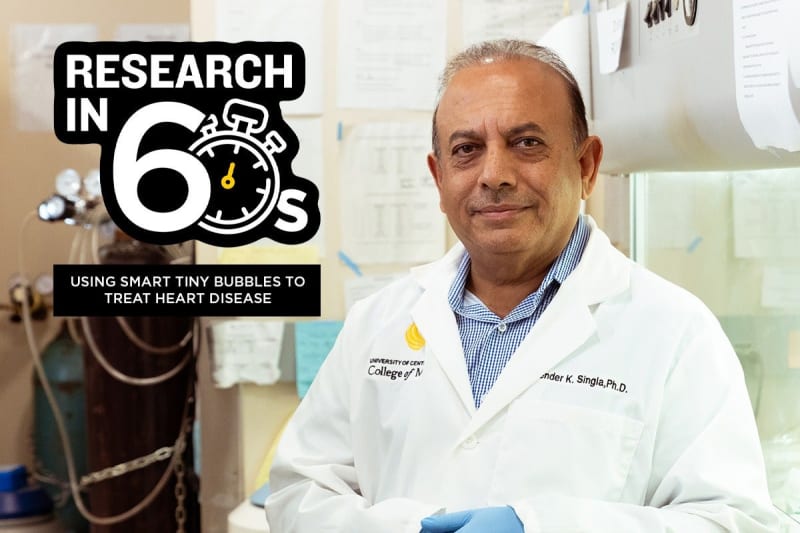
Professor Dinender Singla at UCF's College of Medicine may have solved this decades-old challenge. His team has developed an innovative platform that uses microscopic bubbles to deliver medication directly to diseased areas of the heart.
The technology works like a smart postal service for medicine. Instead of flooding the entire body with drugs and hoping some reach the right destination, these tiny bubbles carry medications straight to the heart tissue that needs healing.
Singla's three-decade research journey began with his mother's influence. She inspired his early love of science through stories of family members who earned doctoral degrees, even though she herself was a homemaker.
Her death from diabetic cardiomyopathy transformed his interest into a mission. "Despite substantial global investment in heart disease treatment, mortality rates remain unacceptably high," Singla explains.
Since joining UCF in 2007, Singla has secured over $12 million in research funding from the National Institutes of Health. He arrived when the College of Medicine was still emerging, and colleagues questioned his decision to leave established institutions in Wisconsin and Vermont.
The gamble paid off. UCF provided the resources, talented students, and institutional support needed to pursue groundbreaking cardiovascular research.
The Ripple Effect
This targeted delivery system could transform cardiovascular care globally. Patients would need lower medication doses, reducing harmful side effects while improving treatment effectiveness.
The economic impact could be enormous. Cardiovascular disease places a massive burden on healthcare systems worldwide, and more precise treatments mean better outcomes at lower costs.
Most importantly, the technology offers hope for the millions of families touched by heart disease. More effective treatments mean fewer preventable deaths and better quality of life for survivors.
The research represents a shift toward personalized, precision medicine. Instead of one-size-fits-all approaches, doctors could tailor treatments to individual patients' needs with confidence the medication reaches its target.
Singla's work exemplifies how personal loss can fuel scientific breakthroughs that benefit humanity. His mother's passing didn't just motivate his research—it shaped a vision for transformative therapies that could save millions of lives.
The smart bubble technology is still in development, but it addresses a fundamental weakness in current heart disease treatment and opens the door to similar targeted approaches for other conditions.
More Images



Based on reporting by Google: scientific discovery
This story was written by BrightWire based on verified news reports.
Spread the positivity!
Share this good news with someone who needs it