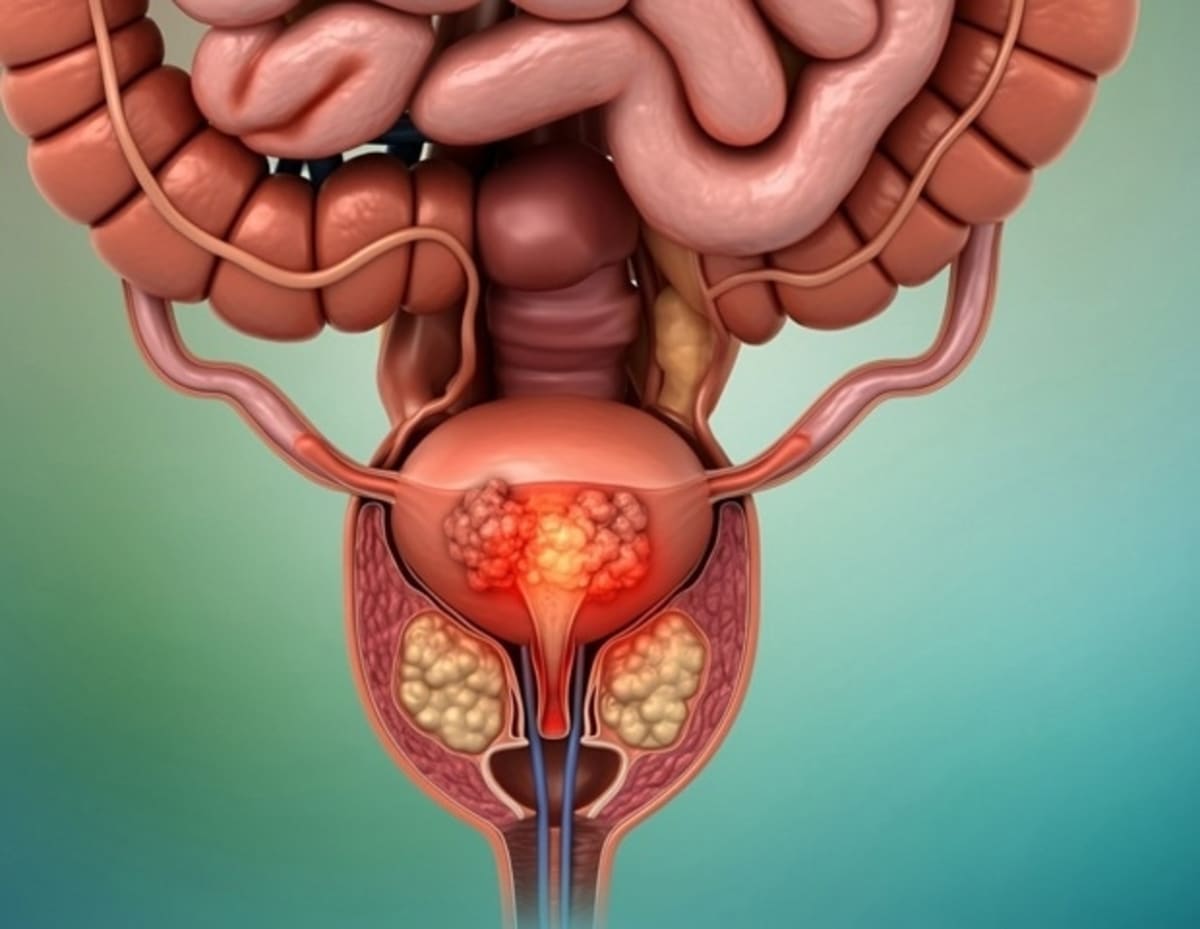
UCLA Finds Way to Make Prostate Cancer Treatment Work Better
Scientists at UCLA discovered how to make targeted cancer drugs more effective against deadly prostate cancer by combining them with a protein blocker. The breakthrough could help patients whose cancer stopped responding to standard treatments.
Scientists just figured out how to make promising cancer drugs work better against one of the deadliest forms of prostate cancer.
Researchers at UCLA Health Jonsson Comprehensive Cancer Center found that combining targeted cancer drugs with a protein blocker makes prostate cancer cells much easier to kill. The discovery could transform treatment for patients whose cancer no longer responds to hormone therapy.
Metastatic castration-resistant prostate cancer is aggressive and currently incurable. Antibody-drug conjugates, precision medicines that deliver chemotherapy directly to tumors, have worked wonders for breast and bladder cancers but have disappointed in prostate cancer trials.
Dr. John Lee and his team at UCLA wondered why. Instead of starting from scratch, they looked for ways to improve what already exists.
The researchers analyzed tumor samples from patients with advanced prostate cancer and discovered three proteins on cancer cells that could be targeted simultaneously. Then they tested dozens of drug combinations to find which ones worked best together.
One pairing stood out. Combining DNA-damaging drugs with a compound that blocks BCL-XL, a protein that helps cancer cells survive, triggered significantly more cancer cell death than either treatment alone.
The results held up in laboratory tests and animal studies. In mice with advanced prostate tumors, the combination slowed tumor growth far more effectively than single treatments.
The Ripple Effect
The breakthrough goes beyond just one new treatment option. The research team established a framework for building better antibody-drug conjugates by pairing complementary drugs and targeting multiple proteins at once.
This flexibility means doctors could eventually tailor these therapies to match each patient's specific cancer biology. The researchers also found that tumors with an intact TP53 tumor suppressor gene responded particularly well, suggesting genetic testing could identify patients most likely to benefit.
The team is already engineering next-generation antibody-drug conjugates that incorporate these findings. They're testing additional combinations that could improve treatment even further.
If confirmed in human clinical trials, this approach could overcome one of the greatest barriers in advanced prostate cancer: treatment resistance. Right now, patients whose cancer stops responding to hormone therapy have limited options.
The research, published in the Journal of Clinical Investigation, offers hope that precision medicine can finally deliver on its promise for prostate cancer patients. Lee and his colleagues proved that sometimes the best innovation comes from making existing tools work smarter, not just inventing entirely new ones.
Based on reporting by Google News - Researchers Find
This story was written by BrightWire based on verified news reports.
Spread the positivity!
Share this good news with someone who needs it