UCLA Nanowires Cut Electronic Noise Below Current Limits
UCLA engineers created microscopic wires that actually get quieter as electricity flows through them, flipping conventional physics on its head. This breakthrough could mean clearer phone calls, better sensors, and a faster path to quantum computers.
Your next phone call might be crystal clear, thanks to tiny wires that behave like nothing scientists have seen before.
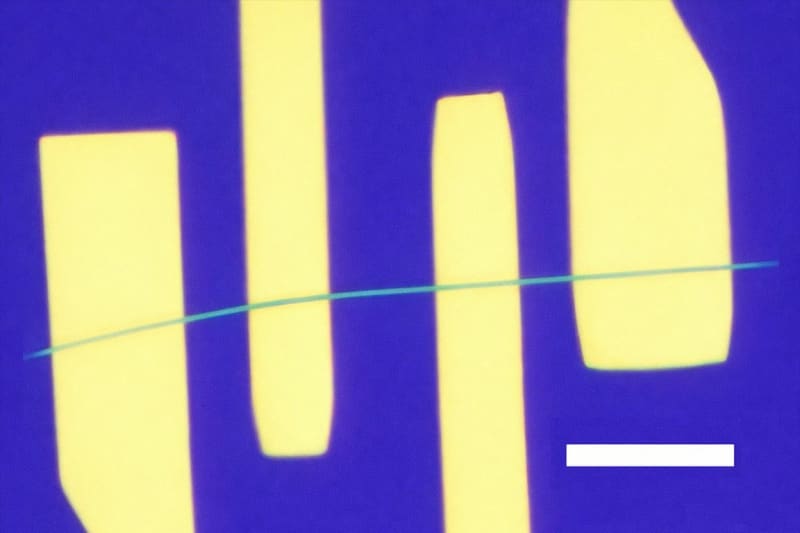
Engineers at UCLA just solved one of electronics' most annoying problems: the background fuzz that disrupts everything from cellphone signals to advanced sensors. They built nanowires so thin that thousands would fit across a single human hair, and these wires do something remarkable. Instead of getting noisier as electricity flows through them like normal wires do, they actually get quieter.
The secret lies in how electrons surf through the material. Normally, electrons bump around like pinballs, knocked off course by vibrations and imperfections in the wire. This creates static and interference. But UCLA's nanowires made from tantalum and niobium compounds let electrons move in sync with those vibrations instead of fighting against them.
"Normally we think about phonons as the bad guys that are scattering electrons," said Alexander Balandin, distinguished professor at UCLA's engineering school. "In this particular case, we found the phonons allowed electrons to jointly move along."
Think of it like surfing. Regular electrons are beginners getting knocked off their boards by every wave. These special electrons are pros who catch the waves and ride them smoothly to shore.
The niobium-based wires worked at room temperature and even hotter, which matters because most quantum breakthroughs only work at freezing cold temperatures. The tantalum wires dropped noise levels so low the team could barely measure them at around negative 100 degrees Fahrenheit.
Why This Inspires
This discovery opens doors that seemed locked just months ago. Quantum computers need incredibly quiet environments to function, and this noise was a major roadblock. Now that barrier looks surmountable.
The same technology could improve GPS accuracy, medical imaging devices, and any sensor that needs to detect faint signals. Your smartphone could maintain clear calls in areas where service currently crackles and drops.
The team published their findings in Nature Communications after double-checking results that seemed too good to be true. They even had to develop new theoretical models because existing physics couldn't explain what they were seeing.
What makes this especially exciting is that it happened at room temperature with one material. Most quantum breakthroughs require elaborate cooling systems and work only in lab conditions. This technology could actually make it into everyday devices.
The future of communication just got a whole lot clearer.
Based on reporting by Google News - Tech Breakthrough
This story was written by BrightWire based on verified news reports.
Spread the positivity!
Share this good news with someone who needs it