UCLA Tests New Cancer Therapy for Aggressive Bone Tumors
UCLA researchers have treated their first patient with a groundbreaking therapy that can simultaneously locate and destroy aggressive bone cancer cells. The treatment offers new hope for young patients with osteosarcoma who haven't responded to standard treatments.
A young patient with aggressive bone cancer just became the first person to receive a revolutionary therapy that acts like a heat-seeking missile against tumors.
UCLA Health researchers launched a clinical trial combining imaging and targeted radiation in a single treatment for metastatic osteosarcoma, a rare bone cancer that primarily strikes children and young adults. The therapy uses a specially designed antibody that both lights up cancer cells and delivers precise radiation directly to them.
The approach targets LRRC15, a protein that fuels tumor growth and helps cancer hide from the immune system. While this protein is nearly absent in healthy tissue, it floods the environment around aggressive tumors, making it an ideal target.
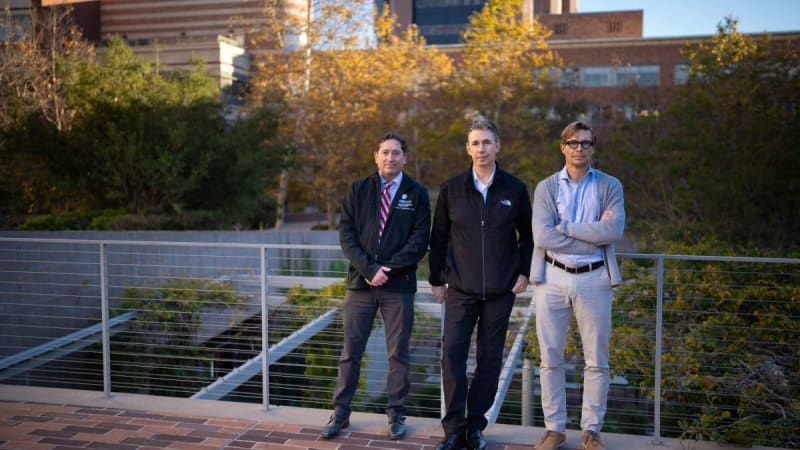
Dr. Noah Federman, who leads the trial, explains the urgent need. "Survival rates for patients with metastatic or recurrent osteosarcoma have remained largely unchanged for decades," he said. "This trial gives us a chance to test a therapy that is far more precise than anything we've had before."
The therapy works through an antibody called DUNP19, developed at UCLA. When paired with radioactive lutetium-177, it becomes a dual-purpose tool that shows doctors exactly where cancer is hiding and then destroys those cells from the inside out.
What makes this especially promising is how it dismantles the tumor's protective shield. Cancer cells often surround themselves with dense, fibrous tissue that blocks immune cells and resists standard treatments. This new therapy destroys both the cancer cells and their protective environment.
The Ripple Effect
The implications stretch far beyond osteosarcoma. In preclinical studies, the therapy showed remarkable results across multiple hard-to-treat cancers, including glioblastoma, pancreatic cancer, triple-negative breast cancer, and aggressive colorectal cancer.
In mouse models of osteosarcoma, nearly all treated animals showed no signs of disease after therapy, while untreated animals didn't survive. The treatment also transformed the tumor environment, allowing immune cells to infiltrate and attack cancer more effectively.
The research represents years of collaboration between UCLA departments and international partners at Washington University in St. Louis, Essen University in Germany, and Lund University in Sweden. Lantheus, a pharmaceutical company specializing in these treatments, is sponsoring the clinical translation.
Dr. Robert Damoiseaux, who helped develop DUNP19, shares the team's optimism. "We are extremely optimistic about the applicability of DUNP19 to not only osteosarcoma, but to many different cancers, including difficult to treat cancer like pancreatic cancer and potentially glioblastoma," he said.
The phase 1 study will evaluate whether the radioactive antibody can safely locate and destroy tumors in patients who've run out of standard treatment options. By using the same molecule for both imaging and treatment, doctors can confirm the therapy reaches its target before delivering the therapeutic dose.
For families facing aggressive childhood cancers, this trial represents something they haven't had in decades: a genuinely new approach backed by solid science and real hope.
Based on reporting by Google News - New Treatment
This story was written by BrightWire based on verified news reports.
Spread the positivity!
Share this good news with someone who needs it