UConn Team Develops Treatment for Fatty Liver Disease
Researchers at UConn have created a promising new therapy that could stop and even reverse fatty liver disease, a condition affecting billions globally with few current treatment options. The innovative approach targets a master regulator in the liver that controls over 1,000 genes crucial for metabolic function.
For billions of people living with fatty liver disease worldwide, hope just arrived from a university lab in Connecticut.
Researchers at UConn School of Pharmacy have developed a breakthrough therapeutic strategy that could halt and potentially reverse fatty liver disease. The team, led by Professor Xiaobo Zhong alongside Ph.D. candidates Jing Jin and Beshoy Armanios, recently filed a patent for their innovative approach.
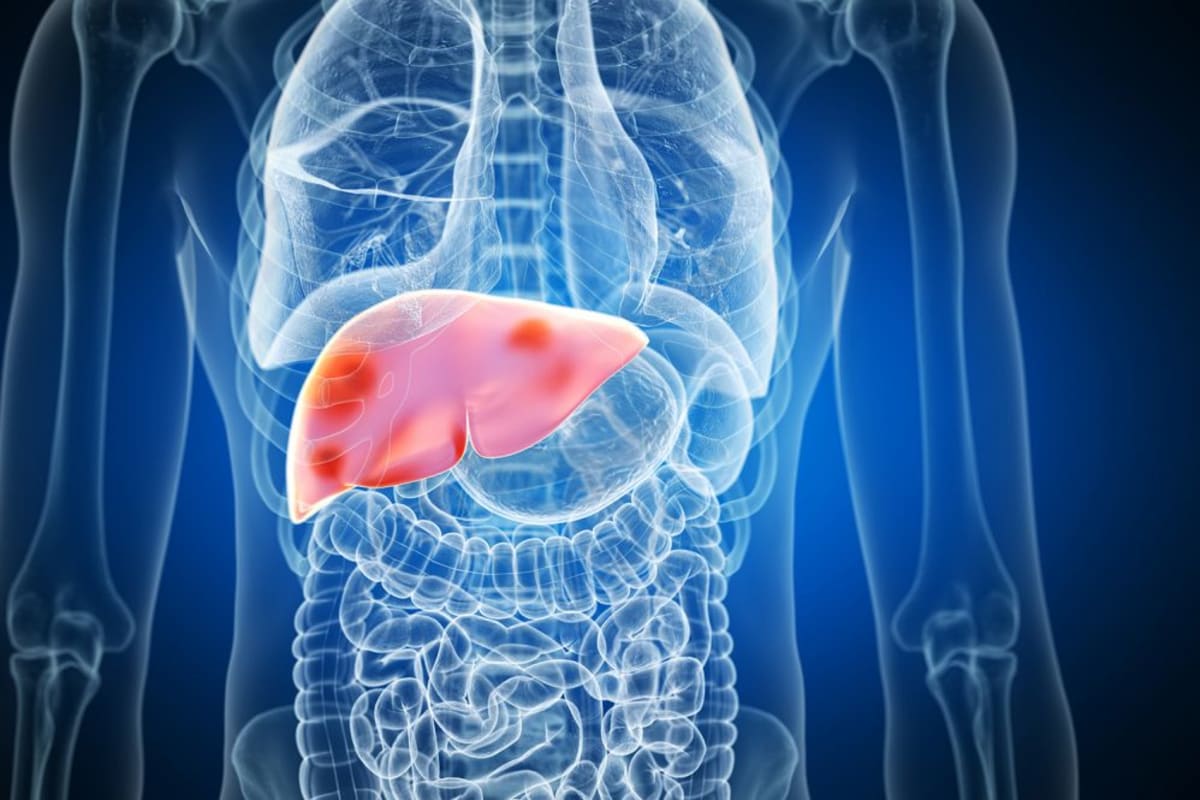
Fatty liver disease progresses silently through four stages, starting with fat accumulation and potentially advancing to inflammation, fibrosis, and eventually cirrhosis. About 400 million people worldwide develop the inflammatory stage called MASH, and many progress to more severe forms where the liver stops functioning properly.
Current treatment options remain frustratingly limited. Doctors primarily recommend diet and exercise, with some medications available to control glucose levels. A newer FDA-approved drug helps burn liver fat, but only benefits a small portion of patients. For advanced cases, liver transplant becomes the only option.
The UConn team took a different path. Instead of targeting downstream metabolic pathways like existing drugs, they focused on a master regulator protein called HNF4A that controls over 1,000 genes important for liver function. In most liver disease patients, this crucial protein becomes depleted.
The researchers discovered that a molecule called HNF4A-AS1 degrades this master regulator, triggering the cascade of problems that lead to fatty liver disease. Their solution uses cutting-edge genetic tools called antisense oligonucleotides and small interfering RNA to stop HNF4A-AS1 from destroying the beneficial protein.
Why This Inspires
This breakthrough represents more than just another potential drug. It opens an entirely new strategy for treating a disease that pharmaceutical companies have struggled with for years. Previous attempts targeting individual pathways have largely failed, but addressing the master regulator could restore normal liver function across all six pathways involved in fat accumulation.
The research builds on years of work showing how this genetic regulator affects lipid metabolism, inflammation, insulin resistance, and drug metabolism. By protecting the master regulator protein, the team believes they can reverse both early and inflammatory stages of the disease.
Zhong acknowledges the challenge ahead, noting that activating something already depleted proves much harder than blocking something overproduced. Yet their elegant solution using genetic tools specifically designed to match and neutralize the harmful molecule shows remarkable promise.
The team hopes their patent will encourage pharmaceutical companies to invest in developing this approach into an accessible treatment. For the countless families touched by this silent disease, that investment could mean the difference between managing symptoms and actually reversing damage.
With clinical development ahead, this discovery lights a path forward for millions who currently face limited options.
Based on reporting by Google News - Disease Cure
This story was written by BrightWire based on verified news reports.
Spread the positivity!
Share this good news with someone who needs it