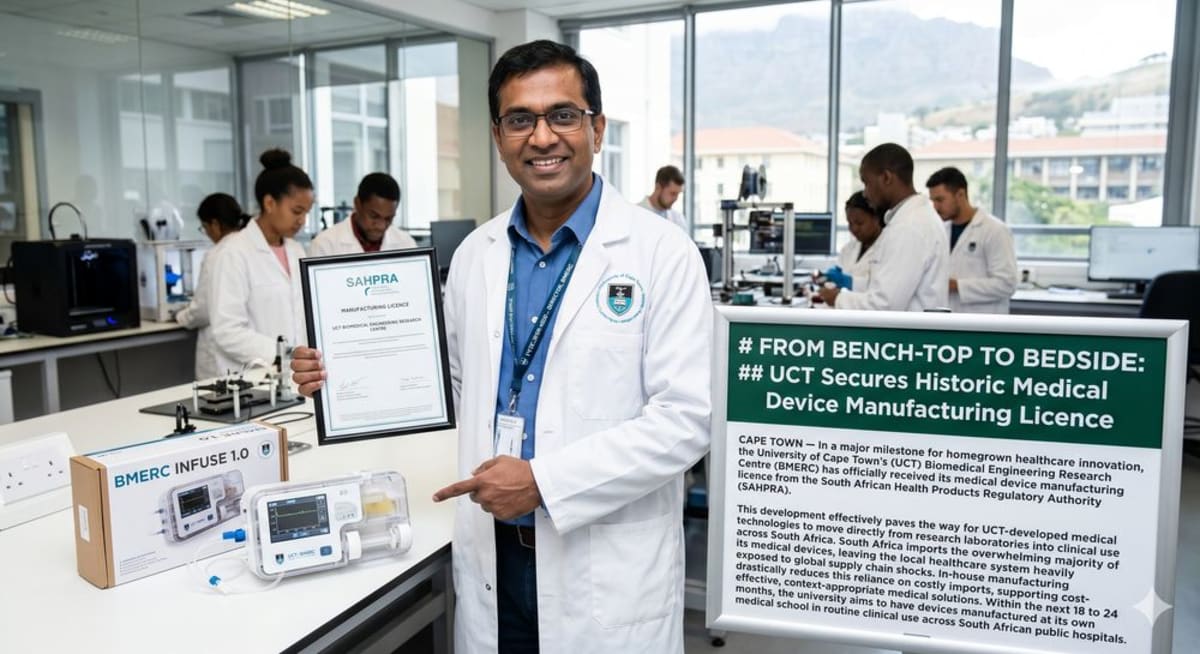
UCT Gains License to Make Medical Devices in South Africa
The University of Cape Town just broke through a decade-long barrier that kept African-designed medical devices from reaching African patients. Now, innovations created for local healthcare needs can go straight from the lab to the hospital bedside.
For more than ten years, the University of Cape Town's Biomedical Engineering Research Centre designed medical devices specifically for African patients, only to watch them stall at a regulatory wall. Despite creating 23 patent families and distributing over 100,000 devices globally, these locally designed innovations couldn't legally be used in South African hospitals without a certified manufacturing pathway.
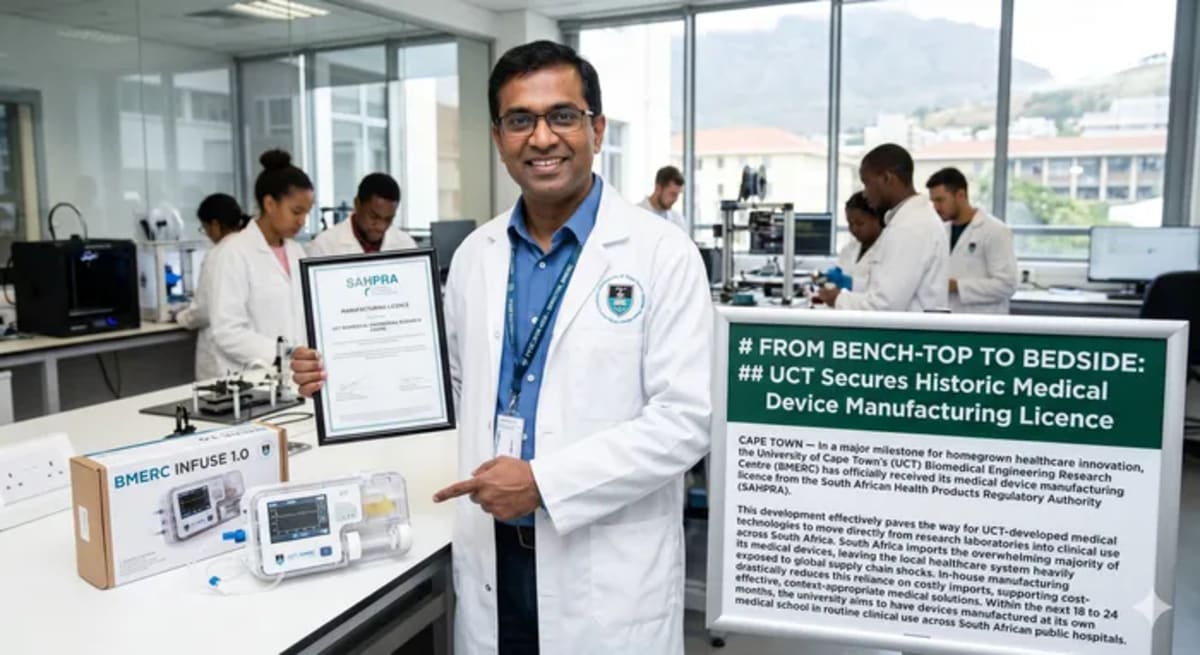
That barrier just came down. The South African Health Products Regulatory Authority has granted UCT's research center an official medical device manufacturing license, allowing the university to produce, distribute, and bring its own innovations directly to market.
"In practical terms, it means the devices we design and develop here, for African patients in an African context, can now be produced and brought to market with the full weight of regulatory recognition behind them," said Professor Sudesh Sivarasu, Director of UCT's BMERC. The license confirms that UCT's quality management systems meet rigorous international standards, ensuring every device prioritizes patient safety.
The breakthrough transforms what the university can accomplish. UCT can now create cost-effective medical solutions tailored to local healthcare challenges, dramatically reducing reliance on expensive imported devices that weren't designed for African contexts.
For South African medical students and biomedical engineers, it creates something equally valuable: the chance to train in a real-world, regulatory-compliant environment. They'll learn to navigate international standards and local requirements, building skills that keep innovation and expertise on the continent.
The Ripple Effect
This milestone reaches far beyond one university's capabilities. Within the next 18 to 24 months, UCT aims to place devices manufactured at its own medical school into routine use across South African public hospitals, fundamentally improving patient care quality and dignity.
The impact aligns with multiple United Nations Sustainable Development Goals, from advancing health and well-being to reducing inequalities and strengthening local innovation infrastructure. Professor Sivarasu credited years of collaboration with regulatory authorities, the Department of Science, Technology and Innovation, the National Research Foundation, and clinical partners across the Western Cape.
Perhaps most importantly, the license creates a sustainable model for African healthcare innovation. Instead of brilliant ideas leaving the continent for manufacturing elsewhere, they can now complete their full journey at home, from the first sketch to the patient's bedside, designed by people who understand the context and created for the communities that need them most.
South African patients will soon benefit from medical devices built specifically for their needs, developed and manufactured right where they'll be used.
More Images
Based on reporting by Regional: south africa breakthrough (ZA)
This story was written by BrightWire based on verified news reports.
Spread the positivity!
Share this good news with someone who needs it
%2Ffile%2Fattachments%2Forphans%2FMLJoburg-91_220988.jpg)