Udaipur Festival Brings Ancient Storytelling Back to Life
Over three days in Udaipur, India, 30 performers proved the human voice is still powerful enough to captivate audiences without screens or speakers. The festival welcomed 400 listeners into warm tents where ancient tales and modern stories flowed together.
Inside a cozy tent in Udaipur's winter chill, something rare happened. People put away their phones and listened to stories the way humans have for thousands of years: voice to voice, heart to heart.
The seventh Udaipur Tales International Storytelling Festival gathered more than 30 performers, including actors Rajit Kapoor and Divya Dutta, for three days of pure spoken word. No microphones, no screens, just storytellers and an audience of 400 sharing ginger tea and ancient tales.
"Every child knows how to tell a story," says storyteller Divy Nidhi Sharma, who co-wrote the Hindi film Laapataa Ladies. "When a teacher asks, 'Why are you late?' and a child says, 'Sir, a dog ate my homework,' that child is telling a story. We just need to remember how."
The festival didn't just celebrate modern storytelling. It also revived dastangoi, an oral art form that once captivated audiences across the Indian subcontinent with epic tales told over days, months, or even years. Actor Danish Hussain explained how cinema and television nearly erased these traditions in the 20th century.
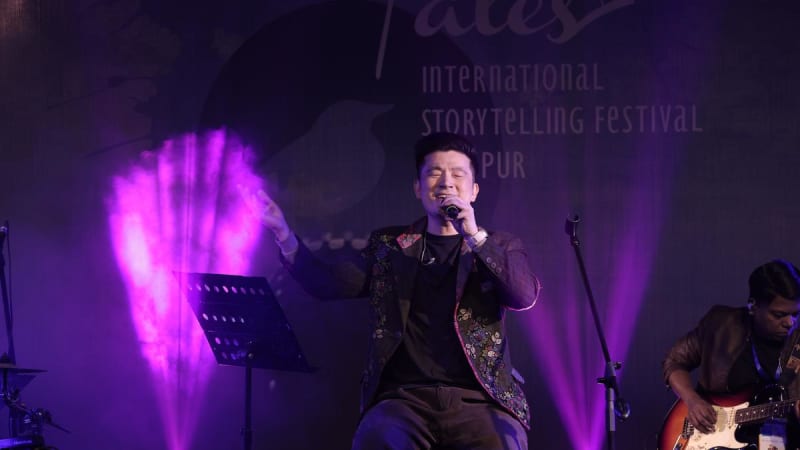
Singer Meiyang Chang performed acoustic versions of beloved Bollywood songs from the late 1990s and early 2000s, weaving personal stories between each melody. The intimate setting let him try something new, connecting with listeners in ways big concert stages don't allow.
Actor Divya Dutta shared four stories from her book The Stars in My Sky, recounting memories of friends from the film industry who have passed away. "Someone is crying, someone is laughing," she says about the live storytelling experience. "That interaction you get is unparalleled."
Why This Inspires
Co-founder Salil Bhandari keeps the audience capped at 400 people deliberately. Beyond that number, he says, the storyteller can't reach every listener, and the magic breaks.
The festival also hosted Jamghat, an open platform where local school children and emerging storytellers could share their own tales. By creating space for new voices alongside masters of the craft, Udaipur Tales ensures the ancient art form stays alive for generations to come.
In a world of endless scrolling and algorithm-driven content, hundreds of people chose to sit in a tent and simply listen. That choice alone tells a story worth sharing.
Based on reporting by The Hindu
This story was written by BrightWire based on verified news reports.
Spread the positivity!
Share this good news with someone who needs it