UK Sheep Farms Thrive with Solar Panels: 200% Growth
A UK shepherd grew her flock from 20 to 200 sheep by grazing them under solar panels. This win-win approach called agrivoltaics is helping struggling farmers while meeting clean energy demands.
Hannah Thorogood never imagined solar panels would save her sheep farm, but free grazing under energy arrays helped her grow her flock tenfold in just a few years.
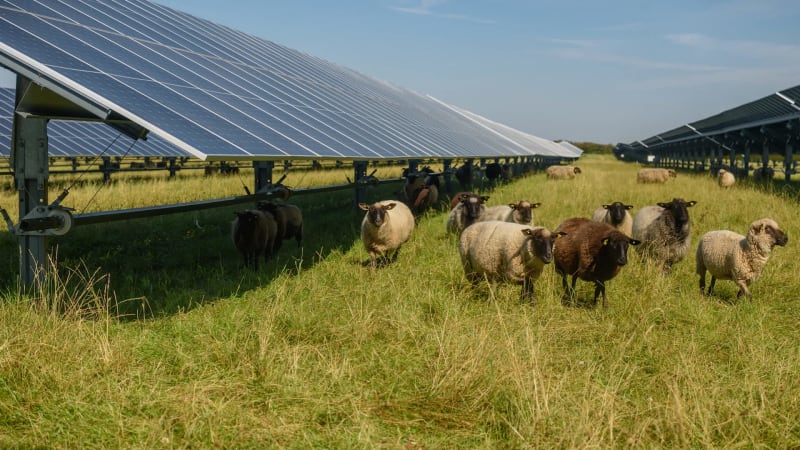
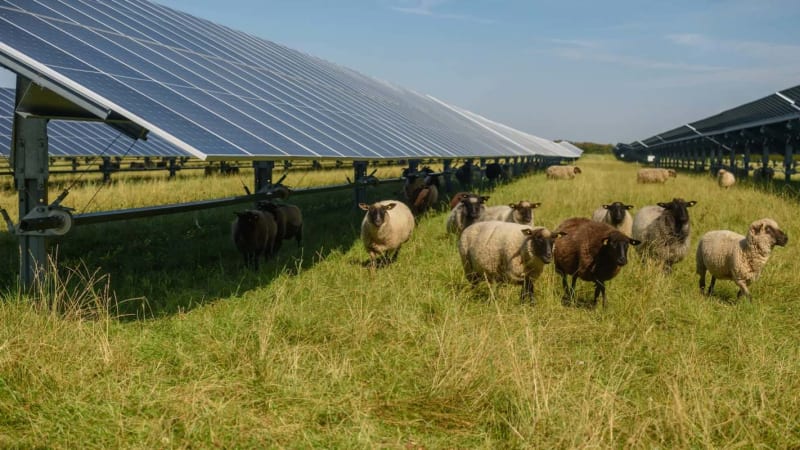
The Lincolnshire shepherd jumped at the chance when solar operators offered their land for grazing. "Solar grazing has given me a massive leg up," Thorogood told The Guardian. She expanded from 20 sheep to 200, finding abundant grass growing beneath and around the panels.
Her timing couldn't be better. England's sheep population hit its lowest numbers on record in 2023 at 21.2 million animals, down significantly since 2015. High costs have pushed many farmers out of the wool and meat business entirely.
Solar farms need that grass managed anyway. Operators spend up to $68,843 per year on mowing and maintenance for an average site. Sheep do the job naturally while slipping between panel legs to reach spots machines can't access easily.
The practice, called agrivoltaics, addresses two urgent needs at once. Global electricity demand keeps climbing, especially from data centers, pushing utility costs up twice as fast as inflation in America. Meanwhile, productive farmland and rural livelihoods need protection.
Solar and wind remain the cheapest and fastest power sources to develop, according to financial experts. But critics worry about losing agricultural land to energy projects. The Campaign to Protect Rural England reports that two-thirds of mega solar farms now occupy once-productive fields.
Agrivoltaics offers a middle path. An acre of good grassland supports four to six sheep, and solar systems typically span between 1 and 100 acres. That's serious grazing opportunity that would otherwise sit empty or require expensive maintenance.
The possibilities extend beyond sheep too. A Virginia operation pairs panels with beekeeping, creating habitat for crucial pollinators. Certain crops actually thrive in the partial shade under arrays.
Early research from Australia suggests the shaded grazing might even improve wool quality, though scientists need longer studies to confirm. Either way, the sheep enjoy cooler conditions while doing valuable work.
The Ripple Effect
This partnership between energy and agriculture is opening doors for newcomers. "This is a valuable opportunity for new, younger, or smaller farmers," says Nicola Noble of the National Sheep Association. Young people priced out of traditional farming can now build flocks without owning land.
Professor Alona Armstrong of Lancaster University sees the bigger picture. "This sort of multiple land use is vital," she notes. As populations grow and climate challenges mount, using land for both food and energy production makes increasing sense.
Solar operators get natural, emissions-free maintenance while farmers access free grazing that would otherwise stay locked behind fences. The sheep get fed, the panels get cleaned, and rural communities gain economic opportunity.
Thorogood's tenfold flock growth shows what's possible when innovation meets tradition, proving that clean energy and agriculture can grow stronger together.
More Images


Based on reporting by Google News - Clean Energy
This story was written by BrightWire based on verified news reports.
Spread the positivity!
Share this good news with someone who needs it