UK Slashed Grid Carbon 77% While Nuclear Plant Delayed
While a nuclear power plant faced decade-long delays and doubled costs, the United Kingdom quietly transformed its electricity grid using wind and solar power. The country cut carbon emissions by 77% and closed its last coal plant before the reactor even turned on.
📺 Watch the full story above
While construction crews struggled to build a single nuclear power plant, the United Kingdom pulled off something remarkable. The country transformed its entire electricity system from coal-heavy to clean energy before the delayed reactor could produce a single watt.
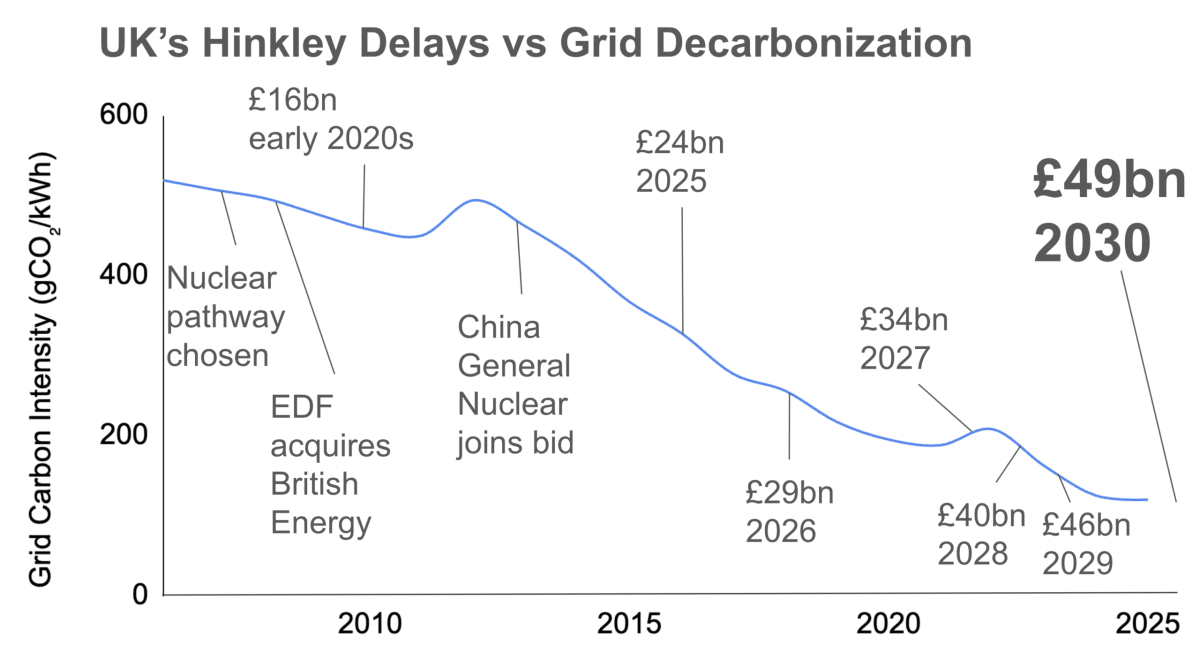
The story begins in 2006 when coal powered 40% of Britain's grid and carbon emissions stood at 520 grams per kilowatt hour. Facing retirement of aging coal and nuclear plants, officials approved Hinkley Point C, a massive nuclear project expected to cost £18 billion and open in 2025.
Then reality hit. Construction delays piled up year after year. Welding problems emerged, supply chains faltered, and the pandemic slowed progress to a crawl. By 2025, the cost had ballooned to £49 billion and the opening date pushed back to 2030, a full five years late.
But something unexpected happened during those delay-filled years. Wind and solar power exploded across the UK while the nuclear plant sat unfinished.
Wind capacity jumped from 2.5 gigawatts in 2006 to 32 gigawatts by 2025. Offshore wind farms sprouted in the North Sea, with projects like Dogger Bank alone matching the entire output planned for Hinkley Point C. Solar panels spread across rooftops and fields nationwide.
The results speak louder than any energy policy debate. Grid carbon intensity plummeted 77% from 520 to just 120 grams per kilowatt hour. The UK closed its last coal plant in 2024, completely eliminating coal from the electricity mix.
The Ripple Effect
The transformation didn't just clean the air. It proved that rapid decarbonization works when you invest in technologies ready to deploy today rather than waiting for massive megaprojects to finish.
The UK now generates most of its electricity from wind, gas, and nuclear plants that were already running. On windy days, renewable energy powers the entire country. Electricity prices from new offshore wind projects have dropped below the guaranteed price the government promised to pay Hinkley Point C.
Other European countries watched the same pattern unfold. Finland's similar reactor took 18 years to build instead of four. France's version opened in 2024 after starting in 2007, tripling its original budget.
Meanwhile, wind and solar projects went from planning to producing clean electricity in just two to three years. The contrast couldn't be sharper.
The transformation shows what happens when policy meets technology that's ready to scale. Britain didn't wait for the perfect solution or the biggest project. It deployed what worked, learned from experience, and kept building.
When Hinkley Point C finally opens in 2030, it will join a grid that already solved the problem it was designed to fix.
More Images
Based on reporting by CleanTechnica
This story was written by BrightWire based on verified news reports.
Spread the positivity!
Share this good news with someone who needs it