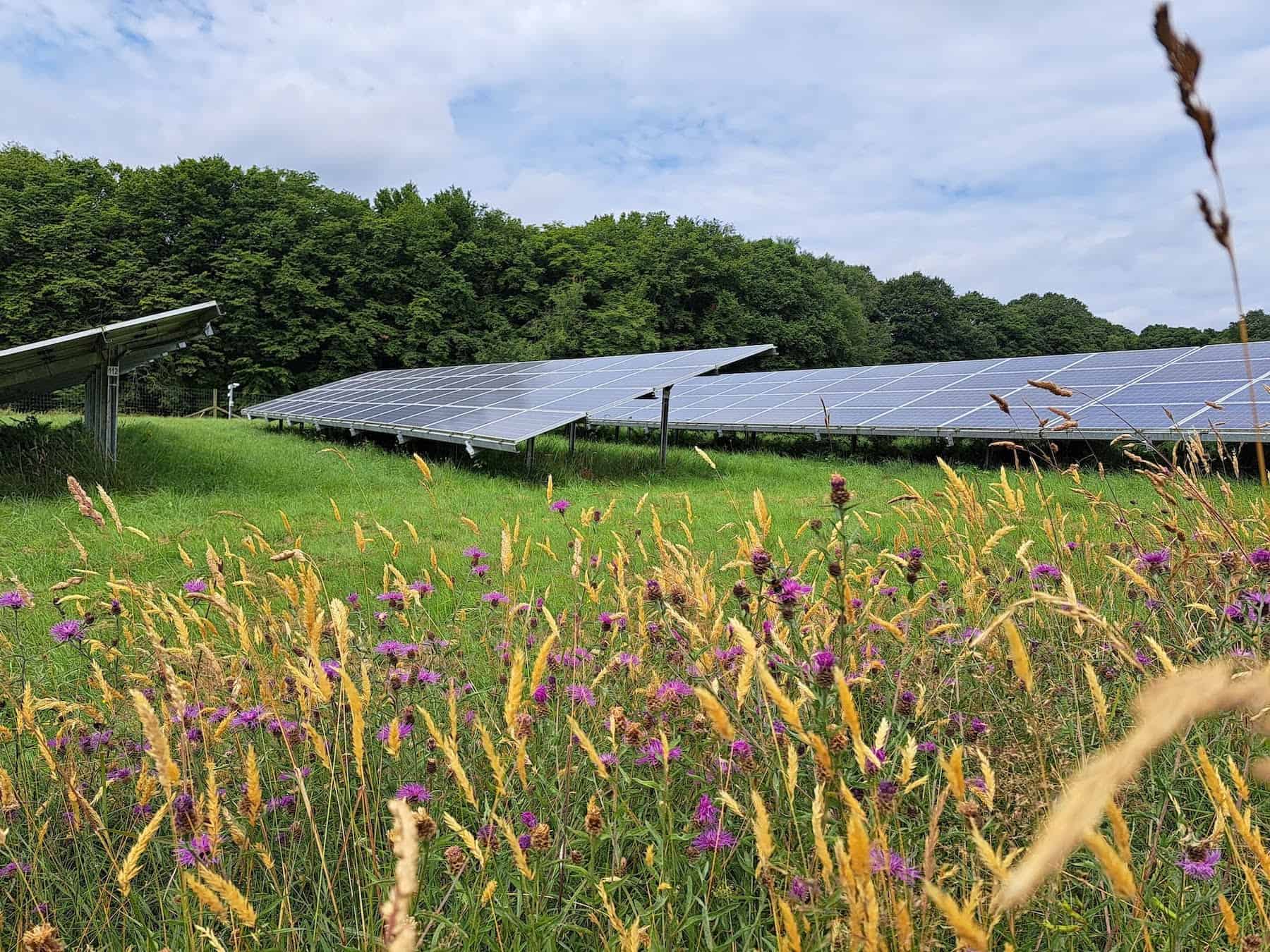
UK Solar Farms Win New Wildlife-Friendly Certification
Two UK solar farms have earned certification for creating thriving habitats alongside clean energy production. The new scheme aims to make renewable energy sites havens for struggling wildlife.
Solar panels and skylarks might seem like an unlikely pairing, but they're increasingly sharing the same space across Britain.
As the UK prepares to nearly double its solar capacity by 2030, a new certification scheme is helping transform these energy sites into wildlife sanctuaries. Wild Power, launched in 2022, awards its seal of approval to solar farms that meet strict biodiversity standards.
So far, only two UK solar farms have earned the certification. Think of it like a fair trade label, but for clean energy.
The idea sparked during a trip to northern Spain, where co-founder James Atkins spotted a solar farm buzzing with life. Animals grazed between panels while bees visited wildflower patches. That hillside vision launched Wild Power's mission to prove renewable energy and nature recovery can happen on the same ground.
The certification uses a free scorecard measuring everything from habitat creation to protecting endangered species. Sites need at least 70 points to qualify, rewarding measures like planting wildlife corridors and removing invasive plants.
Dunmow, a 10MW solar farm in Essex, became only the second certified site in September. The transformation has been dramatic.
What was once a bland field plowed twice yearly is now species-rich grassland dotted with wildflowers. Workers plugged gaps in neglected hedgerows, installed bird and bat boxes in boundary trees, and cleared invasive scrub from areas where skylarks breed.
The results exceed government requirements by a wide margin. While new developments in England must deliver 10% biodiversity improvement, Dunmow projects a 65% increase in habitat units and a 19% boost for hedgerows.
The Ripple Effect
Ecologist Guy Parker already sees the future taking root. Walking through the site last summer, he found himself surrounded by yellow agrimony flowers attracting butterflies while warblers flitted between shrubs.
The changes cost a tiny fraction of the multimillion-pound development budget. Parker suggests adding just tens of thousands of pounds during planning stages could create spectacular wildlife benefits across the UK's growing solar network.
Climate change and biodiversity loss are twin crises threatening our future. These certified solar farms prove we can tackle both challenges on the same patch of land, generating clean electricity while giving struggling species room to recover and thrive.
Based on reporting by Positive News
This story was written by BrightWire based on verified news reports.
Play Today’s BrightWire Positive Mini Crossword & Word Game
Keep your mind sharp with our free 5-minute uplifting daily crossword and positivity word puzzle.
Spread the positivity!
Share this good news with someone who needs it


