UK Wetland Hosts 64% of Nation's Black-Necked Grebes
A former industrial dumping ground in England has transformed into a thriving wetland sanctuary that now supports nearly two-thirds of the UK's breeding black-necked grebes. The conservation success story shows how nature can recover when given the chance.
A century-old dumping ground for canal waste has become a wildlife haven that supports 64% of the UK's breeding black-necked grebes, one of the nation's rarest waterbirds.
Woolston Eyes Nature Reserve in England spans nearly 1,000 acres of wetlands that originated as a disposal site for material dredged during the Manchester Ship Canal's construction in 1894. The company dumped millions of cubic meters of earth onto the site, never imagining it would one day become a conservation treasure.
By 1979, the Manchester Ship Canal Company partnered with the Woolston Eyes Conservation Group to manage the unexpected ecosystem that had quietly developed over 85 years. Freshwater pools, reedbeds, and willow scrub had replaced industrial waste, creating habitat that earned the site special scientific interest status in 1986.
The real transformation began in 2021 when conservationists launched targeted improvements to attract more nesting birds. They created islands specifically designed for black-headed gulls, which the rare black-necked grebes depend on for protection while nesting.
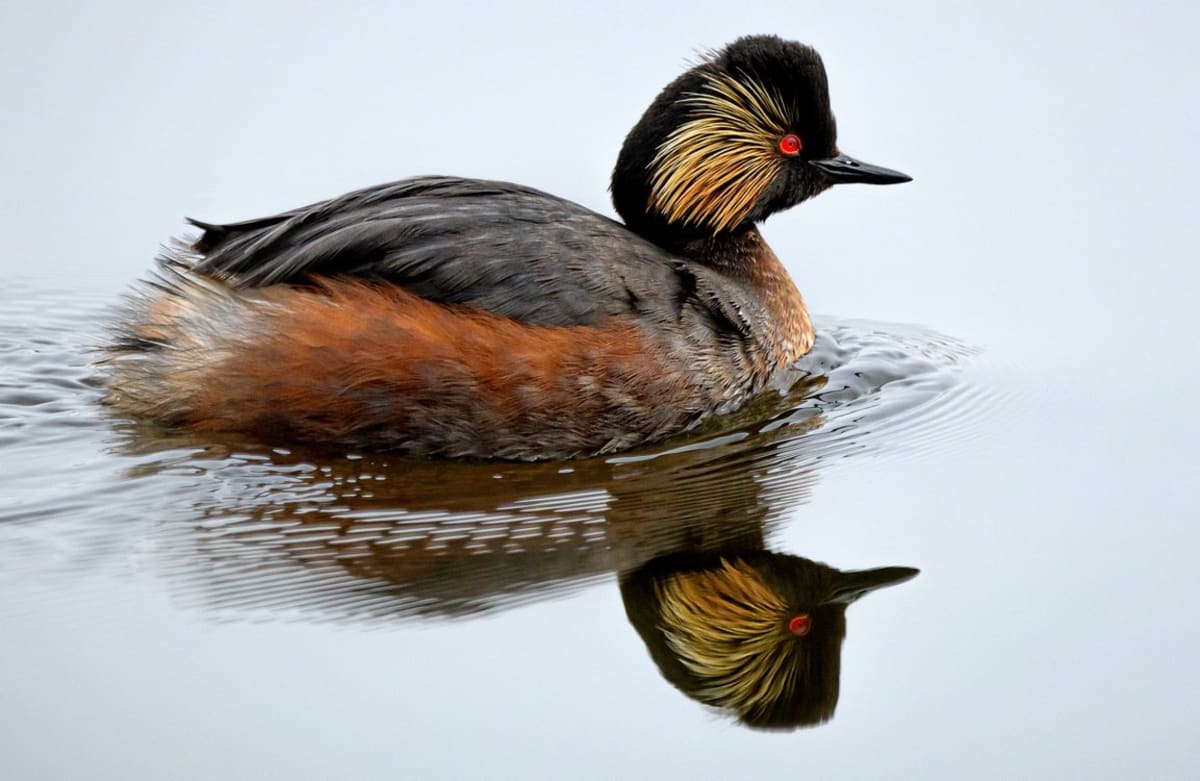
These striking waterfirds sport thin golden feathers that sweep back from ruby-red eyes, making them one of the UK's most beautiful species. They have an unusual habit of building nests right next to gull colonies, using the larger birds as security guards against predators.
The strategy worked beyond expectations. Four breeding pairs arrived in 2023 and successfully raised 15 chicks on the new islands.
By 2025, that number exploded to 35 breeding pairs, with 29 nesting on the restored wetland areas. The population boom means Woolston Eyes now hosts nearly two-thirds of all black-necked grebes breeding in the entire United Kingdom.
The Ripple Effect
The wetland's transformation has benefited far more than just grebes. Species of concern across the UK, including willow tits, grasshopper warblers, and pochards, have all found refuge at Woolston Eyes.
"The rapid growth in numbers shows how effective targeted conservation action can be and is a great example of nature thriving when it is given a chance," said Gavin Thomas, an ecologist with the Royal Society for the Protection of Birds. His team worked alongside volunteers and partners to create the prime habitat.
The success proves that even landscapes scarred by industrial activity can heal with patience and smart intervention, offering hope for other degraded sites across the country.
More Images


Based on reporting by Good News Network
This story was written by BrightWire based on verified news reports.
Spread the positivity!
Share this good news with someone who needs it