UK's New Wildlife Bridge Reconnects Fragmented Habitats
A revolutionary green bridge over Surrey's A3 motorway is giving sand lizards, adders, and deer a safe path across six lanes of traffic. The structure cost just 1% of the road project budget and could become the blueprint for reversing Britain's wildlife decline.
A patch of heather now blooms quietly above one of Britain's busiest motorways, and it might just save entire species from disappearing.
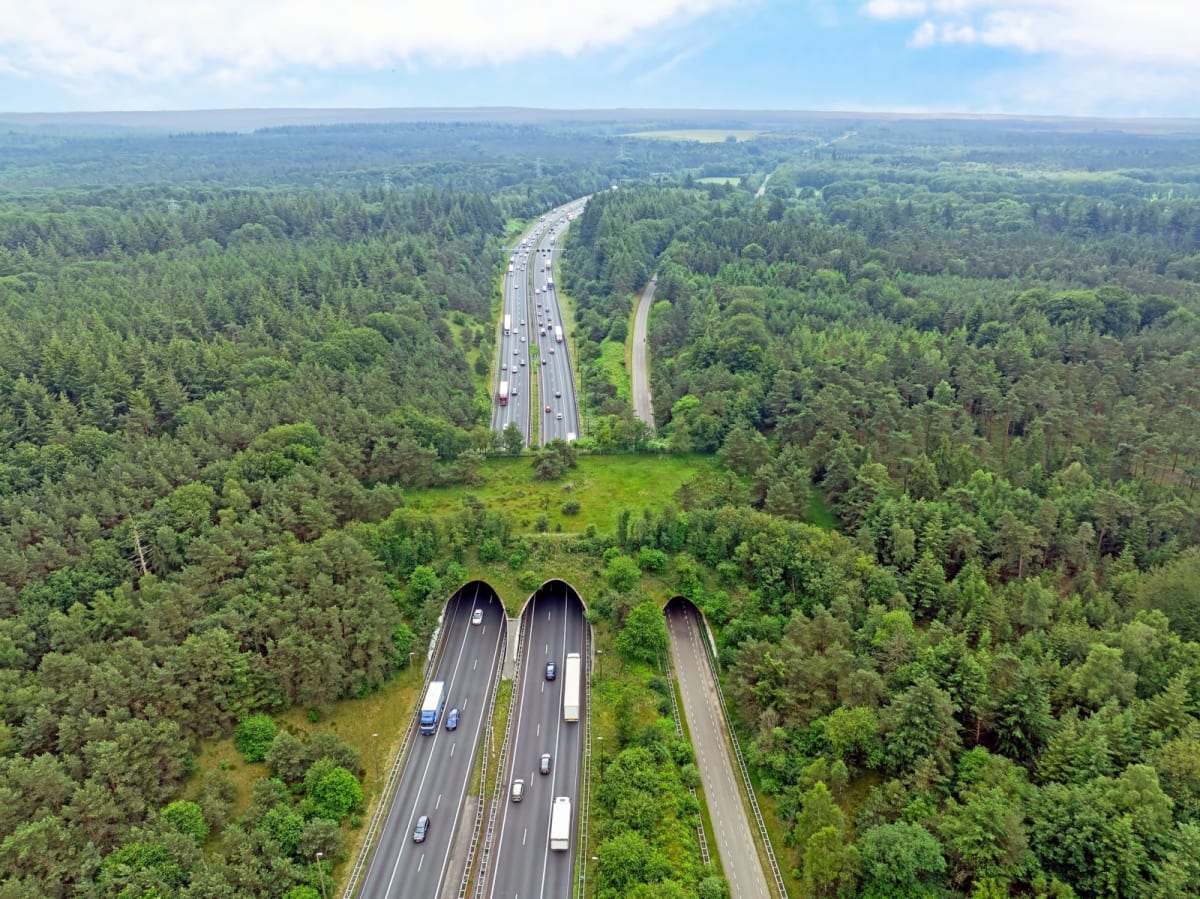
The Cockrow Bridge in Surrey is not your typical highway overpass. This living corridor transplants real heathland directly over the A3, complete with sand, scrub, logs, and native plants. Sand lizards, adders, foxes, roe deer, and ground nesting birds can now safely cross between habitats that roads violently separated decades ago.
Wildlife has already started using it before the official opening. Conservationists are watching creatures rediscover connections their ancestors once knew, reuniting populations that roads had isolated for generations.
The problem is staggering. Britain's road network has sliced the country into one of the most fragmented landscapes in the world. Nearly 1,500 species face extinction across Great Britain, with average wildlife abundance dropping 19% since 1970. Roads do not just kill animals in collisions; they shrink gene pools and quietly push entire populations toward oblivion.
At Wisley Common, where the bridge now stands, conservationists once listened for the rustle of rare lizards in ancient heathland. Instead, they heard only silence after the arterial road carved through.
The Ripple Effect
This single bridge demonstrates what investing in nature recovery actually looks like. The structure cost just over 1% of the total road improvement budget, proving wildlife crossings are not expensive pipe dreams but practical solutions hiding in plain sight.
Experts believe dedicating just 1 to 3% of future highway budgets to similar green infrastructure could meaningfully reverse habitat fragmentation nationwide. The Netherlands has built around 80 wildlife crossings since 1988. The United States operates more than 1,000. Britain has serious catching up to do.
Every new road scheme presents a choice. Engineers can either continue fragmenting what little wild nature remains, or they can weave recovery directly into infrastructure plans. The Cockrow Bridge proves the second option works, costs relatively little, and delivers benefits that compound over decades.
The real genius is the simplicity. This is not experimental technology or unproven theory. It is dirt, plants, and common sense engineering that lets nature heal itself once humans stop blocking the way.
What makes this bridge extraordinary is not just the reptiles and birds crossing today, but the signal it sends about what becomes possible when recovery gets built into the blueprint from day one.
More Images


Based on reporting by Google News - Wildlife Recovery
This story was written by BrightWire based on verified news reports.
Spread the positivity!
Share this good news with someone who needs it