UN Declares Slave Trade Greatest Crime Against Humanity
The United Nations passed a historic resolution recognizing the transatlantic slave trade as humanity's greatest crime, with 123 nations voting in favor. Ghana led the effort to establish a day of remembrance and push for formal apologies and reparations from nations that profited from slavery.
After centuries of silence, the world's largest assembly has spoken with unprecedented moral clarity about one of history's darkest chapters.
The United Nations General Assembly passed a landmark resolution declaring the transatlantic slave trade the "greatest crime against humanity." Ghana sponsored the measure with support from the African Union and Caribbean nations, and 123 countries voted yes.
The resolution establishes March 25 as the International Day of Remembrance of the Victims of Slavery. It calls for formal apologies and reparations from nations that built their wealth on stolen lives and labor.
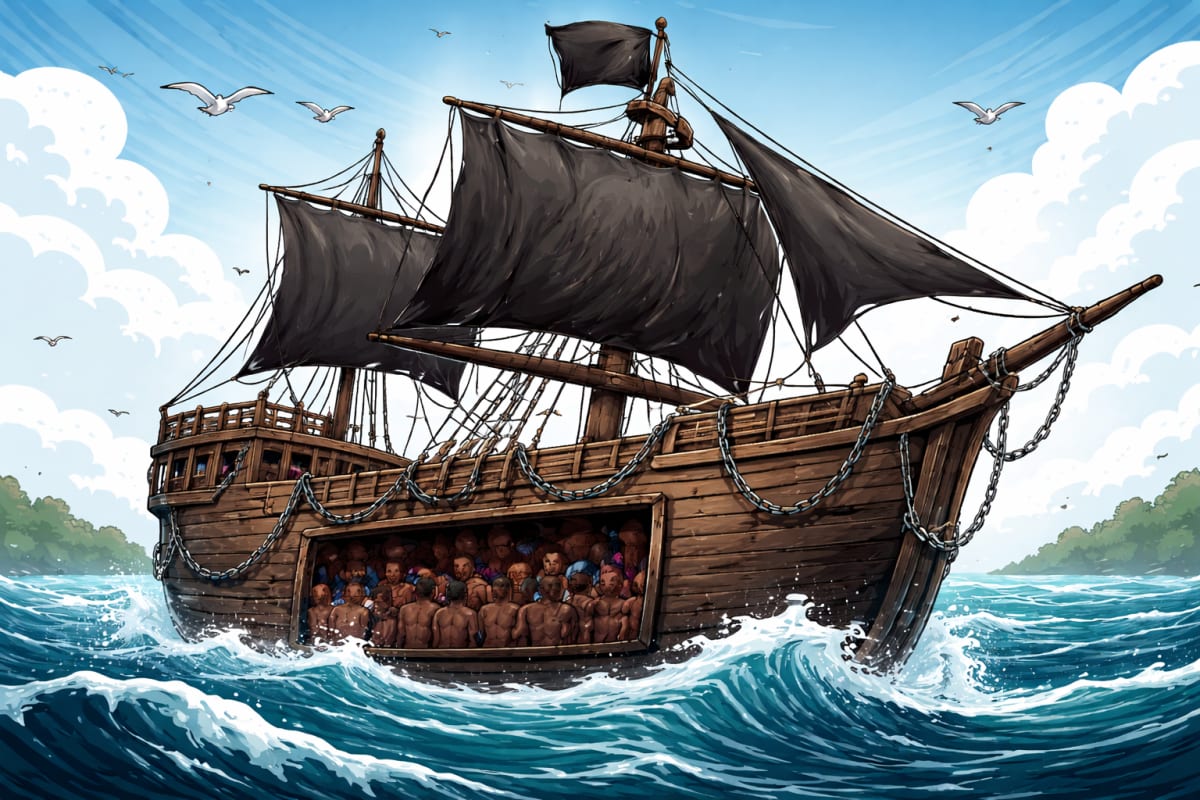
Between 1501 and 1867, an estimated 15 million people from West Africa were enslaved and shipped across the Atlantic. Over two million people, mostly women and children, died during the horrific journey in overcrowded vessels.
Their forced labor in cotton, tobacco, and sugar plantations created enormous wealth for European nations and America. By 1890, the United States controlled 58 percent of global cotton exports, primarily from the slavery-dependent American South.
Port cities like Liverpool, Amsterdam, and Nantes thrived on this brutal trade, fueling the Industrial Revolution. Britain's Royal African Company, formed in 1672 by King Charles II, existed solely to supply enslaved Africans to Caribbean plantations.
UN Secretary-General Antonio Guterres emphasized that "the wealth of many western nations was built on stolen lives and stolen labour." He pressed for reparations to address the ongoing legacies of racism, inequality, and limited opportunities that still affect descendants of enslaved people worldwide.
The Ripple Effect
Ghana's President John Mahama achieved what many thought impossible. His diplomatic leadership united over 120 nations in acknowledging historical truth and demanding justice.
The resolution gives new strength to the Caribbean Community's ongoing campaign for reparatory justice. Since 2013, 15 Caribbean nations have pursued a 10-point demand totaling $33 trillion in reparations.
History shows this kind of justice is possible. Germany has paid over $80 billion to victims of Nazi atrocities since 1952. Museums in Cambridge, Oxford, the Netherlands, France, and Germany have begun returning artifacts stolen from Africa during colonial expeditions.
Even partial acknowledgments matter. The Netherlands formally apologized in 2022. Universities are returning hundreds of items taken from the Benin Kingdom in 1897.
Three nations voted against the resolution: the United States, Israel, and Argentina. Notably, major slavery participants including the United Kingdom, Portugal, Spain, France, and Denmark abstained from voting.
This UN resolution transforms a scattered movement into a unified global demand for truth and repair. It provides moral authority for descendants of enslaved people to seek justice from nations that still benefit from centuries of stolen labor and destroyed lives.
The vote proves that even the most painful truths can eventually receive the recognition they deserve.
More Images


Based on reporting by Premium Times Nigeria
This story was written by BrightWire based on verified news reports.
Spread the positivity!
Share this good news with someone who needs it