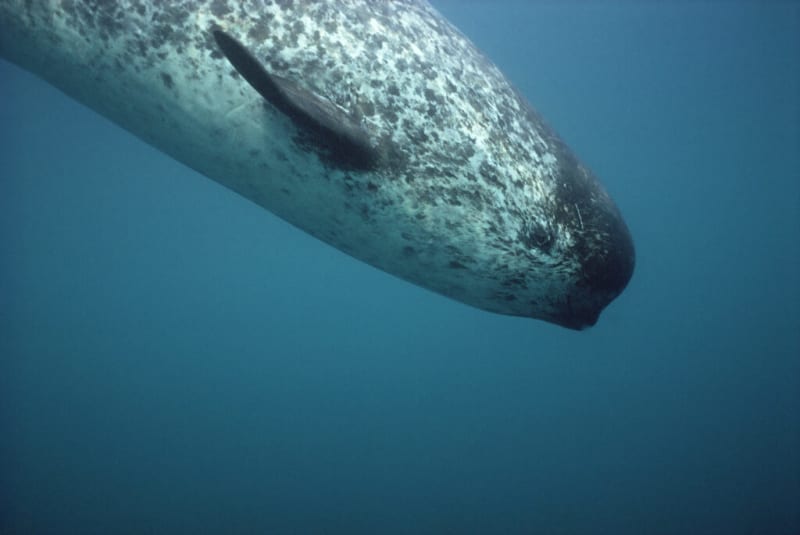
UN Ships Agree to Quiet Down for Arctic Narwhals
Global shipping regulators just approved new guidance to reduce underwater noise threatening narwhals and other Arctic whales. Simple fixes like slower speeds and cleaner hulls could cut noise pollution nearly in half while saving fuel.
The ocean's "unicorns" are facing a noisy new threat, but world leaders just took a major step to help them.
Narwhals have survived in Arctic waters for millennia by using echolocation to hunt in darkness and find breathing holes in thick ice. They emit up to a thousand clicks per second, listening for echoes to navigate the frigid deep. But as the Arctic warms three times faster than the rest of Earth, melting ice has opened new shipping lanes that fill their world with deafening noise.
The number of cargo ships, fishing vessels and oil tankers crossing Arctic waters has exploded over the past decade. That constant rumble masks the sounds narwhals need to survive and drowns out their calls to each other.
Last month, the International Maritime Organization gathered in London to tackle the problem head on. Member nations agreed on clear guidance for reducing underwater noise pollution, marking a significant win for Arctic whales.
"Underwater noise is a growing problem, contributing to serious impact on the Arctic ecosystem," said Sarah Bobbe of Ocean Conservancy. Three whale species that call the Arctic home year round are all at risk from ship noise, even in small amounts.
The solution turns out to be surprisingly simple and benefits everyone involved. Ships can install quieter propellers, keep their hulls clean, and improve engine insulation. The most effective fix? Just slow down.
Lower speeds dramatically reduce underwater noise while cutting fuel costs and emissions. Slower ships are also less likely to strike bowhead whales during their seasonal migrations.
Why This Inspires
Conservation groups like WWF have mapped "blue corridors" showing where narwhals, belugas and bowheads travel each spring and fall to reach feeding and breeding grounds. Female narwhals gather in calm fjords each summer to safely birth and raise their calves before migrating to deeper winter waters.
These maps are now in the hands of ship operators worldwide. While current guidelines remain voluntary, the new IMO agreement represents real momentum toward mandatory rules.
The technology exists, the routes are mapped, and global leaders are paying attention. If ships don't slow down soon, Arctic underwater noise could quadruple by 2030. But with cooperation between conservationists and maritime regulators, the ocean's unicorns may keep their quiet home after all.
Based on reporting by Inside Climate News
This story was written by BrightWire based on verified news reports.
Spread the positivity!
Share this good news with someone who needs it