US and Allies Launch Plan to Break China's Mineral Grip
The United States just brought together major world powers to build a new trade zone for the critical minerals that power our phones, cars, and clean energy future. It's a massive step toward breaking one country's control over materials the whole world needs.
Countries across the globe just took a major step toward securing the materials that power modern life.
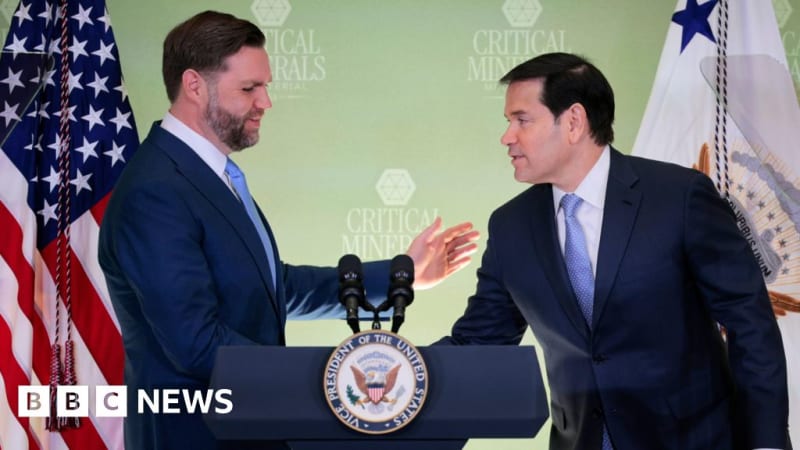
On Wednesday, the US State Department hosted the first ever Critical Minerals Ministerial, bringing together leaders from the UK, European Union, Japan, India, South Korea, Australia, and the Democratic Republic of Congo. Their mission? Create a new trade zone for the rare earths and critical minerals essential to everything from smartphones to electric car batteries.
Right now, China controls most of the world's supply of these crucial materials. That dominance has made it difficult for other mineral-rich countries to even get financing for their own projects.
Vice President JD Vance outlined how the US plans to use tariffs strategically to prevent mineral prices from dropping too low, which often scares away investors. The goal is to make mining projects viable in more countries.
David Copley, a special assistant to President Trump, announced plans to deploy hundreds of billions of dollars into the mining sector. The US has already invested in companies like MP Materials, which makes rare earth magnets, and Lithium Americas, which produces key battery materials.
The collaboration goes deeper than money. US Trade Representative Jamieson Greer revealed that America, Japan, and the European Commission are developing coordinated trade policies together. This united approach means multiple major economies working as partners instead of competitors.
The announcement came alongside Project Vault, a nearly $12 billion critical mineral reserve launched by President Trump on Monday. Industry leaders are celebrating the decisive action.
The Ripple Effect
This partnership could transform how the world accesses the materials needed for clean energy and technology. When multiple countries can mine and process critical minerals, prices stabilize and supply chains become more reliable.
The collaboration means more jobs in mining communities across partner nations. It also gives countries with mineral deposits the financial backing they need to develop their own resources.
For everyday people, more diverse mineral sources mean more stable prices for electronics, electric vehicles, and renewable energy technology. It could accelerate the clean energy transition by ensuring steady access to battery materials.
The timing matters too. This cooperative approach builds bridges between democracies while addressing a real economic challenge. Countries are choosing partnership over going it alone.
Even China's Foreign Ministry acknowledged the importance of communication and dialogue on the issue. The conversation is happening at the highest levels, with President Trump and Chinese President Xi Jinping discussing trade matters the same day as the ministerial event.
This gathering marks the beginning of a new chapter in how the world sources critical materials, with cooperation leading the way.
More Images
Based on reporting by BBC Technology
This story was written by BrightWire based on verified news reports.
Spread the positivity!
Share this good news with someone who needs it