US Clean Energy Hits Record Despite Political Headwinds
America is installing clean energy faster than ever in 2025, with solar and wind capacity jumping 25% above last year's record. Courts, market forces, and skyrocketing electricity demand are powering the boom forward.
America's clean energy sector is having its best year ever, proving that market forces can sometimes outpace political opposition.
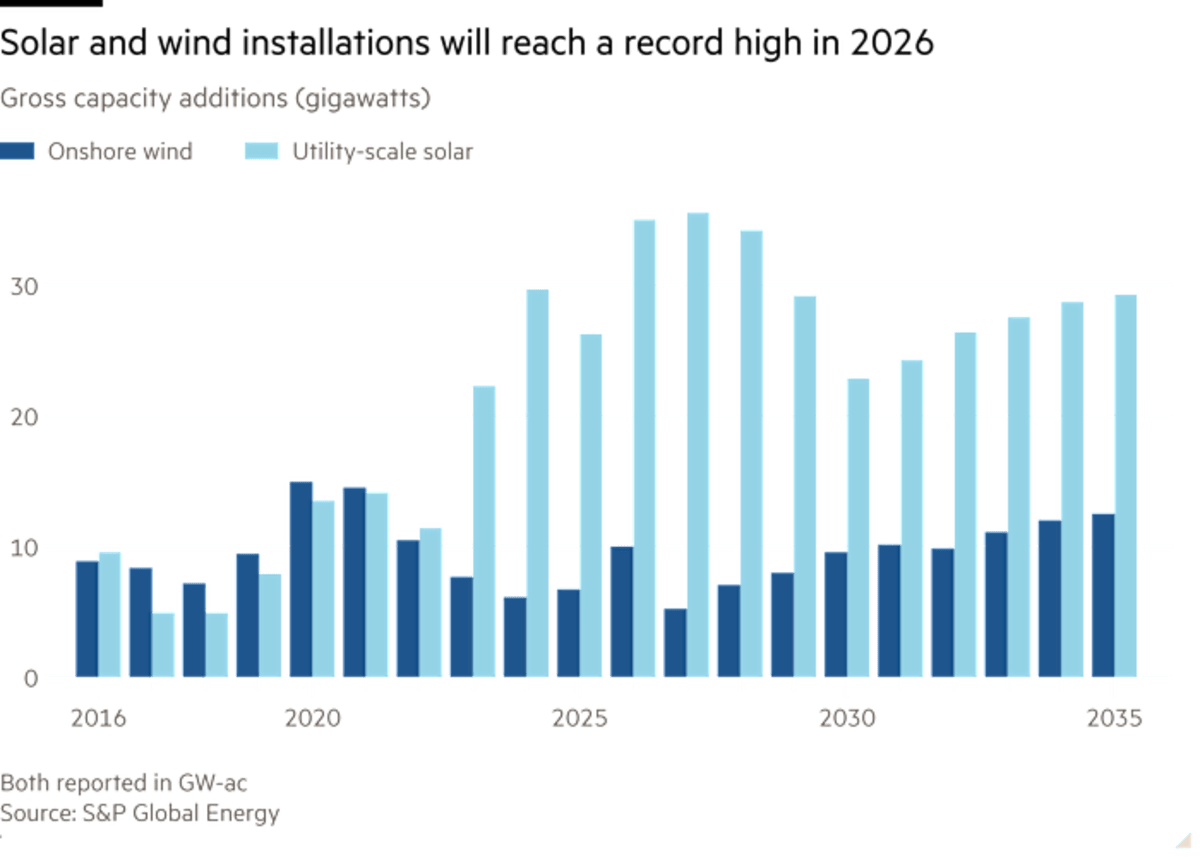
The United States will add 45 gigawatts of clean energy capacity in 2025, enough to power a country the size of Turkey. That's 25% more than the previous record set just last year, according to S&P Global Energy.
The surge comes despite federal efforts to slow renewable development. An early July deadline for projects to qualify for tax credits sparked a construction frenzy, with developers racing to break ground before losing financial incentives.
But the bigger story is simple economics and urgent need. US electricity demand is expected to jump 39% by 2035, driven largely by power-hungry artificial intelligence data centers that need energy immediately.
Solar and wind projects take less than two years to build, compared to at least three years for gas plants. They're also cheaper, producing power for around $37 to $38 per megawatt hour versus at least $48 for gas.
Courts have played a surprising role in keeping projects moving forward. Judges have blocked all five federal attempts to halt offshore wind construction along the East Coast, and recently ordered the Pentagon to stop interfering with onshore wind development.
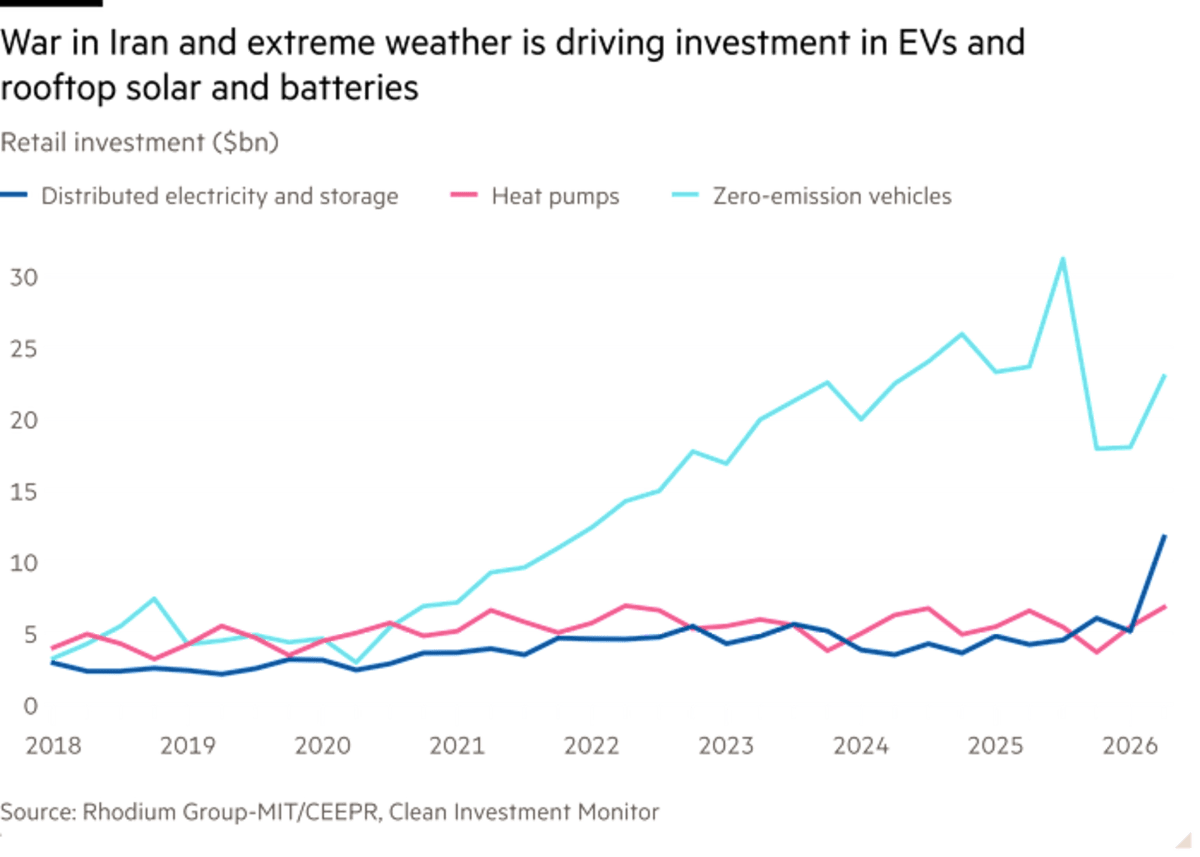
Homeowners are joining the movement too. Residential solar panel and battery installations jumped 45% in early 2026 compared to the previous quarter, particularly in hurricane-prone areas like Florida where families want backup power during storms.
The Ripple Effect
This clean energy boom is creating opportunities beyond electricity generation. Developers who finish projects by 2030 can still claim tax benefits, meaning construction jobs and economic activity will continue for years.
The momentum is also changing the conversation around energy policy. As one energy executive put it, "There was a campaign promise to go against renewables, but at the same time they're realizing that you can't do without it."
Higher electricity prices expected after subsidies expire mean renewable power developers can remain profitable while meeting America's growing energy hunger. Solar capacity alone will set another record in 2027, with wind following close behind.
When urgent need meets economic sense, progress finds a way forward.
More Images

Based on reporting by Google News - Clean Energy
This story was written by BrightWire based on verified news reports.
Spread the positivity!
Share this good news with someone who needs it