US Groundwater Could Fill Great Lakes 13 Times Over
Scientists just created the most detailed map ever of America's hidden water supply, revealing we have enough groundwater to fill the Great Lakes 13 times. This breakthrough could transform how we manage our most precious resource.
Imagine having a savings account but never knowing how much money is actually in it. That's exactly how scientists have felt about America's groundwater until now.
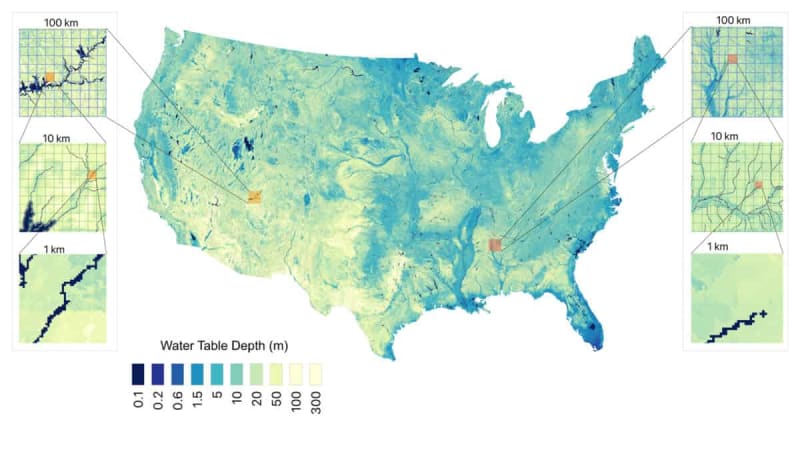
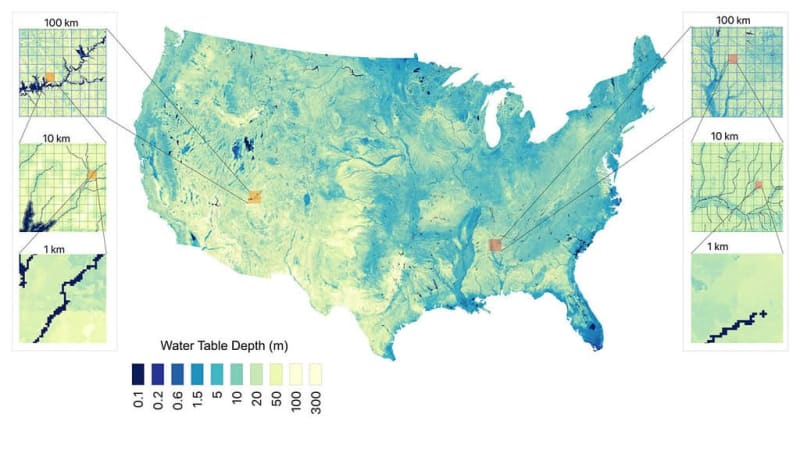
Princeton University hydrologist Reed Maxwell and his team just solved one of hydrology's biggest mysteries. Using machine learning and nearly a million measurements dating back to 1895, they've created the highest-resolution map ever of groundwater beneath the United States.
The result? About 306,500 cubic kilometers of water lie beneath our feet. That's enough to fill all the Great Lakes 13 times over, or match nearly seven years of flow from every river on Earth combined.
Previous estimates ranged wildly from 159,000 to 570,000 cubic kilometers because scientists were essentially working blind. Only 1% of Earth's freshwater sits on the surface where we can easily measure it. Everything else hides underground in soil and rock we can't see directly.
The team's map reveals details at 30-meter resolution, showing groundwater down to depths of 392 meters. When they tested what happens with lower resolution data, the kind many global models still use, the estimate dropped by 18%. Those missing details matter enormously for managing water resources.
Here's something surprising: about 40% of the continental US has groundwater within 10 meters of the surface. That shallow depth means the water directly interacts with plants and land ecosystems, revealing how connected our surface world is to the hidden reserves below.
The machine learning approach brought an unexpected advantage. Because the training data included evidence of human water use over more than a century, the model actually learned to account for how we pump and deplete groundwater. What usually sounds like a flaw in artificial intelligence became a feature.
Why This Inspires
This isn't just a number on a map. Farmers can now make smarter irrigation decisions. Regional water managers can plan for the future with actual data instead of guesswork. Communities facing drought can better understand their reserves.
Laura Condon, a University of Arizona hydrologist on the team, puts it perfectly: "Groundwater is literally everywhere all the time. Wherever you're standing, dig down, and you'll eventually hit water."
We finally know what's in our water savings account, and that knowledge could help protect this vital resource for generations to come.
More Images
Based on reporting by Google News - Science
This story was written by BrightWire based on verified news reports.
Spread the positivity!
Share this good news with someone who needs it