USC Merges Engineering and Medical Schools for Health Innovation
USC just created one of California's first joint biomedical engineering departments, uniting two powerhouse schools to turn breakthrough ideas into real treatments faster. The collaboration has already produced the world's first FDA-approved artificial retina and brain implants that restore memory.
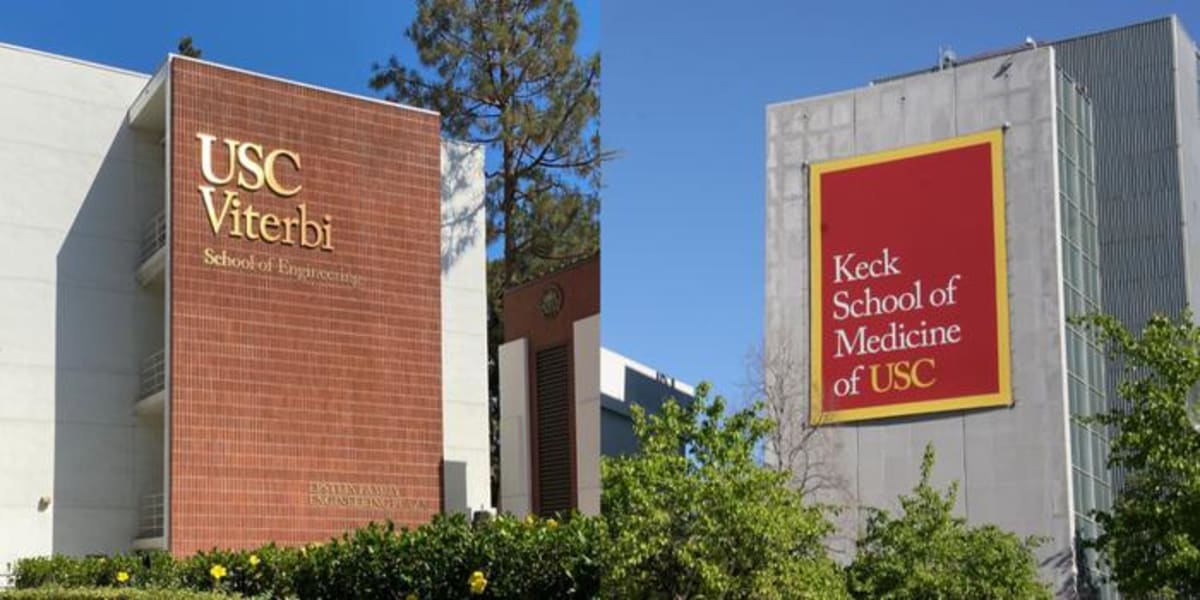
Two of USC's most innovative schools just joined forces to speed up the journey from lab discovery to life-saving treatment. The Keck School of Medicine and the USC Viterbi School of Engineering announced their biomedical engineering department will now operate as one united force.
This isn't just administrative reshuffling. The partnership formalizes decades of collaboration that has already changed lives through groundbreaking medical devices and treatments.
The results speak for themselves. USC researchers developed the Argus II, the first FDA-approved bionic eye that restored sight to people with severe vision loss. They created the first brain implant to bring back lost memory function. They pioneered new immunotherapy approaches to fight cancer more effectively.
The newly integrated department celebrates 50 years of existence this year and received a $35 million boost from the Alfred E. Mann Foundation for Biomedical Engineering in 2022. Now, with additional support from USC leadership, it's poised to accelerate innovation even further.
Faculty from both schools will share resources, institutes, and cutting-edge facilities. They'll tackle bigger, more ambitious projects together, combining expertise in medical devices, neuroengineering, imaging science, drug discovery, and artificial intelligence.
Recent wins show what's possible when engineers and doctors work side by side. Last year, a joint team used ultrasound technology to make CAR T-cell therapy more effective against solid tumors. Another group just secured a five-year grant to develop new treatments for metastatic breast cancer.
Current projects include a $47 million federal effort to make eye transplants a reality and advance treatments for macular degeneration. Researchers are also using brain stimulation to restore memory in Alzheimer's patients and help rebalance brain signals in people with depression.
The Ripple Effect
This partnership model could reshape how universities approach medical innovation nationwide. By breaking down walls between disciplines, USC is creating a blueprint for faster translation of research into treatments that reach patients.
The new structure positions USC to compete for larger grants and tackle more complex challenges. It also means medical students and engineering students will learn alongside each other, training a new generation of innovators who think across traditional boundaries.
With access to USC's new School of Advanced Computing, the department will integrate artificial intelligence and advanced computing into biomedical research, opening doors to discoveries we haven't yet imagined.
Fifty years of biomedical engineering excellence just got a powerful upgrade that promises to deliver more breakthroughs when patients need them most.
More Images
Based on reporting by Google News - School Innovation
This story was written by BrightWire based on verified news reports.
Spread the positivity!
Share this good news with someone who needs it