
USC Scientists Find Brain Drug to Fight Alzheimer's
Researchers at the University of Southern California have created compounds that could calm brain inflammation tied to Alzheimer's disease while preserving normal brain function. The breakthrough targets a specific enzyme elevated in people with the APOE4 gene, the strongest genetic risk factor for the disease.
Scientists may have found a way to dial down one of Alzheimer's most damaging processes without disrupting the delicate balance the brain needs to function normally.
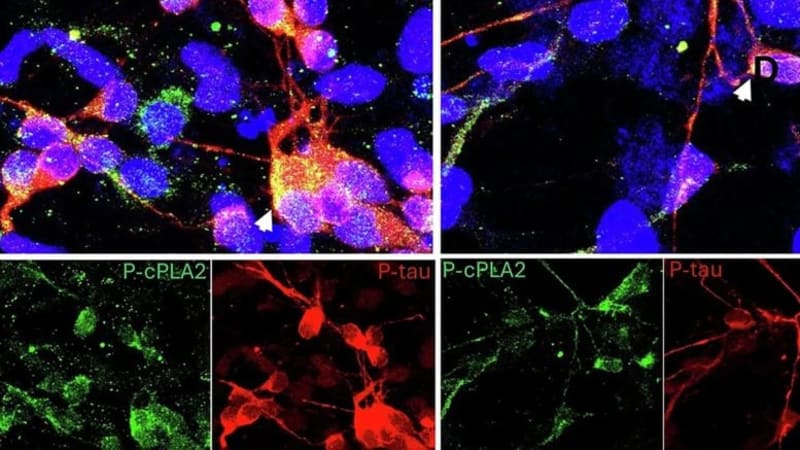
A team at the University of Southern California created new druglike compounds that target brain inflammation connected to Alzheimer's disease. Their work, published in the journal npj Drug Discovery, focuses on an enzyme called cPLA2 that's elevated in people carrying the APOE4 gene.
The APOE4 gene is the strongest genetic risk factor for Alzheimer's, but not everyone who carries it develops the disease. The researchers discovered that APOE4 carriers with unusually high cPLA2 levels typically do develop Alzheimer's, suggesting the enzyme drives harmful inflammation rather than just being present during it.
The challenge was creating a treatment that could reduce cPLA2 activity without shutting it down completely, since the enzyme plays important roles in normal brain function. The compounds also needed to be small enough to cross the blood-brain barrier, which blocks most molecules from entering brain tissue.
The team used powerful computational screening to evaluate billions of potential molecules. They looked for compounds that would hit cPLA2 specifically, enter the brain, and work under realistic biological conditions.
After creating a shortlist, pharmacologists prepared the leading candidates for animal testing and measured how much of each compound actually reached the brain. One compound emerged as the prime candidate after reducing harmful cPLA2 activation in human brain cells exposed to Alzheimer's related stressors.
In mouse models, the inhibitor successfully penetrated the blood-brain barrier and affected neuroinflammatory pathways. The compounds worked at low concentrations, showing they're potent in brain-relevant systems.
Why This Inspires
This research represents a thoughtful approach to a devastating disease that affects millions of families. Rather than trying to eliminate a problematic enzyme entirely, the scientists are finding ways to modulate it, respecting the brain's need for balance while addressing the inflammation that contributes to cognitive decline.
The work is especially meaningful for people who carry the APOE4 gene and wonder about their future. While genetic risk factors can feel predetermined, this research suggests that understanding the biological mechanisms between genes and disease can reveal new intervention points.
Director Hussein Yassine emphasized the team's careful approach: "Our goal is to find out whether targeting inflammation can alter Alzheimer's risk, particularly in APOE4 carriers. This next phase focuses not on promises, but on carefully determining whether modulating this pathway is safe, feasible, and ultimately meaningful for human disease."
The breakthrough offers hope that precision medicine approaches targeting specific inflammatory pathways could one day help prevent or slow Alzheimer's progression in those most at risk.
More Images

Based on reporting by Google News - Scientists Discover
This story was written by BrightWire based on verified news reports.
Spread the positivity!
Share this good news with someone who needs it