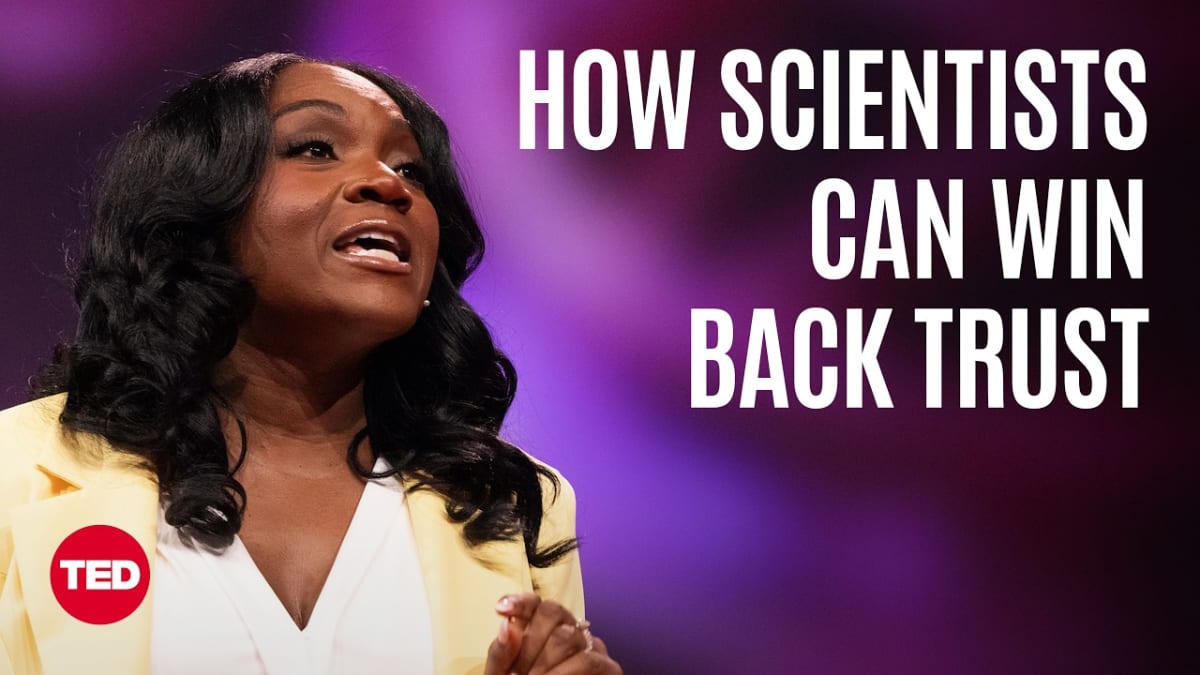
Vaccine Developer Says Trust Matters More Than Science
The scientist who helped create the first COVID-19 vaccine says the hardest part wasn't the research. It was earning trust from people with honest questions about what they were being asked to put in their bodies.
Building a vaccine in record time was the easy part, says the woman who helped make it happen.
Immunologist Dr. Kizzmekia Corbett co-developed the first COVID-19 vaccine to enter clinical trials, a achievement that helped save millions of lives. But in her recent TED Talk, she revealed that creating the science was never the real challenge.
The hardest obstacle? The gap between scientists and everyday people who had honest questions about the shots.
Dr. Corbett calls it "vaccine inquisitiveness" rather than hesitancy, and that word choice matters. She believes curiosity about medical decisions is not only normal but healthy, and scientists need to meet people where they are instead of talking down to them.
Her approach flips the script on how public health typically communicates. Instead of dismissing concerns or overwhelming people with technical jargon, she advocates for real conversations that treat questions as valid and worthy of thoughtful answers.
Why This Inspires
Dr. Corbett's message arrives at a critical moment. Trust in science took a beating during the pandemic, with misinformation spreading faster than facts and communities feeling left behind by institutions that seemed more interested in lecturing than listening.
By acknowledging that trust must be earned, not demanded, she's modeling a new path forward. Her work proves that brilliance in the lab means little if discoveries never reach the people who need them most.
She's now focused on ensuring humanity is better prepared for the next pandemic, not just scientifically but socially. That means building bridges before the next crisis hits, creating relationships rooted in respect rather than authority.
The future of public health may depend less on what scientists discover and more on whether they can explain it in ways that honor people's intelligence and autonomy.
Based on reporting by TED
This story was written by BrightWire based on verified news reports.
Spread the positivity!
Share this good news with someone who needs it