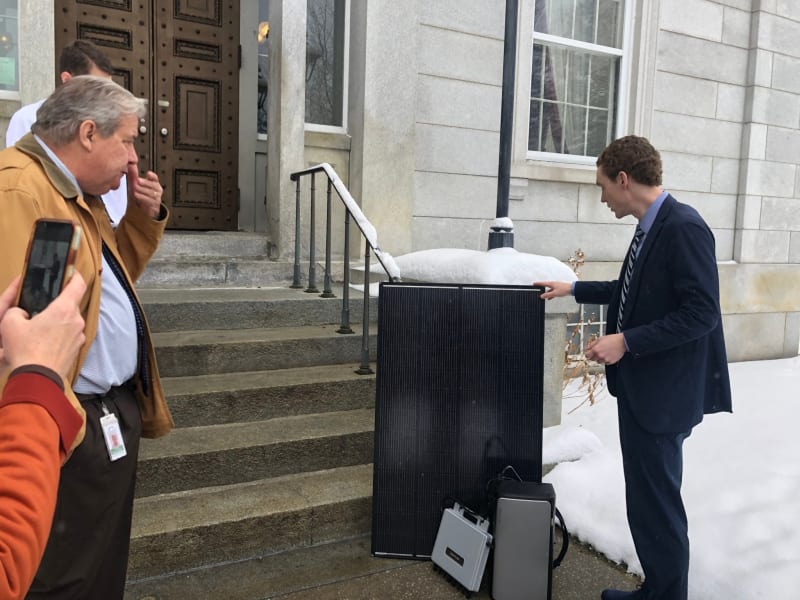
Vermont Senate Passes Bill to Make Solar Power Easier
Vermont just made it simpler for renters and homeowners to generate their own clean energy. A new bill eliminates red tape for small plug-in solar devices that work like any appliance.
Vermont's Senate just voted unanimously to make solar power accessible to everyone, including renters and people who've been priced out of traditional rooftop systems.
The bill removes a major headache: interconnection agreements. These contracts between customers and utilities can add costs and create months-long wait times before solar systems start working. Now, small plug-in solar devices can skip that process entirely.
The technology itself is beautifully simple. These solar panels plug directly into a wall outlet or battery, just like a toaster or phone charger. Instead of pulling power from the grid, they supply electricity throughout your home.
Senator Anne Watson, who chairs the committee that reviewed the bill, captured the spirit perfectly. "It's very Vermont to be contributing and self-sufficient," she said. "Who doesn't want to generate their own power?"
Ben Edgerly Walsh from Vermont Public Interest Research Group sees this as a game changer for people left behind by the solar revolution. Renters, condo owners, people surrounded by trees, and mobile home residents have had almost no options until now.
The portable systems offer a unique advantage. Renters can take them when they move, and installation requires zero electrical work. No contractors, no permits, no hidden fees.
Cora Stryker from Bright Saver, a nonprofit promoting plug-in solar, has been working with states across the country on similar legislation. Utah passed its version last March with bipartisan support. Pennsylvania, Maryland, and other states are following Vermont's lead.
The bill caps systems at 1200 watts per electric meter. That update specifically helps multi-residential buildings, where more units can now participate.
Not everyone sees this as a universal solution. TJ Poor from the Public Service Department points out that a 1200-watt system still costs about $2,000. That's a significant investment for low-income households, even without the interconnection fees.
The legislation also includes important safety provisions. The devices won't export excess power back to the grid for compensation, which keeps things simple and protects utility workers during outages.
The Ripple Effect
What started as a European innovation is spreading across America, state by state. Vermont's unanimous Senate vote signals something bigger: clean energy is becoming less about who can afford a $20,000 rooftop installation and more about giving everyone a chance to participate.
The bill still needs final approval before plug-in solar systems hit the market, but the momentum is clear. Solar power is moving from exclusive to accessible, one outlet at a time.
More Images

Based on reporting by Google News - Clean Energy
This story was written by BrightWire based on verified news reports.
Spread the positivity!
Share this good news with someone who needs it