Virginia Tech Turns Plastic Waste Into Engine Oil
Scientists have cracked the code on recycling PVC, one of the planet's toughest plastics to repurpose, by transforming it into high-performance engine lubricant. The breakthrough could tackle two environmental problems at once: mountains of plastic waste and the carbon footprint of making industrial oils.
Millions of tons of PVC plastic end up in landfills every year because it's notoriously hard to recycle, but Virginia Tech researchers just found a way to turn this stubborn waste into something engines desperately need.
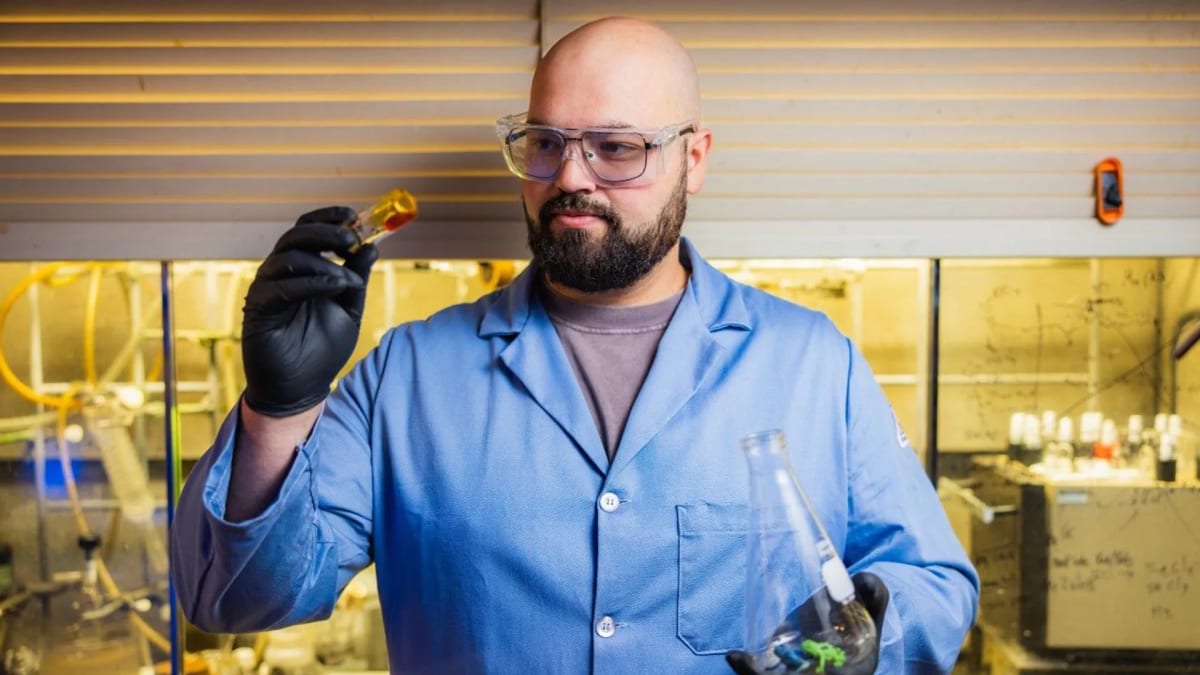
Chemist Guoliang "Greg" Liu and his team discovered how to transform polyvinyl chloride into polyalphaolefin, a key ingredient in high-performance lubricants like engine oil. The process takes PVC from household plumbing, window frames, and even old credit cards and converts it into a product that powers everything from lawn mowers to jet engines.
The method is surprisingly straightforward. Researchers place PVC in a solvent, add aluminum trichloride and alpha olefins, then heat the mixture to 158 degrees Fahrenheit for three hours. What emerges is a thick, high-quality oil that performs as well as traditional lubricants.
PVC has always been recycling's nightmare child. It contains chlorine and unpredictable additives that vary wildly depending on how it was manufactured, making it nearly impossible to process through conventional recycling methods. Meanwhile, the world keeps demanding more engine oil, which carries a hefty environmental price tag to produce.
The research team, which Liu affectionately called "the three musketeers," initially struggled to find the right approach. Their early experiments produced soft, gooey materials that didn't deliver the performance they wanted. Then Liu had a breakthrough moment: what if they kept breaking down the polymer chains into smaller segments?
That shift in thinking changed everything. The team sent samples to Ali Erdemir at Texas A&M University for testing and partnered with William Goddard at Caltech on chemical computations. Virginia Tech colleague Xi Chen developed economic models showing how the oil could be manufactured at industrial scale.
The Ripple Effect spreads far beyond just cleaning up plastic waste. This innovation could reduce dependence on petroleum-based lubricant production while giving discarded PVC a valuable second life. Industries that rely on steady supplies of engine oil now have a potential source that helps solve pollution problems instead of creating them.
Liu's lab has already proven the concept works with other plastics, having previously converted different plastic wastes into surfactants for soaps and detergents. Those successes gave the team confidence to tackle PVC, often considered the most challenging plastic to repurpose.
The researchers are now focused on scaling up production to make the lubricant widely available. As Liu puts it, lubricants are the silent heroes working quietly in machinery across the world, and this breakthrough could help produce them more sustainably while clearing plastic from our landfills.
Based on reporting by Science Daily
This story was written by BrightWire based on verified news reports.
Spread the positivity!
Share this good news with someone who needs it