Virtual Twin Tech Cuts Client Plastic Use by 18%
French software company Dassault Systèmes just proved virtual testing can slash real-world waste. Their first impact report shows clients saved millions while cutting emissions using digital twins to perfect products before manufacturing.
Imagine testing thousands of product designs without wasting a single piece of plastic or metal. That's exactly what Dassault Systèmes' virtual twin technology delivered for companies in 2025, according to the French software firm's first-ever impact report released this month.
The technology creates digital replicas of products, processes, and even entire factories. Companies can experiment, optimize, and perfect everything virtually before committing to physical production.
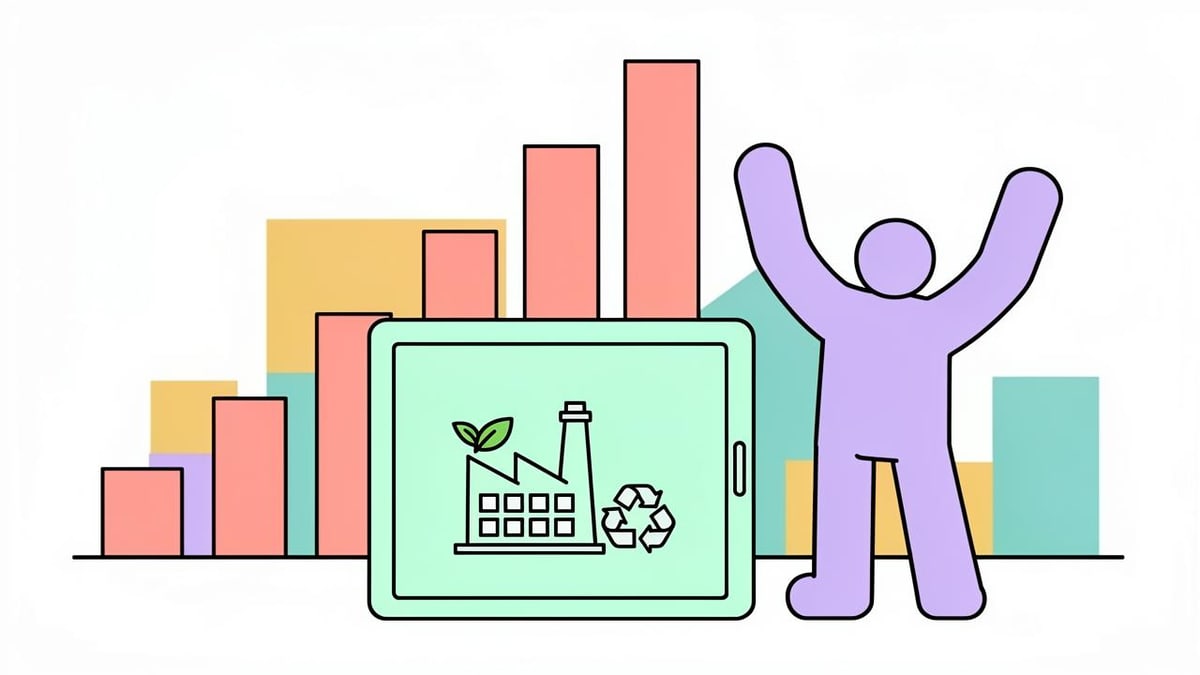
One consumer packaging company used virtual twins to redesign their products, slashing plastic use by 18% while boosting recycled materials by 76%. A manufacturing client discovered that half the components they planned to throw away could actually be reused, saving $45 million in the process.
The environmental wins add up fast. A wind turbine manufacturer prevented nearly 8,000 tons of carbon dioxide emissions by optimizing designs virtually. A residential construction project achieved the highest possible energy rating (A++++) by testing building configurations digitally first.
Dassault Systèmes walked the talk on their own operations too. The company cut its direct emissions (Scope 1 and 2) by 78.3% compared to 2019 levels. Half of their suppliers now use science-based targets to reduce their own greenhouse gas emissions.
The Ripple Effect
Virtual twin technology represents a fundamental shift in how we make things. Instead of the old trial-and-error approach that generates waste with every iteration, companies can now fail fast and cheap in the digital world before succeeding in the physical one.
This ripple extends beyond individual companies. As more suppliers adopt science-based emissions targets and more products get optimized before production, entire supply chains become cleaner and more efficient.
The report also revealed that 42.9% of Dassault Systèmes' revenue aligns with the EU Taxonomy, the European Union's framework for sustainable economic activities. Women hold 41.7% of executive positions at the company, showing progress on human capital alongside environmental goals.
The technology proves that sustainability and profitability aren't opposing forces. That $45 million saved through component reuse didn't just help the planet; it dropped straight to the bottom line, making the business case for virtual optimization impossible to ignore.
More Images
Based on reporting by Google News - Emissions Reduction
This story was written by BrightWire based on verified news reports.
Spread the positivity!
Share this good news with someone who needs it