Volcano Accidentally Destroyed Its Own Methane Pollution
A 2022 volcanic eruption in the South Pacific unexpectedly cleaned up some of its own methane emissions, offering scientists new clues for fighting climate change. The discovery could inspire breakthrough methods to slow global warming within the next decade.
A massive underwater volcano may have just shown scientists a new way to fight climate change, completely by accident.
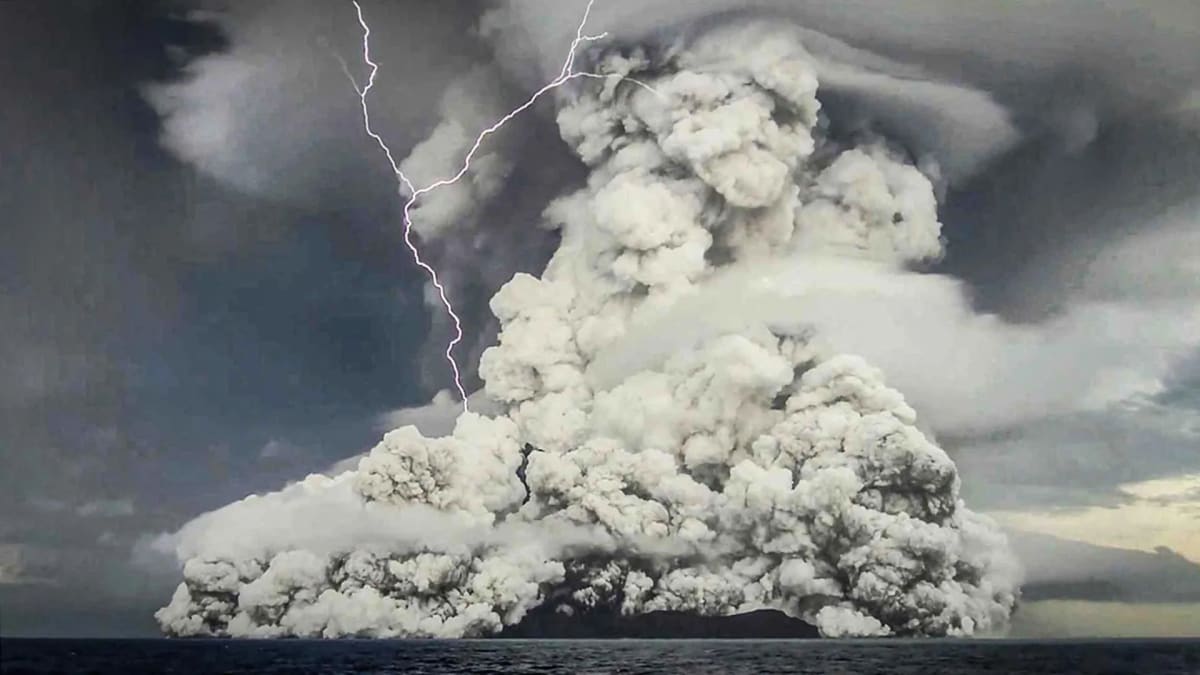
When Hunga Tonga erupted beneath the South Pacific in January 2022, it ranked among the most powerful volcanic explosions in modern history. Researchers now report that the enormous volcanic cloud somehow destroyed some of its own methane pollution through an unexpected natural process.
The finding matters because methane is a climate emergency. The gas causes about one third of current global warming and traps heat 80 times more effectively than carbon dioxide over 20 years.
Scientists discovered what happened using satellite observations of the massive eruption plume. They detected record high levels of formaldehyde, a chemical that only appears briefly when methane breaks apart in the atmosphere.
Dr. Maarten van Herpen from Acacia Impact Innovation led the research team. "When we analyzed the satellite images, we were surprised to see a cloud with a record high concentration of formaldehyde," he explains in the study published in Nature Communications.
Because formaldehyde only survives for a few hours, tracking it for 10 days all the way to South America proved the cloud was actively destroying methane throughout its journey. The volcano released about 300 gigagrams of methane during the eruption, roughly equal to annual emissions from two million cows.
At the same time, the plume removed approximately 900 megagrams of methane daily. That matches the daily emissions of two million cows.
The chemistry involves an unusual trio: volcanic ash, seawater, and sunlight. Because the volcano erupted underwater, it blasted enormous amounts of salty seawater upward along with ash, sending some material into the stratosphere.
Sunlight striking this mixture appears to have produced highly reactive chlorine atoms. Those chlorine atoms then attacked methane molecules, helping break them apart.
The basic chemistry was first identified in 2023 when scientists found similar reactions occurring with Saharan dust and sea salt in lower atmosphere layers. Professor Matthew Johnson from the University of Copenhagen worked on both discoveries.
"What is new and completely surprising is that the same mechanism appears to occur in a volcanic plume high up in the stratosphere, where the physical conditions are entirely different," Johnson says.
The Bright Side
This unexpected discovery could accelerate the timeline for climate solutions. Unlike carbon dioxide, which lingers for centuries, methane typically disappears from the atmosphere within about 10 years through natural chemical reactions.
That shorter lifetime makes methane an especially attractive target for quick climate action. Scientists sometimes call methane reduction an "emergency brake" on climate change because cutting levels today could produce noticeable benefits within a decade.
Understanding how nature accelerates methane breakdown could help researchers develop new strategies for slowing near term warming. The volcanic discovery adds another piece to the puzzle of atmospheric chemistry that scientists are racing to understand.
While no one wants more volcanic eruptions, this accidental experiment revealed chemistry that might inspire human solutions. Sometimes nature's surprises point the way forward.
Based on reporting by Google News - Science
This story was written by BrightWire based on verified news reports.
Spread the positivity!
Share this good news with someone who needs it