Volcano Accidentally Destroys Methane in Climate Surprise
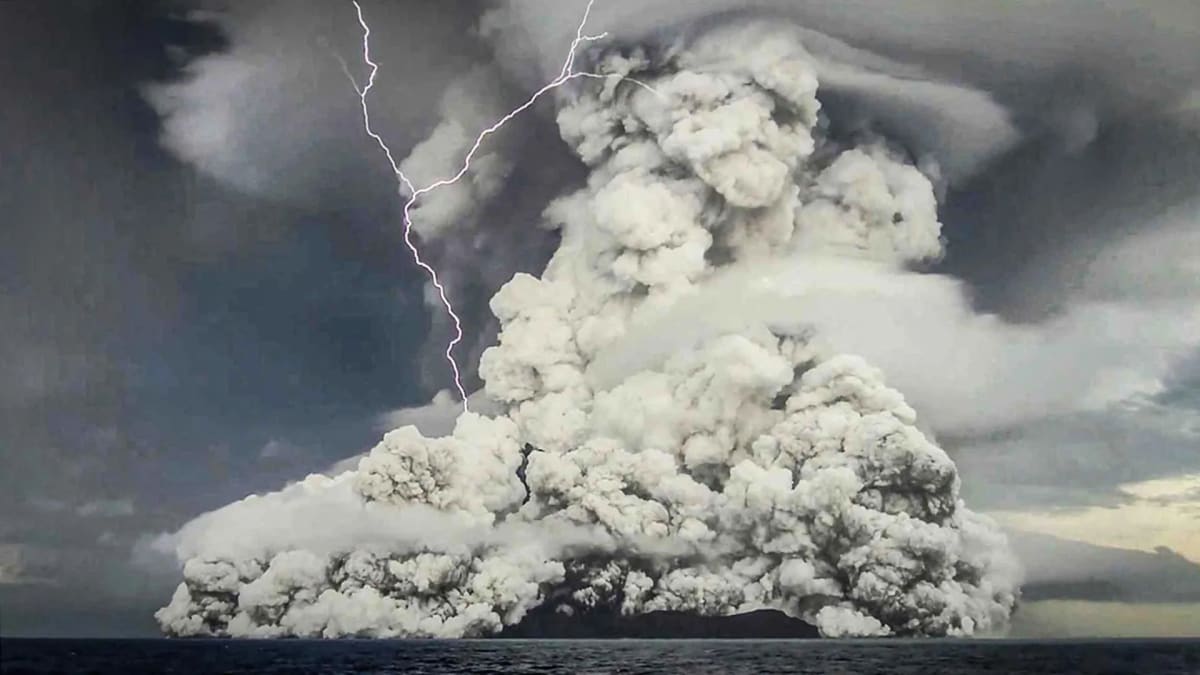
A massive underwater volcano eruption in 2022 triggered an unexpected atmospheric reaction that broke down methane, one of the most powerful greenhouse gases warming our planet. Scientists say this accidental discovery could help develop new tools to slow climate change.
When the Hunga Tonga volcano erupted underwater in January 2022, scientists expected destruction. What they didn't expect was a potential weapon against climate change.
Researchers tracking the eruption detected record-breaking levels of formaldehyde in the massive volcanic plume, a chemical signature that told them something remarkable was happening. Methane, a greenhouse gas 80 times more powerful than carbon dioxide, was being destroyed in real time.
"When we analyzed the satellite images, we were surprised to see a cloud with a record-high concentration of formaldehyde," explains Dr. Maarten van Herpen, lead author of the study published in Nature Communications. The team tracked the cloud for 10 days as it drifted all the way to South America, continuously breaking down methane the entire journey.
The secret ingredient turned out to be an unexpected combination. Volcanic ash mixed with salty seawater and sunlight created reactive chlorine particles high in the stratosphere. Those particles then attacked methane molecules and tore them apart.
Scientists had previously discovered a similar process happening much closer to Earth's surface. In 2023, researchers found that Sahara Desert dust mixing with ocean spray could create the same methane-destroying reaction. Professor Matthew Johnson from the University of Copenhagen, who worked on both discoveries, says finding the same mechanism in an entirely different environment was completely surprising.
The Ripple Effect
This discovery reaches far beyond one volcanic eruption. Scientists now realize they may need to revise global methane estimates because atmospheric dust has been playing a role they never accounted for.
The finding matters because methane reduction could act as an emergency brake for climate change. Unlike carbon dioxide that lingers for centuries, methane breaks down in about 10 years. Cutting methane pollution could slow warming within the next decade and help avoid dangerous climate tipping points.
The volcano also solved a major measurement problem. Researchers working on technologies to artificially remove methane from the atmosphere have struggled to prove their methods actually work. This study shows that satellites can detect methane breakdown by tracking formaldehyde levels, offering a new verification tool.
Dr. Jos de Laat from the Royal Netherlands Meteorological Institute, senior author of the study, says being able to observe methane removal from space changes everything for climate technology development.
The research team stresses that reducing carbon dioxide emissions remains essential for long-term climate stability. But this accidental discovery from a volcanic eruption halfway around the world just opened a new door in the fight against global warming.
Based on reporting by Science Daily
This story was written by BrightWire based on verified news reports.
Spread the positivity!
Share this good news with someone who needs it