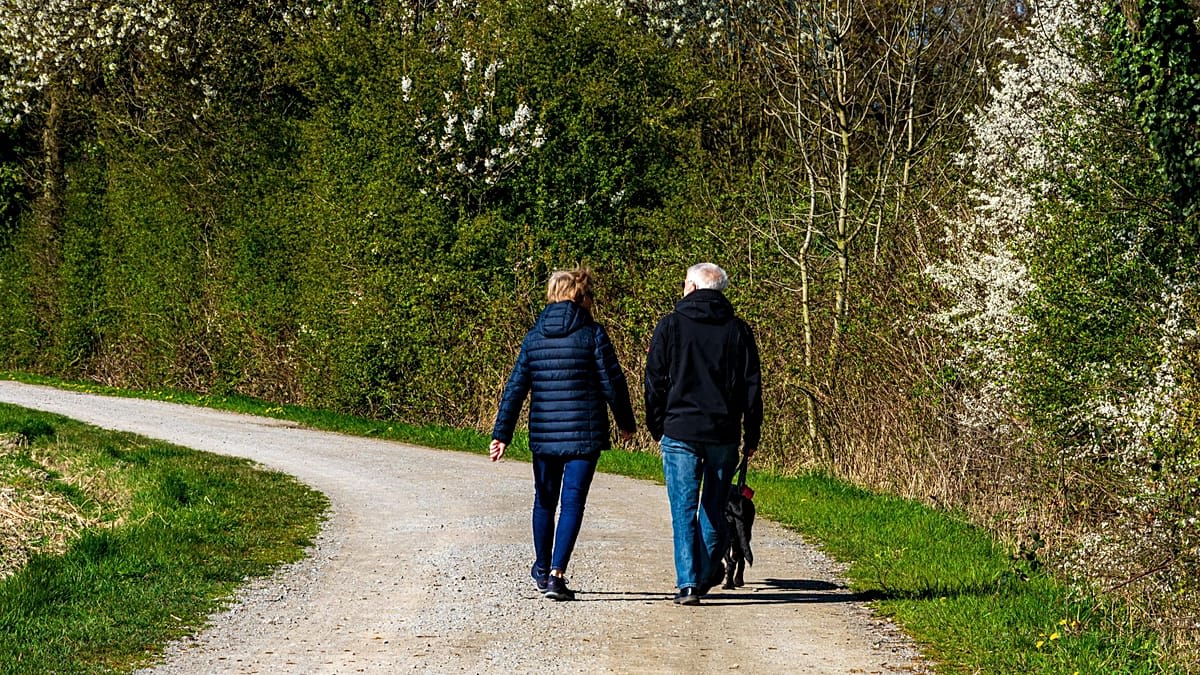
Walking Faster Can Replace More Steps, Study Finds
Great news for busy people: a brisk 30-minute walk may lower your risk of early death just as much as hitting 10,000 steps at a slower pace. New research shows it's about finding the right combination that fits your life.
That 10,000-step daily goal might be more flexible than you think, and science has the receipts to prove it.
A new study published in the British Journal of Sports Medicine analyzed data from over 100,000 middle-aged adults and found something encouraging. People who walked fewer steps at a faster pace had similar reductions in early death risk as those who logged more steps at a slower pace.
Here's the real win: someone walking just 4,000 steps daily at a brisk clip showed health benefits comparable to someone taking 5,000 to 7,500 slower steps. For anyone juggling demanding schedules, managing health conditions, or feeling intimidated by that magic 10,000 number, this research opens new doors.
The 10,000-step target actually came from a 1960s Japanese pedometer marketing campaign, not scientific research. Professor Emmanuel Stamatakis from Monash University led the study to explore whether pace and step count could work together in different combinations.
Researchers tracked participants for eight years, measuring both their daily steps and their fastest sustained pace during their most active 30 minutes. The sweet spot? Taking 7,500 to 10,000 steps daily showed the lowest risk of early death, regardless of pace.
But for people walking less than that, picking up the pace made a real difference. A brisk walk means breathing heavier, feeling warmer, but still being able to speak in short sentences. That's roughly 80 to 100 steps per minute for most adults.
The Bright Side
This research hands us something rare: permission to customize our health goals. A 65-year-old managing a knee injury doesn't need to feel defeated by an arbitrary number. A shift worker with fragmented free time can choose intensity over duration. A parent squeezing in exercise between responsibilities can make those minutes count.
The key is consistency over perfection. What matters isn't a motivated two weeks in January but what you're still doing months and years later. Whether you add more steps at a comfortable pace or fewer steps with more purpose, both paths lead somewhere good.
For those wanting to measure their pace, count steps for 15 seconds and multiply by four. But listening to your body works just as well as chasing numbers.
The most practical takeaway is simple: if time is tight, walking faster gives you more health benefits per minute. If speed isn't safe or comfortable for you, adding more steps at your own pace delivers similar rewards. Either route works, and the right choice is whichever one you'll stick with.
More Images



Based on reporting by Google News - Health
This story was written by BrightWire based on verified news reports.
Spread the positivity!
Share this good news with someone who needs it