Walter Reed Cancer Survivors Celebrate Life and Healing
Walter Reed National Military Medical Center's cancer center brought together survivors like Melinda DeLoatch-Speight to celebrate victories and share hope. The Third Annual Cancer Survivors' Day Summit highlighted how presidential-level care is helping more patients beat cancer than ever before.
When Melinda DeLoatch-Speight heard "Stage 3 ovarian cancer" in September 2021, her doctors at Walter Reed had a powerful message: Stage 3 doesn't mean the end.
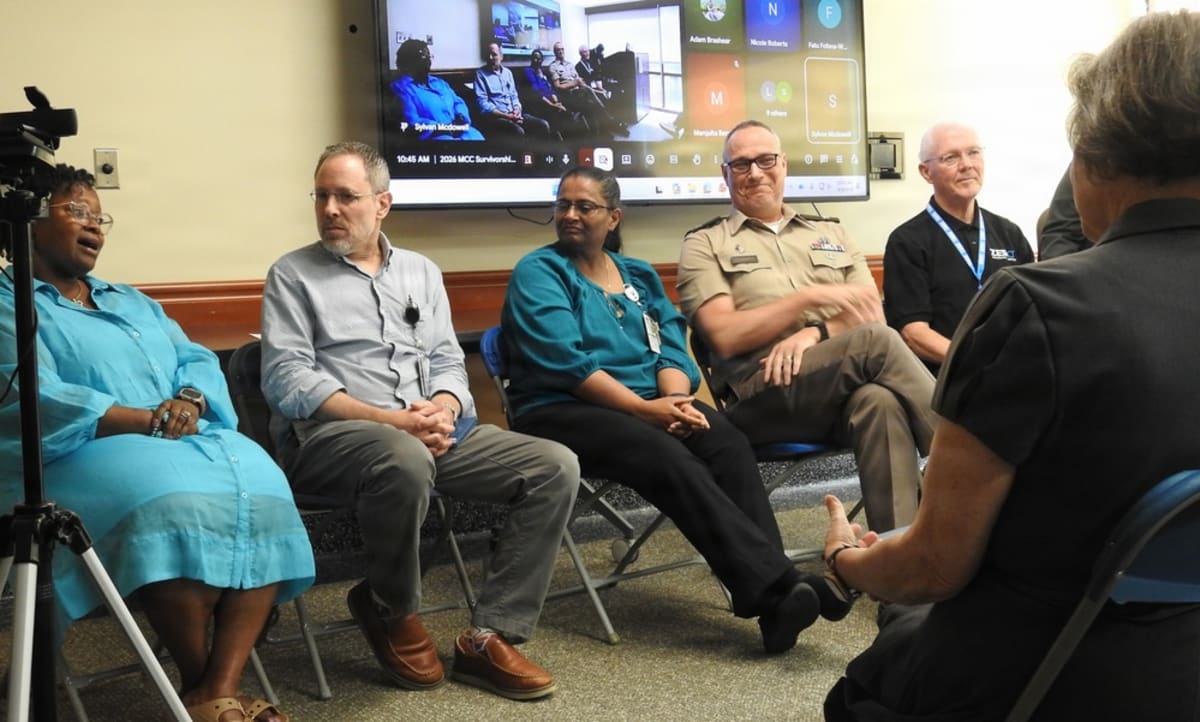
Four years later, DeLoatch-Speight stood before fellow survivors at Walter Reed National Military Medical Center's Third Annual Cancer Survivors' Day Summit, calling her care team "amazing." Her husband served in the U.S. Coast Guard, giving their family access to the John P. Murtha Cancer Center, the Department of Defense's only Cancer Center of Excellence.
The June 9th summit wasn't just a celebration. It was proof that military medicine is winning the cancer fight.
In 2025 alone, Walter Reed diagnosed 807 new cancer patients. But here's the remarkable part: thousands more are now in survivorship care, living full lives after treatment.
Fred Cohrs represents that growing success story. After a high-risk prostate cancer diagnosis, he underwent minimally invasive surgery at Walter Reed's Center on Prostate Disease Research. Today, his PSA levels are completely undetectable, meaning no signs of cancer remain.
"Doctors saved my life, and the support group saved my soul," Cohrs shared. He now leads a prostate cancer support group, helping newly diagnosed patients navigate their journey.
Why This Inspires
Navy Captain Melissa Austin, Walter Reed's director, calls the survivorship program "the jewel in our cancer care crown." It's visible proof that the center's commitment extends far beyond treatment, following patients for life.
The medical center combines cutting-edge research with holistic care. Registered nurse Sarah Bernstein, who coordinated the summit, explained how the team uses the most current research-based treatments alongside comprehensive support for families and caregivers.
Retired Army Colonel Craig Shriver, who directs the cancer center's research program, shared an even bigger dream. "The premier day will come when we can prevent cancer or diagnose it before it occurs," he said.
Researchers at Walter Reed are already working toward that future. Epidemiologist Rebecca Robbins studies how treatment choices and lifestyle changes impact survival. Her team found that even small shifts, like quitting smoking, consistently improve outcomes for survivors.
Meanwhile, epidemiologist Kimberly Robins examines how breast cancer patients use supportive care resources across the Military Health System. Understanding these patterns helps doctors provide better age-specific care that addresses each patient's unique physical and emotional needs.
For DeLoatch-Speight, whose rare cancer type remains somewhat mysterious to medicine, there's hope in every research breakthrough. "I would love for this not to be a mystery anymore," she said.
The summit reminded everyone in the room that cancer survivors aren't just statistics. They're neighbors, volunteers, family members, and friends whose second chances create ripples of hope in their communities.
Based on reporting by Google News - Cancer Survivor
This story was written by BrightWire based on verified news reports.
Spread the positivity!
Share this good news with someone who needs it