Wasp Colonies Survive Leadership Chaos With Hidden Heroes
When queen wasps vanish, their colonies explode into violent power struggles that should spell disaster. But scientists discovered some wasps quietly become heroes, feeding the young and keeping society alive while others battle for the throne.
Losing a queen throws a wasp colony into chaos, but new research reveals an uplifting twist: while some wasps fight for power, others quietly save the day.
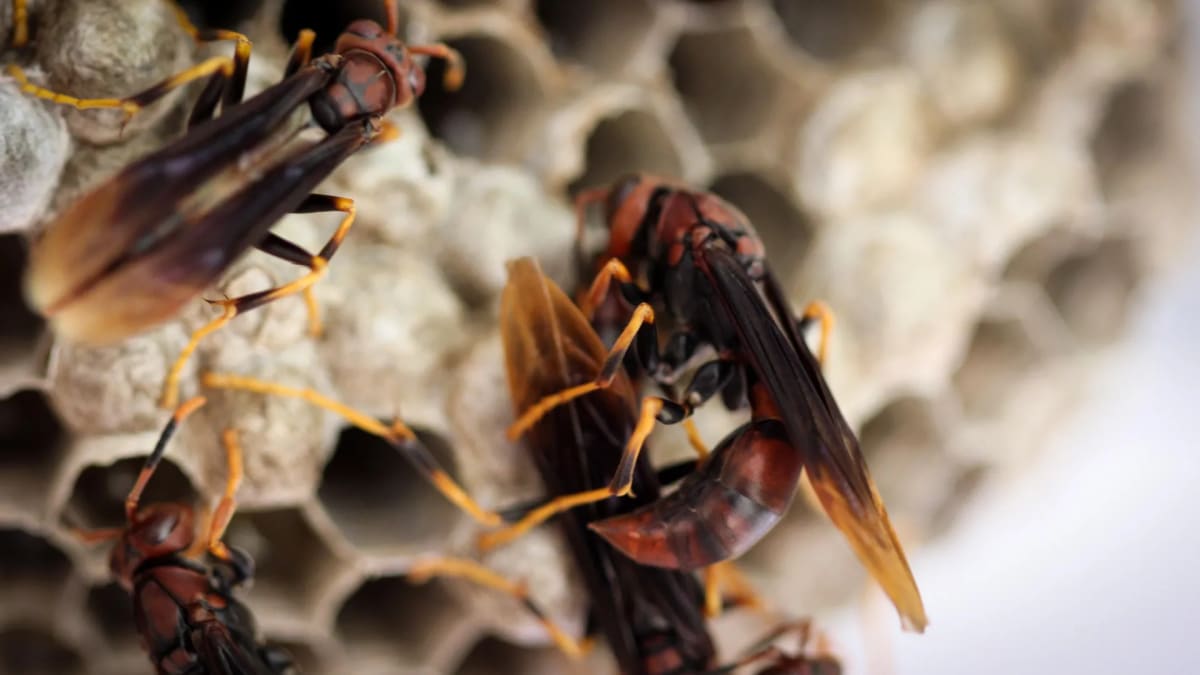
Scientists at University College London studied tropical paper wasps in the Caribbean and discovered something remarkable about how insect societies survive crisis. When they removed queens from colonies, the results were immediate and violent.
Female wasps began battling aggressively for dominance, shattering the colony's normal social order. These weren't polite succession plans but full blown civil wars involving multiple competitors.
Here's where the story gets inspiring. Despite the turmoil, the colonies didn't collapse.
Researchers found that a separate group of wasps completely avoided the fighting and focused on what really mattered: feeding the larvae and maintaining daily colony operations. The scientists named them "compensators" because they offset the damage from the leadership battles.
These hero wasps gathered food, cared for developing young, and kept essential tasks running while chaos erupted around them. Their quiet dedication meant the colony could survive even during its worst crisis.
The most surprising part? Scientists found no biological differences between the fighters and the helpers.
That suggests these wasps are making strategic choices rather than following fixed roles. Some bet on fighting for power to secure their reproductive future, while others choose cooperation to protect their siblings in the brood.
Why This Inspires
This research challenges how we think about societies in crisis. We often assume order and clear rules are the only way communities survive leadership changes.
But these wasps prove that even chaotic, aggressive transitions can work when some individuals prioritize the collective good. While attention focuses on the dramatic power struggles, the real heroes work quietly in the background.
Dr. Owen Corbett, the study's lead author, put it perfectly: "Cooperation didn't disappear; it was redistributed." Even in their darkest moments, these colonies survived because some wasps chose service over ambition.
The findings expand our understanding of cooperation in animal societies, especially tropical species with less rigid social structures than their European cousins. Most past research focused on orderly hierarchies with predictable succession.
Professor Seirian Sumner, senior author of the study, noted that understanding animal conflict management helps us think differently about cooperation broadly. In times of turmoil, every society depends on those doing essential work in the background.
The research suggests that maybe survival isn't about avoiding conflict but about having enough individuals who keep doing what matters most when everything falls apart.
Based on reporting by Science Daily
This story was written by BrightWire based on verified news reports.
Spread the positivity!
Share this good news with someone who needs it