Webb and Chandra Reveal Pink Star Nursery 20,000 Light-Years Away
Two of NASA's most powerful telescopes just revealed a stunning view of newborn stars wrapped in glowing pink halos. The images show cosmic forces at work creating the next generation of stars in our galaxy.
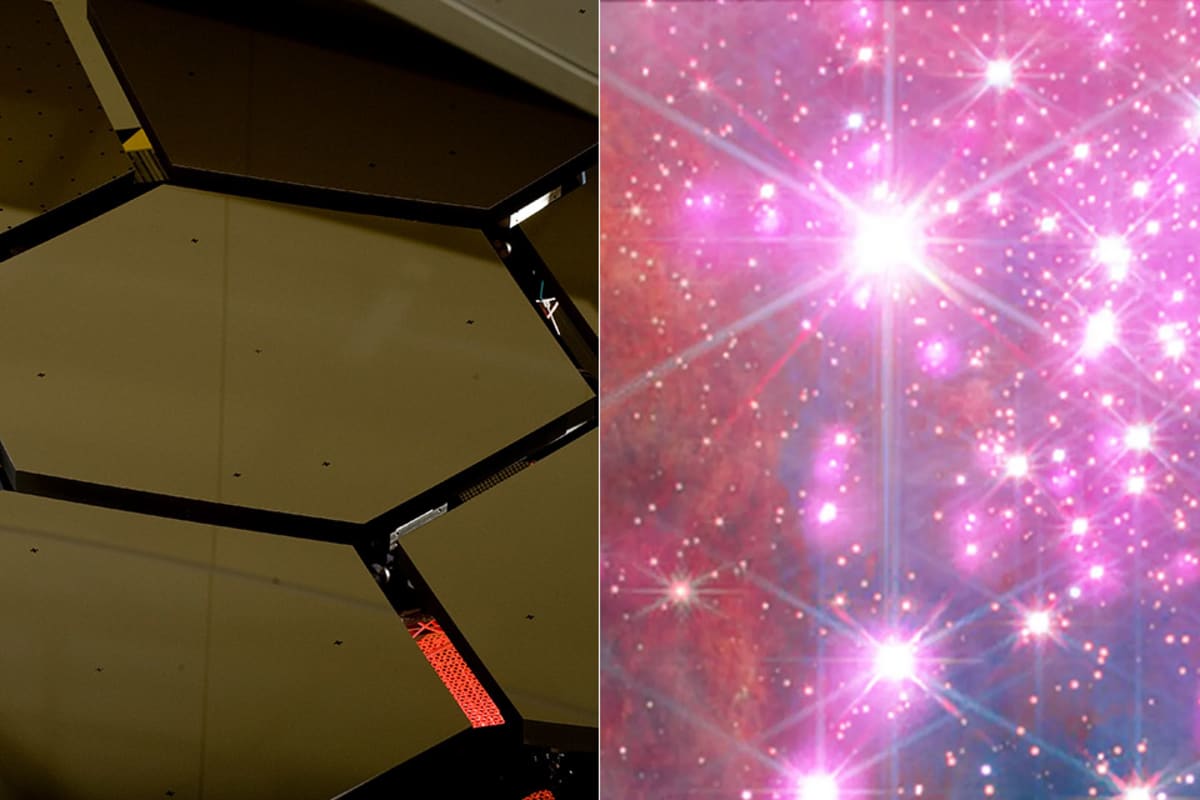
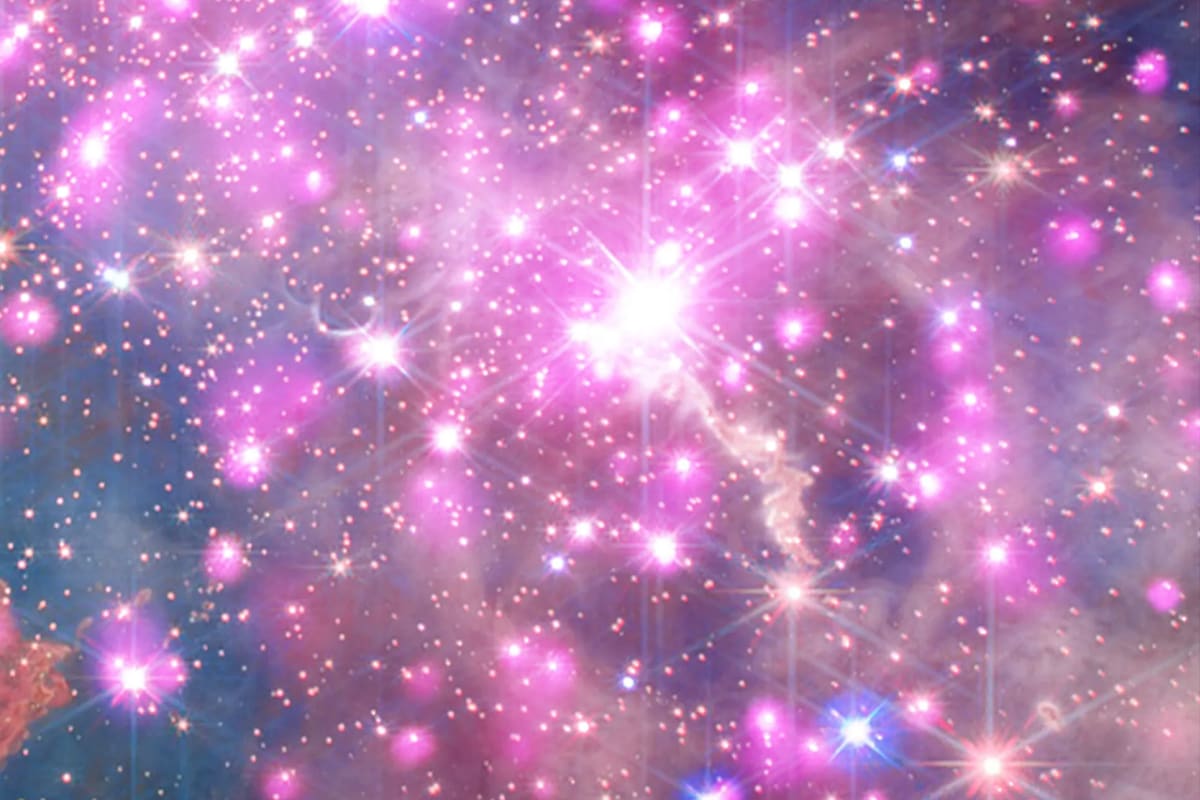
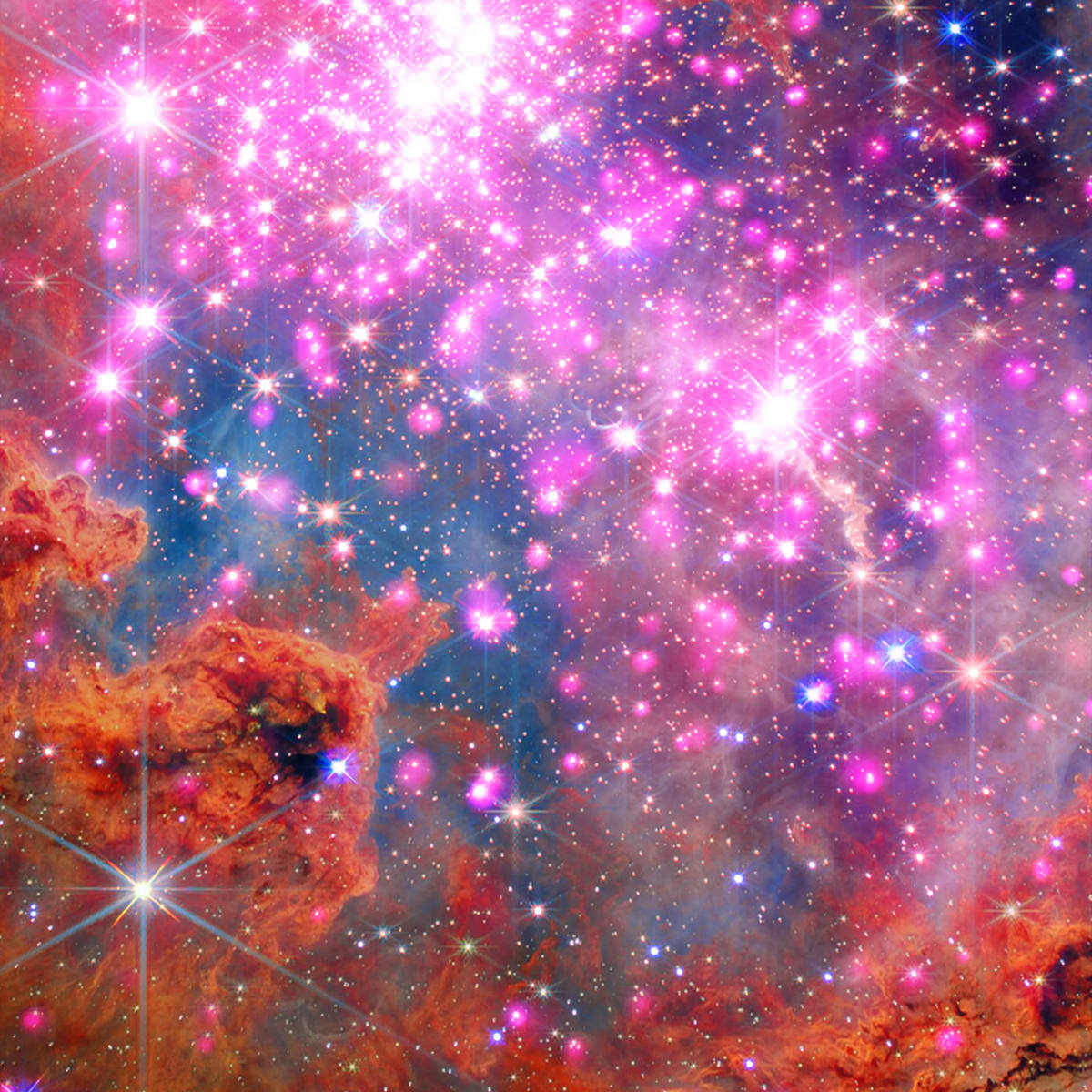
Astronomers just released a breathtaking new view of Westerlund 2, a stellar nursery where dozens of baby stars are being born 20,000 light-years from Earth. By combining data from the James Webb Space Telescope and the Chandra X-ray Observatory, scientists created an image that looks like a cosmic celebration, with brilliant points of light ringed in neon pink against waves of orange dust.
The pink glow isn't just beautiful. It's actually showing us something incredible happening in real time.
Chandra captures X-rays from the hottest, most massive stars in the cluster, revealing material heated to millions of degrees by powerful stellar winds. These winds act like cosmic shockwaves, slamming into surrounding gas and creating pockets of superheated energy that shine in X-rays.
Meanwhile, Webb's infrared vision sees through the thick dust clouds that would normally block our view. The telescope reveals cooler layers of gas and dust where new stars are still forming, painted in warm orange and red tones that represent different temperatures and compositions.
Westerlund 2 sits in the Carina constellation and ranks as one of the closest examples of an ultra-young star cluster packed with some of the galaxy's brightest stars. Most of these stars formed just one to three million years ago, which makes them cosmic newborns by astronomical standards.
Why This Inspires
This composite image shows how different ways of seeing the universe can work together to reveal hidden stories. Webb sees the nursery where stars grow up protected by dust, while Chandra captures the powerful forces of the mature stars already reshaping their neighborhood.
At the heart of the cluster, massive O-type stars pump out intense ultraviolet radiation and high-speed winds. A few Wolf-Rayet stars, which have shed their outer layers, blast even stronger winds into space.
All this activity takes place inside RCW 49, a giant bubble of ionized hydrogen gas lit up by UV radiation from the stars within. Scientists can now study how these different stellar populations interact and influence future star formation.
The collaboration between these two powerful telescopes gives astronomers tools to understand not just what stars look like, but how they're born, how they change their environments, and how they create the conditions for the next generation of stars to form.
More Images

Based on reporting by Google: James Webb telescope
This story was written by BrightWire based on verified news reports.
Spread the positivity!
Share this good news with someone who needs it