Webb Telescope Captures Dying Star's Brain-Shaped Nebula
NASA's James Webb Space Telescope just revealed stunning new images of a cosmic cloud nicknamed the "Exposed Cranium" that looks remarkably like a brain scan. The dying star's colorful finale, captured 5,000 light-years away, is helping scientists understand how stars seed the universe with materials for future worlds.
A dying star is putting on a spectacular cosmic light show, and NASA's most powerful telescope just captured it in breathtaking detail.
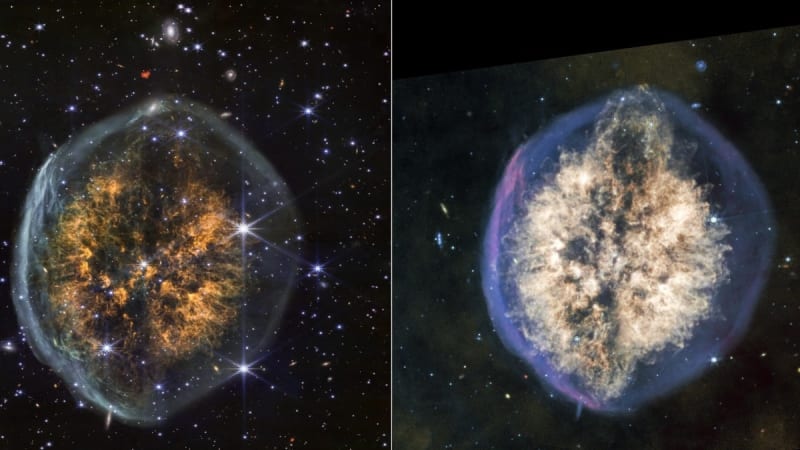
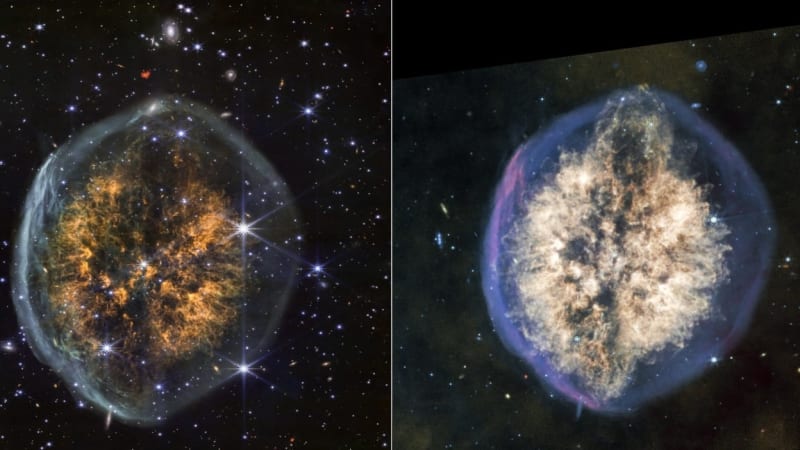
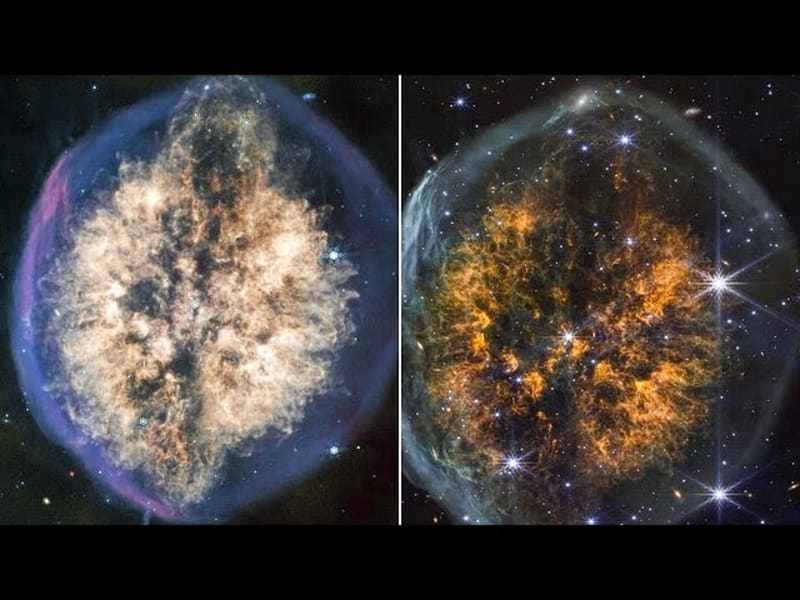
The James Webb Space Telescope photographed PMR 1, a planetary nebula in the Vela constellation about 5,000 light-years from Earth. Scientists nicknamed it the "Exposed Cranium" because the cloud of gas and dust looks exactly like a brain scan, complete with two glowing hemispheres split down the middle.
Webb's infrared cameras can see through thick cosmic dust, revealing details that earlier telescopes missed. The new images show multiple layers of material the star shed during different outbursts, like rings frozen in time.
This isn't just about getting pretty space pictures. Scientists are watching a critical moment in stellar evolution, and the view could help them predict what happens next.
The star creating this nebula might eventually explode as a supernova, or it might quietly shrink into a white dwarf about the size of Earth. The answer depends on the star's mass, which researchers are still trying to determine.
Why This Inspires
Stars don't just die. They transform, releasing their materials back into space like cosmic gardeners planting seeds for the future.
The glowing shells Webb captured contain hydrogen and other elements that will eventually form new stars and planets. Every atom in our bodies came from stars like this one, making their final acts deeply personal.
Webb's mid-infrared view reveals dust glowing with heat, while the near-infrared view lets background stars and distant galaxies shine through the cloud. The telescope even spotted possible jets shooting from the central star, suggesting it's ejecting material in opposite directions.
A faint outer bubble marks an earlier period when the star shed material. Closer to the center, a more complex mix of gases forms the brain-like shape that caught astronomers' attention.
The dark lane running through the middle reinforces the nebula's brainy appearance while showing how the star's outbursts shaped the cloud's symmetry. These patterns help scientists figure out how fast the star is losing mass and which phase of decline they're witnessing.
As the star nears its end, it puffed out into a red giant up to 1,000 times its original size, engulfing the space around it. Now it's releasing its outer layers in bursts, creating expanding shells that will eventually scatter through space.
This freeze-frame moment captures how dying stars contribute to the universe's ongoing story of creation.
More Images

Based on reporting by Google: James Webb telescope
This story was written by BrightWire based on verified news reports.
Spread the positivity!
Share this good news with someone who needs it