
Webb Telescope Captures Galaxies 8 Billion Years Old
The James Webb Space Telescope just revealed hundreds of never-before-seen galaxies from 8 billion years ago, using cosmic gravity as a natural magnifying glass. This stunning image shows the same distant galaxies multiplied like reflections in a hall of mirrors.
Scientists just unveiled a cosmic time capsule showing what the universe looked like when it was less than half its current age.
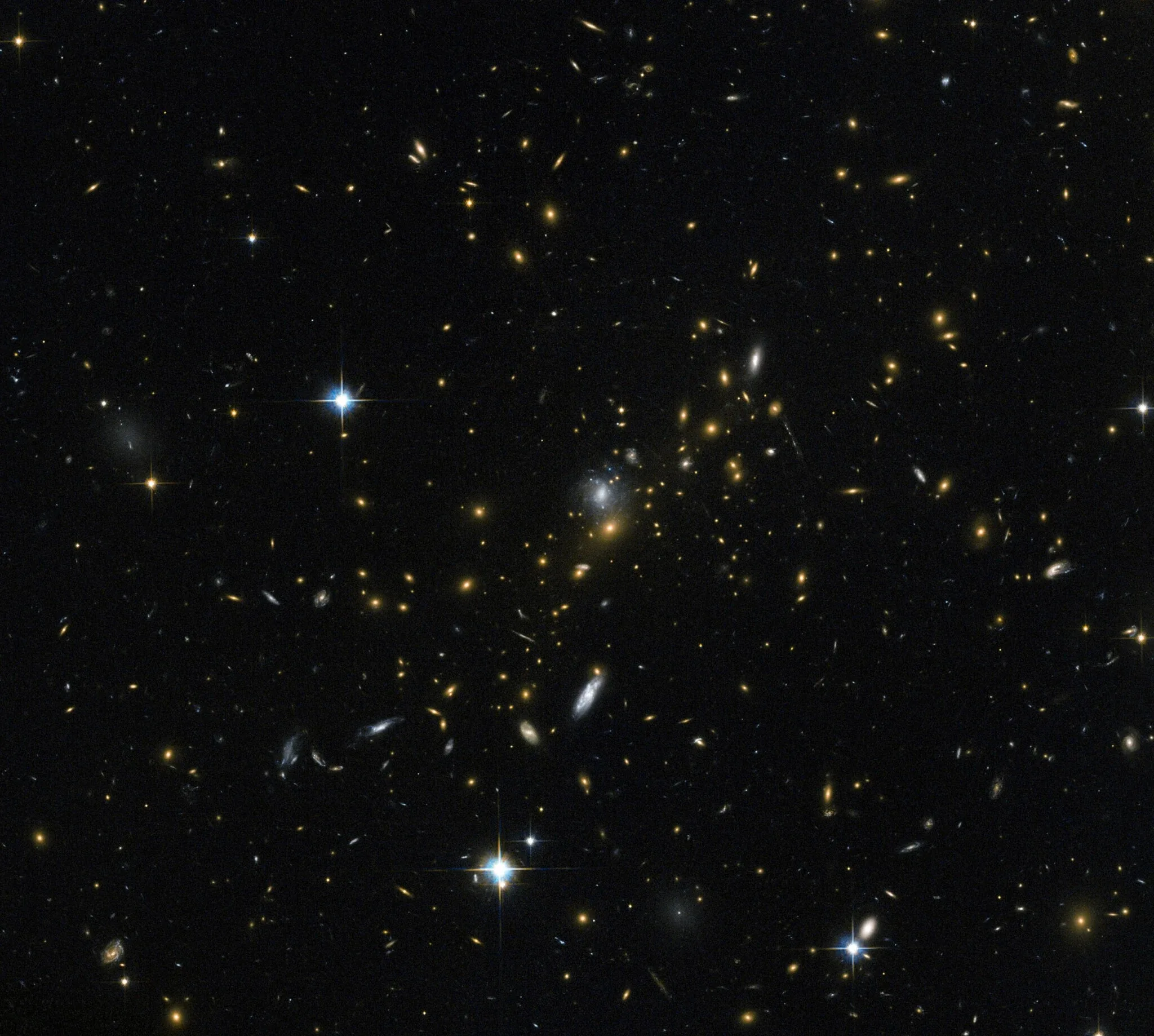
The James Webb Space Telescope captured a breathtaking image of galaxy cluster MACS J0454.1-0300, located five billion light years from Earth. Behind it, even more distant orange galaxies glow from eight billion years in the past.
The magic happens through gravitational lensing, where massive objects bend light around them like a cosmic magnifying glass. Einstein predicted this phenomenon a century ago, and Webb is now using it to peer deeper into space than ever before.
What makes this image extraordinary is a rare double feature. The same distant galaxies appear multiple times, warped and stretched by gravity's pull. This mirror effect only happens in 10 to 20 percent of galaxy clusters when everything lines up perfectly.
Webb captured two of these rare configurations in a single frame, something never observed before in one cluster. Each duplicated image reveals details about galaxies too faint and far away to see otherwise.
Why This Inspires
When the Hubble Space Telescope photographed this same patch of sky in 2014, it saw a fraction of what Webb reveals today. Hundreds of galaxies invisible to Hubble now shine clearly in Webb's view, proof that our tools for exploring the universe keep getting better.
These galaxies always existed in that corner of space. They were just waiting for technology sensitive enough to detect their ancient light, which has been traveling toward Earth for billions of years.
Webb's 6.5-meter mirror captures infrared light that human eyes cannot see, revealing a universe far richer and more complex than earlier telescopes could show. Every new image rewrites what scientists thought they knew about how galaxies formed and evolved.
The telescope continues delivering monthly pictures that expand our understanding of the cosmos. Each discovery reminds us that the universe holds more wonders than we imagined, and we're only beginning to glimpse them.
Seeing eight billion years into the past isn't just impressive science; it's a window into our own cosmic origins.
More Images



Based on reporting by Innovation Desk
This story was written by BrightWire based on verified news reports.
Building Something New? Try the BrightWire Tech Stack Advisor
Compare modern frameworks, cloud hosting, and AI tools tailored to your project budget and scale.
Spread the positivity!
Share this good news with someone who needs it


