Webb Telescope Captures Planets Being Born 450 Light-Years Away
NASA's James Webb Space Telescope just gave us a front-row seat to planet formation, capturing stunning images of two young stars surrounded by the cosmic dust and gas that will become new worlds. These images reveal exactly how planets grow from tiny particles into massive spheres orbiting distant suns.
Scientists just released breathtaking images showing the birth of planets around two young stars, giving us the clearest view yet of how worlds like Earth come to be.
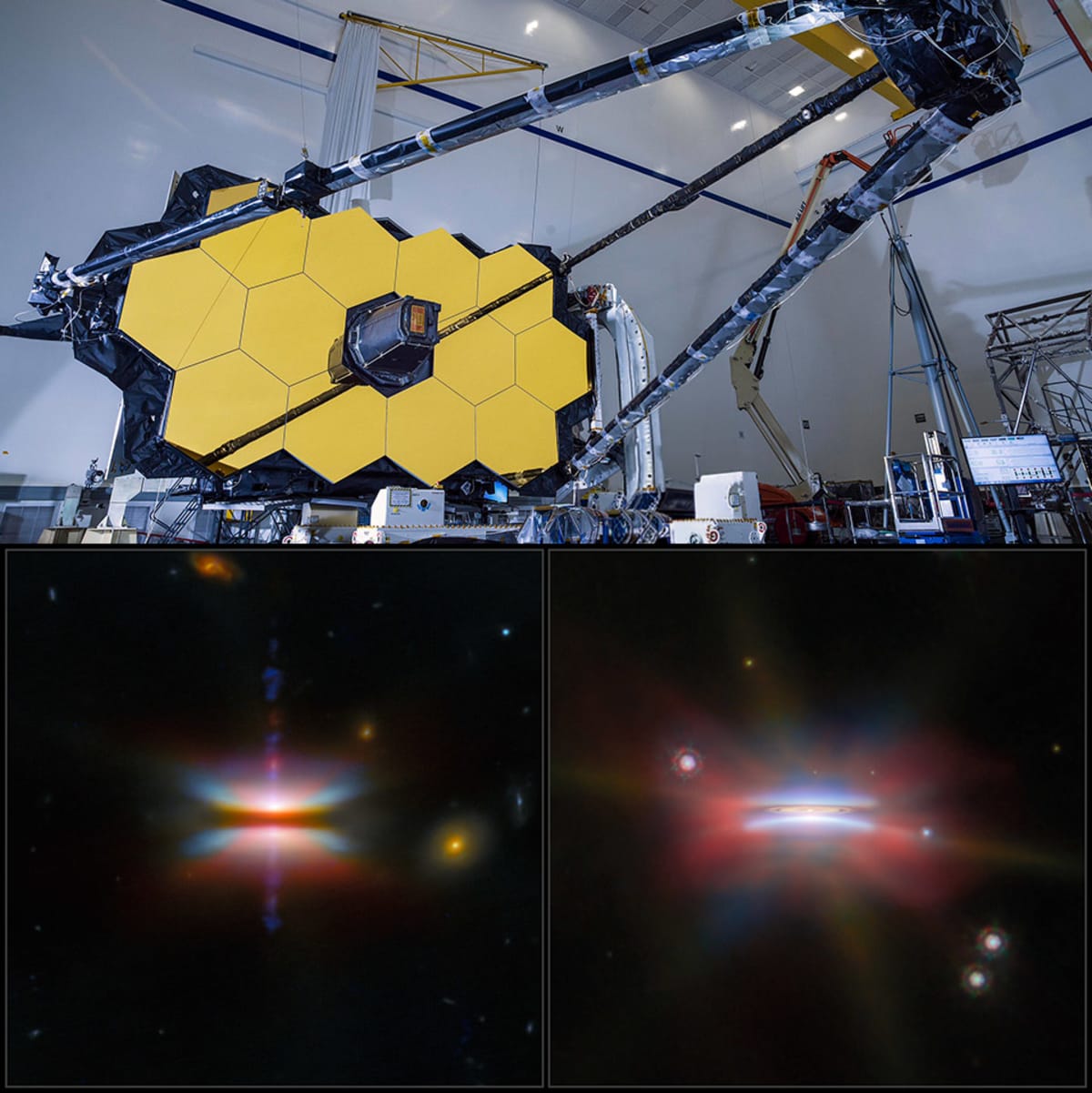
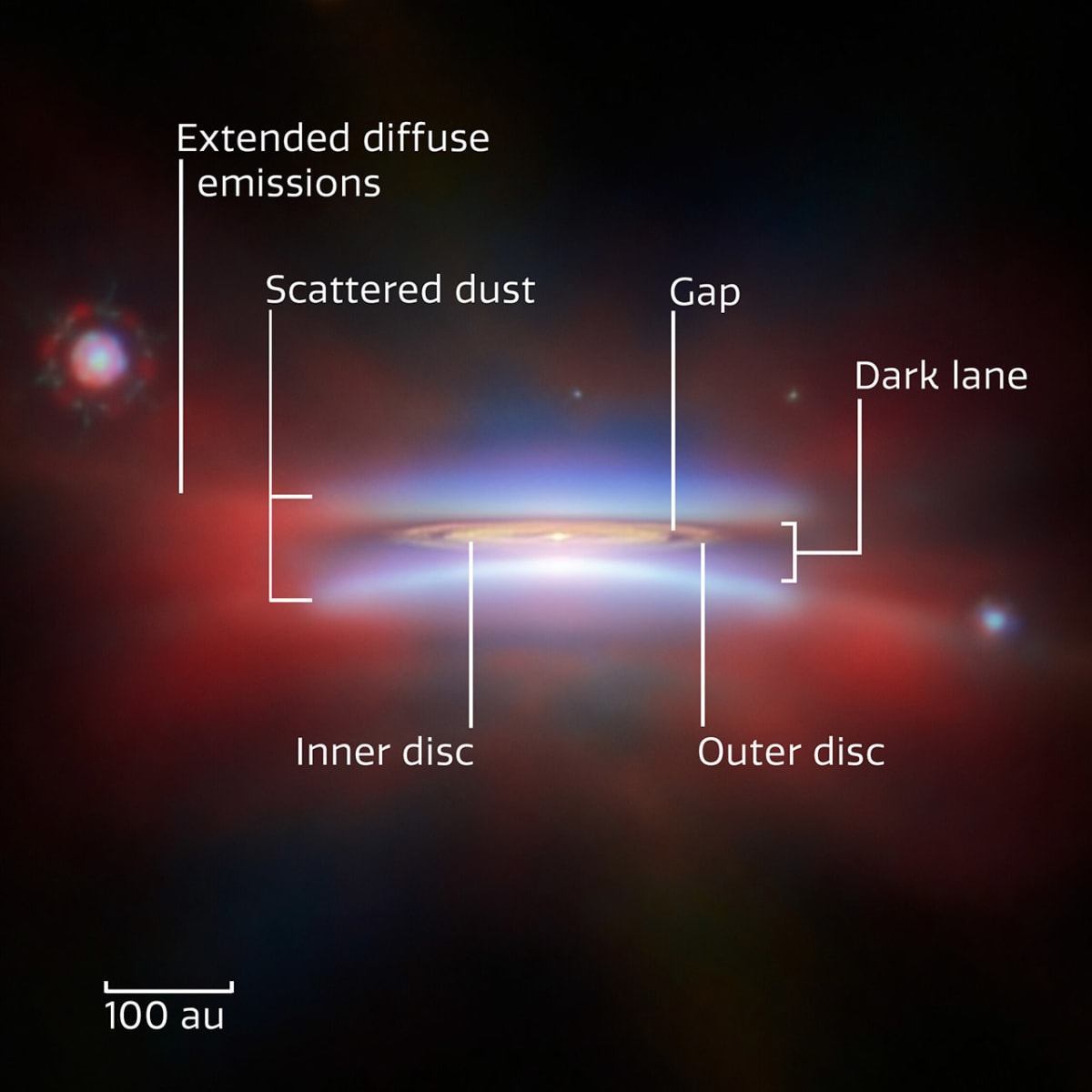
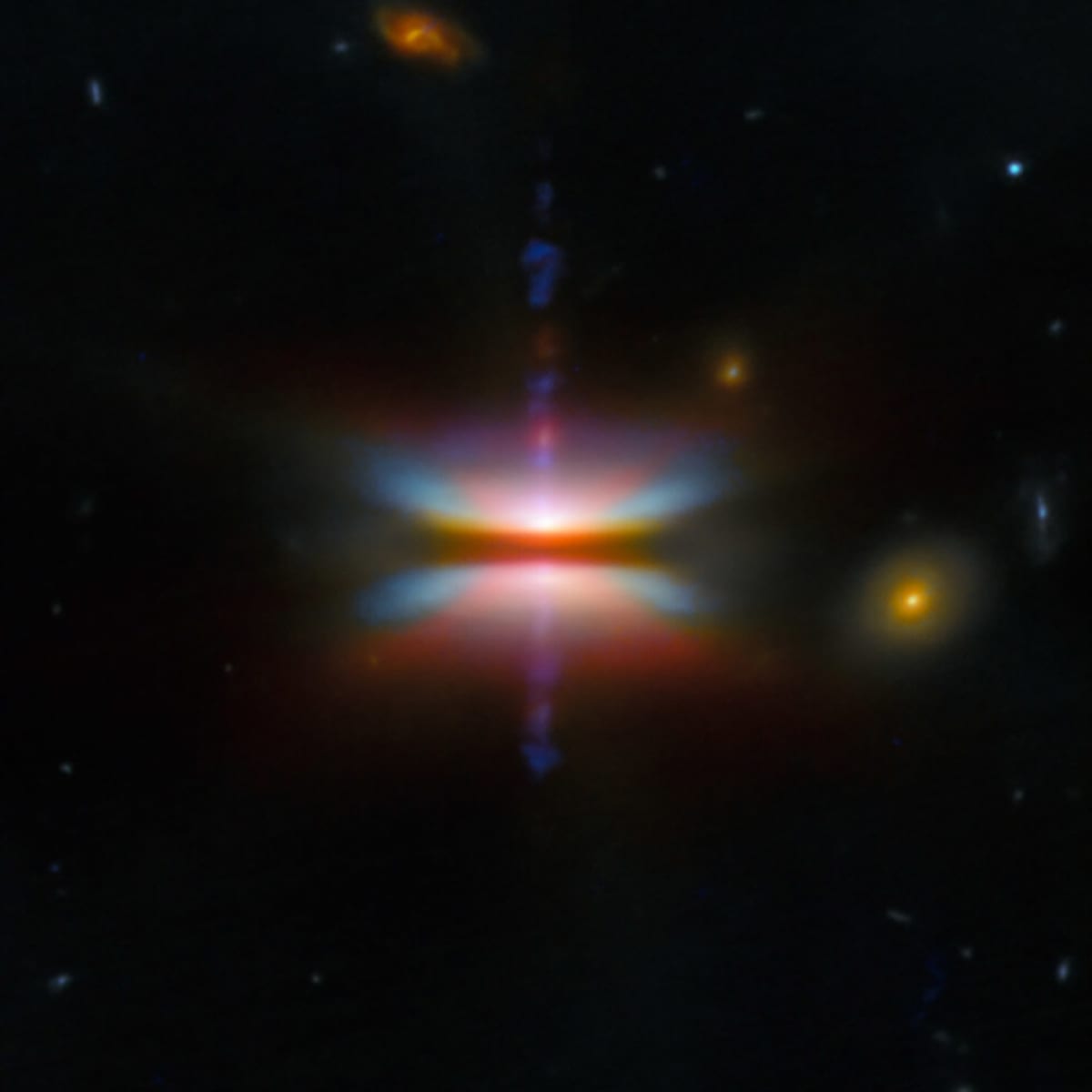
NASA's James Webb Space Telescope photographed two stellar nurseries located about 450 light-years from Earth. The first star, Tau 042021 in the Taurus constellation, sits at the center of a massive disk of swirling material. A dark band cuts across the middle where dust blocks the star's light, while bright cones of material shoot above and below.
The second star, Oph 163131 near Ophiuchus, appears nestled inside a yellowish disk scattered with dust patches. What makes this image particularly exciting is a noticeable gap in the larger particles surrounding the star, suggesting a young planet is already forming and clearing its orbital path.
These disks contain everything needed to build planets: hydrogen, carbon monoxide, and dust particles ranging from microscopic specks to chunks nearly a millimeter across. Those millimeter-sized grains are the most important because they represent the first steps toward becoming asteroids, moons, and planets.
The research team combined data from three powerful instruments to create this complete picture. Webb's infrared cameras detected heat from different-sized dust grains, Hubble captured how light bounces off the finest particles, and ALMA radio telescopes mapped where larger materials cluster together.
Viewing these disks edge-on gives scientists a unique advantage. They can see thin layers of dust blown upward from the main disk, glowing brightly as they reflect starlight at different heights. This reveals exactly where different materials exist in the disk.
The Bright Side: Understanding how dust distributes throughout these stellar nurseries helps scientists predict what kinds of planets will form in different regions. Rocky planets like Earth typically form closer to the star where temperatures vaporize lighter materials, while gas giants develop farther out where it's cool enough for ice and gas to accumulate.
Over millions of years, these swirling disks will transform completely. Pebbles will clump into boulders, boulders into asteroids, and asteroids into planets. Eventually, the star's radiation will blow away most remaining gas, leaving behind a stable solar system with planets orbiting peacefully.
We're watching the universe build new worlds right before our eyes.
More Images

Based on reporting by Google: James Webb telescope
This story was written by BrightWire based on verified news reports.
Spread the positivity!
Share this good news with someone who needs it