
Webb Telescope Captures Sharpest Black Hole View Ever
The James Webb Space Telescope has delivered the clearest image ever of a supermassive black hole's dusty feeding disk, solving a decades-old mystery about where the intense glow around these cosmic giants actually comes from. The breakthrough reveals how black holes grow and shape entire galaxies.
Scientists just got their sharpest look yet at a black hole eating dinner, and it's rewriting what we thought we knew about these cosmic powerhouses.
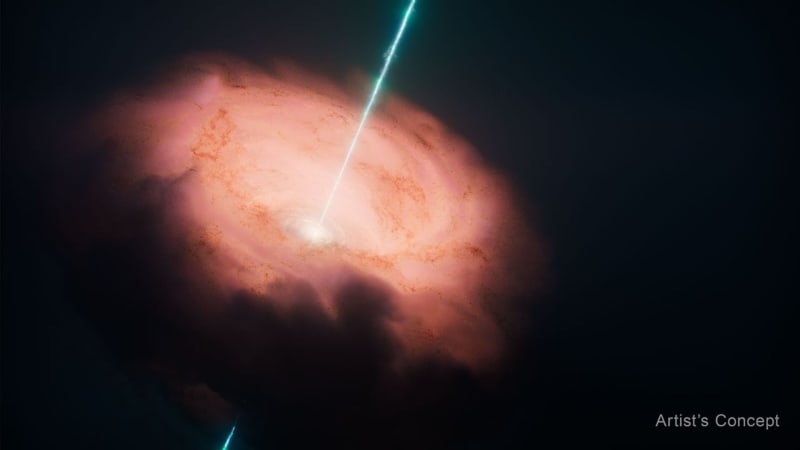
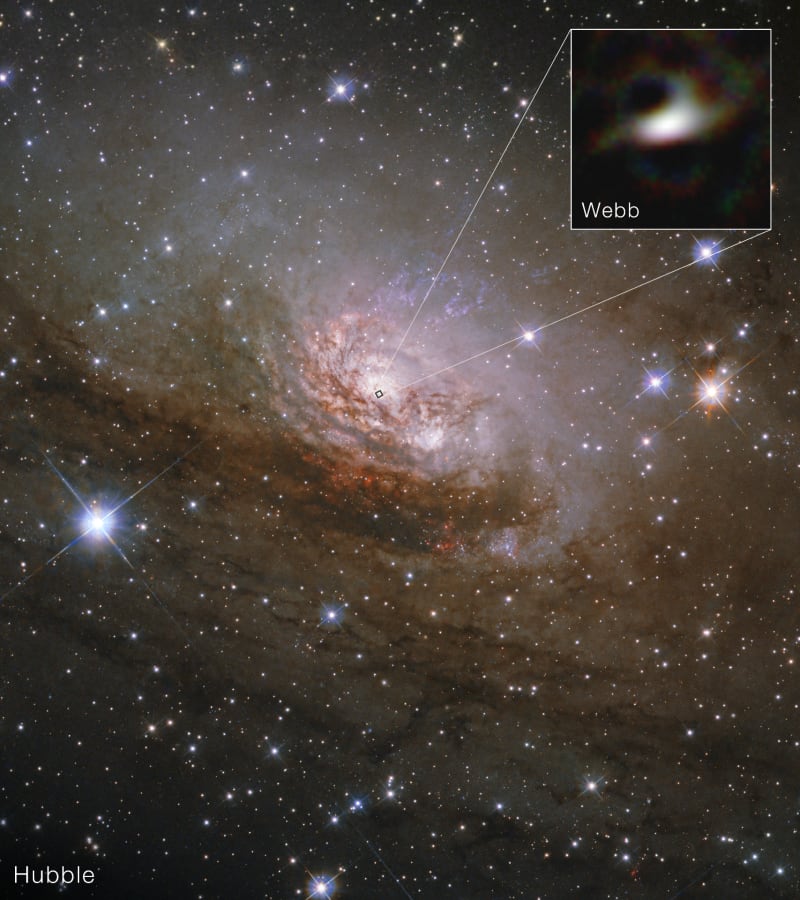
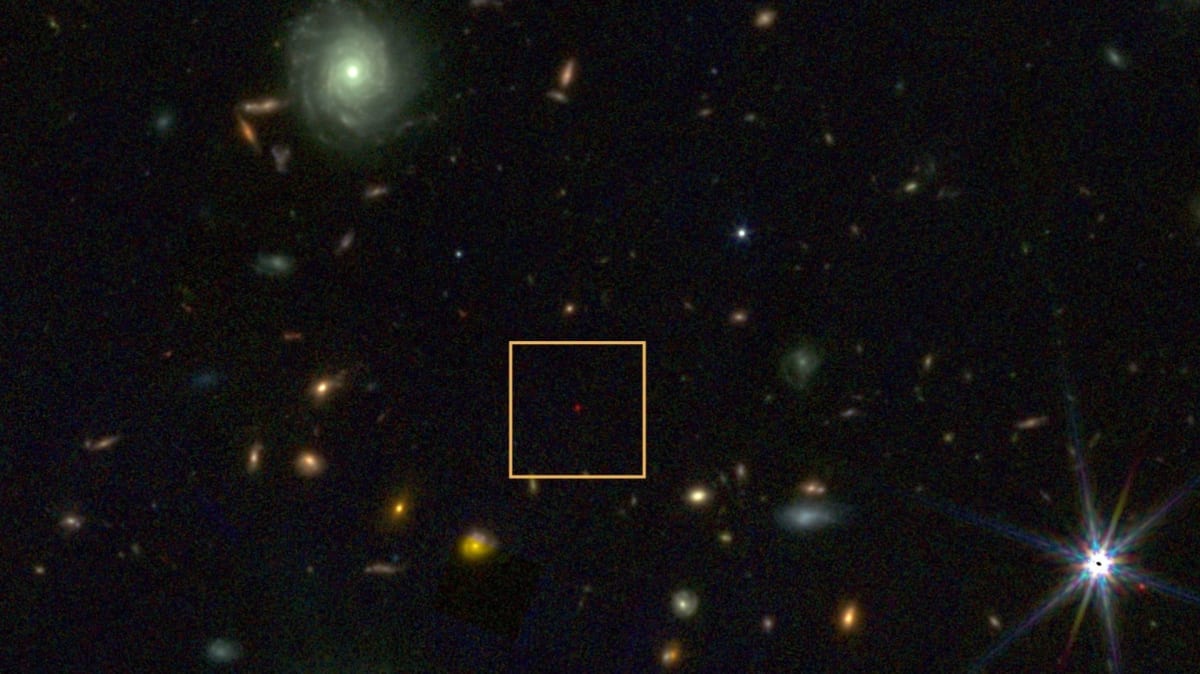
The James Webb Space Telescope captured unprecedented images of a supermassive black hole 14 million light years away in the Circinus galaxy. The snapshots reveal something surprising: the intense glow around active black holes comes from dense disks of gas and dust feeding the black hole, not from powerful outflows as scientists assumed for decades.
Enrique Lopez-Rodriguez of the University of South Carolina led the team using a clever technique that made Webb's vision twice as sharp. By gathering light through seven small hexagonal openings, they created patterns that isolated the hot dust and revealed hidden structures normally too blurred to see clearly.
"It's like we are observing this region with a 13-meter space telescope" instead of Webb's actual 6.5-meter diameter, explained study co-author Joel Sanchez-Bermudez. The result? A crystal-clear view of a glowing, donut-shaped disk surrounding the black hole.
The data revealed something fascinating: 87 percent of the infrared glow comes from the flattened disk closest to the black hole, the main reservoir funneling material inward. Less than 1 percent comes from outflows where dust gets blasted away by the black hole's activity.
Why This Inspires
This discovery matters far beyond pretty pictures. Understanding how black holes feed helps scientists grasp how entire galaxies evolve over billions of years.
When black holes consume matter, they release enormous energy that can trigger or suppress star formation across their host galaxies. By clearly separating what's falling in from what's getting pushed out, Webb's observations provide crucial clues about how supermassive black holes grow and shape the cosmic structures around them.
The team observed Circinus twice, in July 2024 and March 2025, marking the first time Webb's high-contrast mode studied a galaxy beyond our own. They're eager to apply this validated technique to a dozen or more nearby black holes to understand the relationship between accretion disks, outflows, and black hole power.
Earlier telescopes simply lacked the resolution needed to distinguish the accretion disk, the dusty torus, and outflows from each other, blending everything into a single fuzzy glow. Webb changed that, giving astronomers the tools to study these cosmic engines with unprecedented clarity.
The findings, published in Nature Communications, open a new window into one of the universe's most extreme environments. Every time we sharpen our view of the cosmos, we discover nature is even more intricate and amazing than we imagined.
More Images
Based on reporting by Google News - Science
This story was written by BrightWire based on verified news reports.
Spread the positivity!
Share this good news with someone who needs it
%2Fhttps%3A%2F%2Ftf-cmsv2-smithsonianmag-media.s3.amazonaws.com%2Ffiler_public%2F3f%2F55%2F3f5579c8-c4a7-43a5-bb54-6498478792fd%2Fhelix1940__fitmaxwzk3mcw2ntbd.jpg)