Webb Telescope Finds Building Blocks of Life in Distant Galaxy
The James Webb Space Telescope discovered an unexpected treasure trove of organic molecules in a distant galaxy's dust-shrouded core, including some that could lead to the formation of life's essential ingredients. Scientists found benzene, methane, and even a carbon molecule never before seen outside our Milky Way.
Scientists just discovered something remarkable hiding in plain sight: a distant galaxy packed with the organic molecules that could someday lead to life.
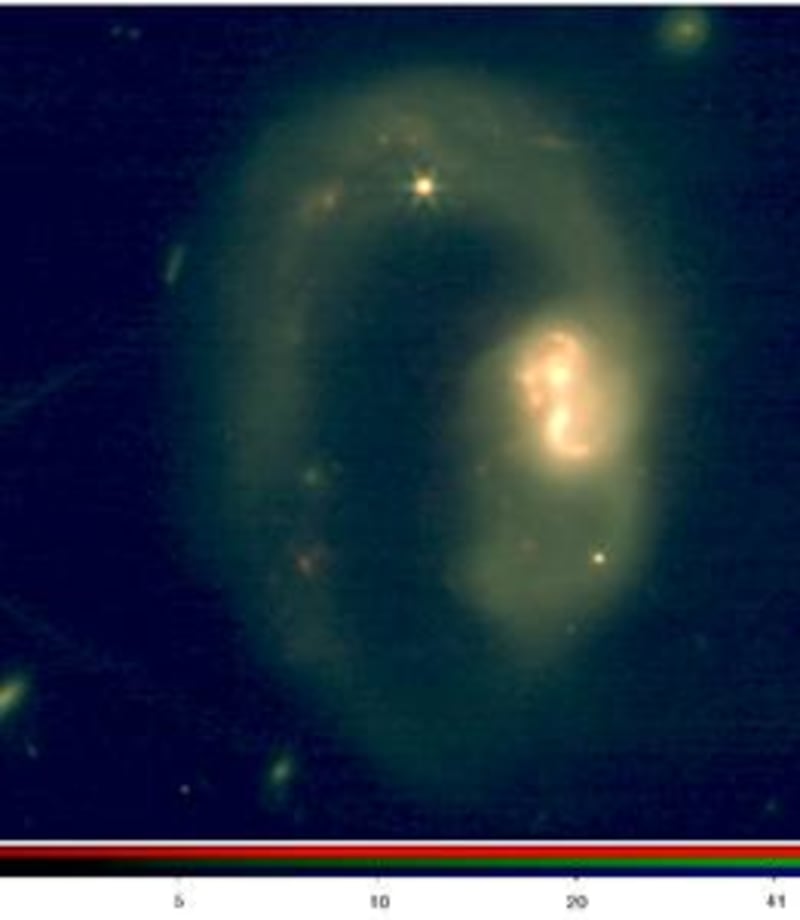
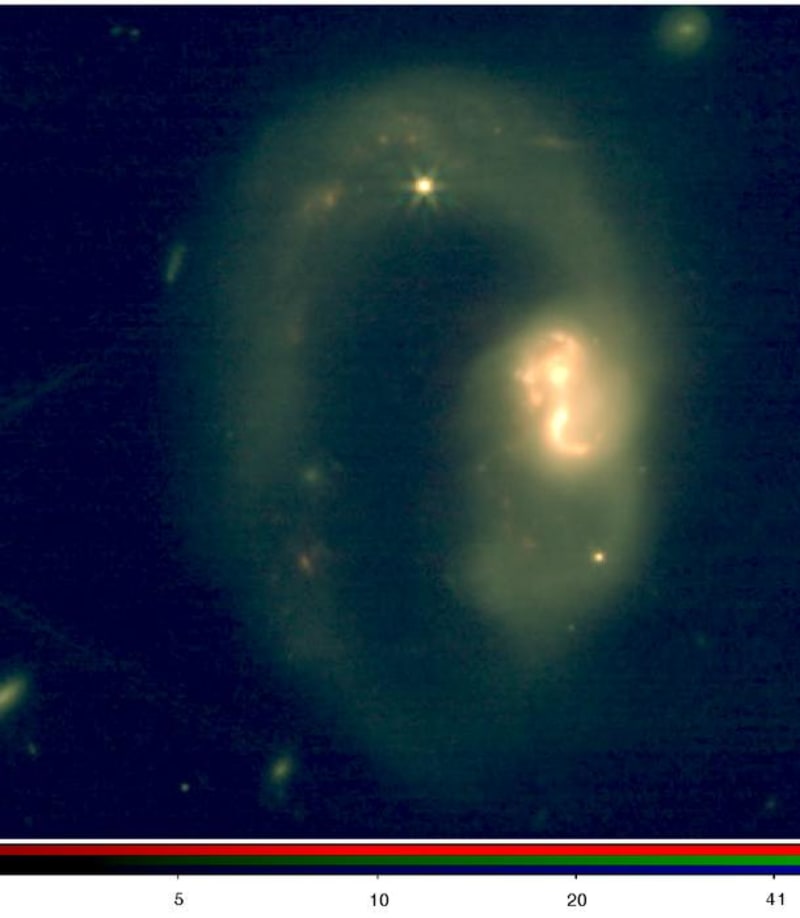
Using the James Webb Space Telescope, researchers peered through thick clouds of dust to study IRAS 07251-0248, a galaxy about 600 million light-years away. What they found stunned them: an incredibly rich collection of small organic molecules floating around the galaxy's core, far more than any models predicted.
The team detected benzene, methane, acetylene, and several other carbon-based molecules. They even spotted the methyl radical, a crucial carbon compound, for the first time ever outside our own galaxy.
"We found an unexpected chemical complexity, with abundances far higher than predicted by current theoretical models," says Dr. Ismael García Bernete from Spain's Center for Astrobiology, who led the study published in Nature Astronomy.
The discovery gets even more exciting when you consider what these molecules represent. While they're not found in living cells themselves, they could be vital stepping stones in prebiotic chemistry, the chemical reactions that happen before life begins. They might eventually combine to form amino acids and nucleotides, the building blocks of proteins and DNA.
The galaxy's core acts like a cosmic chemistry lab. Powerful cosmic rays slam into complex carbon molecules and dust grains, breaking them apart and releasing smaller organic molecules into space. This constant recycling creates what researchers call a "continuous source of carbon" feeding an intricate chemical network.
Why This Inspires
This discovery changes how we think about where life's ingredients come from. These deeply obscured galactic cores might be factories churning out organic molecules across the universe, playing a crucial role in how galaxies chemically evolve over billions of years.
The James Webb Space Telescope made this possible by observing in infrared wavelengths that can penetrate dust clouds blocking visible light. The team combined data from two instruments spanning wavelengths from 3 to 28 microns, revealing chemical signatures that have remained hidden until now.
Professor Dimitra Rigopoulou from Oxford University, who co-authored the study, notes the broader significance: these organic molecules "could play a vital role in prebiotic chemistry representing an important step towards the formation of amino acids and nucleotides."
The findings open new doors for studying how organic molecules form and survive in some of the universe's most extreme environments. Every discovery like this brings us closer to understanding how common the ingredients for life might be throughout the cosmos.
More Images
Based on reporting by Google: James Webb telescope
This story was written by BrightWire based on verified news reports.
Spread the positivity!
Share this good news with someone who needs it