Webb Telescope Finds Galaxy Cluster That Shouldn't Exist
The James Webb Space Telescope discovered a massive galaxy cluster forming just one billion years after the Big Bang, two billion years earlier than scientists thought possible. The finding is forcing astronomers to completely rethink how the universe's largest structures formed.
📺 Watch the full story above
Scientists just found something in deep space that breaks all the rules about how fast the universe grew up.
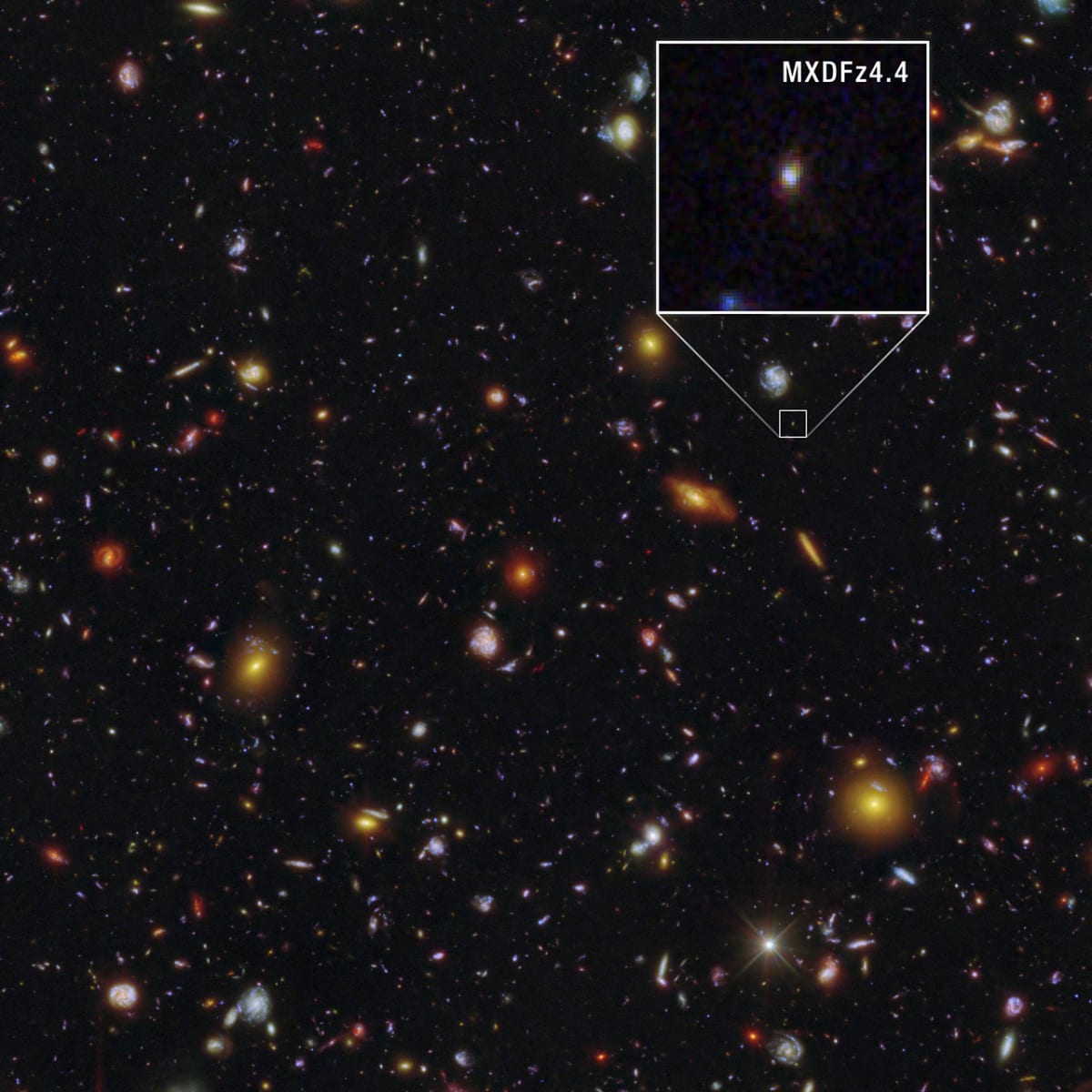
The James Webb Space Telescope and NASA's Chandra X-ray Observatory captured images of a massive galaxy cluster called JADES-ID1, located 12.7 billion light years from Earth. That means the light in these images has been traveling through space for 12.7 billion years, nearly three times longer than Earth has even existed.
Here's what makes this discovery so remarkable: this galaxy cluster formed just one billion years after the Big Bang. Scientists didn't think that was physically possible.
"We thought we'd find a protocluster like this two or three billion years after the big bang, not just one billion," explains researcher Qiong Li from the University of Manchester. The previous record holder for this type of structure formed three billion years after the Big Bang, making JADES-ID1 two billion years earlier than anything astronomers had seen before.
The cluster weighs in at about 20 trillion times the mass of our sun and contains at least 66 galaxies. It's what scientists call a "protocluster" because it's still in its early, violent phase of formation, growing and colliding as it takes shape.
Galaxy clusters like this one are crucial tools for understanding how the universe works. They help scientists measure cosmic expansion and study mysterious forces like dark energy and dark matter.
Why This Inspires
This discovery shows how much we still have to learn about our universe. Every time scientists think they understand the rules, telescopes like Webb reveal something that challenges everything we thought we knew.
"It's very important to actually see when and how galaxy clusters grow," says co-author Gerrit Schellenberger from the Center for Astrophysics. "It's like watching an assembly line make a car, rather than just trying to figure out how a car works by looking at the finished product."
The finding was only possible because two of humanity's most powerful telescopes worked together, combining Webb's infrared vision with Chandra's X-ray detection to peer deeper into space than ever before. The JADES field where researchers found the cluster sits in the deepest X-ray observation spot ever conducted, making it one of the few places in the sky where such a discovery could happen.
Now astronomers face an exciting challenge: figuring out how JADES-ID1 formed so quickly when their models say it shouldn't have been possible. The answer could unlock secrets about the earliest days of our universe and help rewrite our understanding of cosmic history.
Sometimes the best discoveries are the ones that prove we were wrong all along.
More Images




Based on reporting by Google: James Webb telescope
This story was written by BrightWire based on verified news reports.
Spread the positivity!
Share this good news with someone who needs it