Webb Telescope Finds Universe's First Stars After Decades
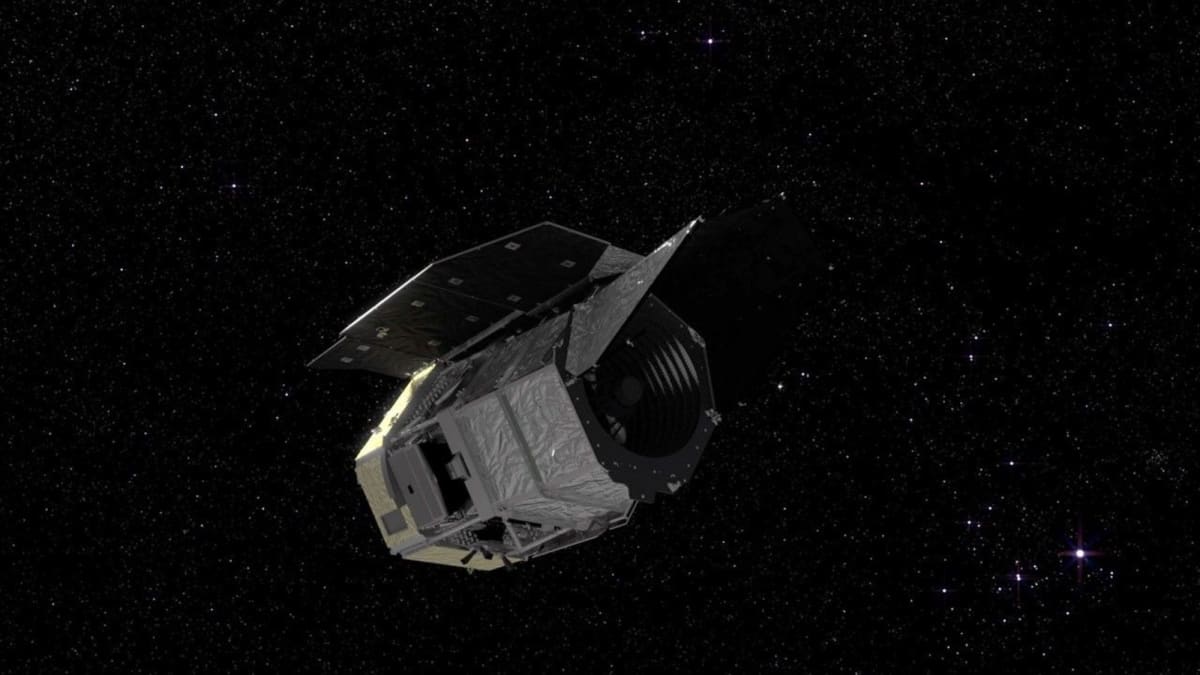
The James Webb Space Telescope has detected the strongest evidence yet for Population III stars, the first generation of stars that illuminated the dark universe. Two independent research teams confirmed the discovery using metal-free chemical signatures from a tiny object near one of the most distant galaxies ever observed.
After decades of searching, scientists may have finally spotted the universe's very first stars shining in the cosmic darkness.
The James Webb Space Telescope detected what appears to be Population III stars near the distant galaxy GN-z11. These theorized first-generation stars have been the holy grail of astronomy for years, universally expected to exist but never directly seen until now.
What makes this discovery so compelling is the chemical fingerprint. The tiny companion object near GN-z11 emits only helium and hydrogen, with no heavier elements detected. That's exactly what scientists predicted for stars born from the pristine gas clouds left over from the Big Bang.
Every generation of stars after the first incorporated heavier elements like carbon, oxygen, and iron from previous stellar explosions. Finding a source with none of these elements is like discovering cosmic DNA from the universe's infancy.
Two independent research teams confirmed the findings using different analytical methods. One group detected doubly ionized helium emission lines, while another identified hydrogen signals from the same location. This convergence matters because observations at such extreme distances can be tricky to interpret.
The stars themselves were likely massive and short-lived. Analysis suggests they weighed significantly more than our sun and burned through their fuel in just a few million years. Without heavier elements to help gas clouds cool and fragment, the early universe favored these stellar giants.
These massive stars lived fast and died young, likely exploding as supernovae that scattered the first heavy elements into space. Those elements became the building blocks for everything that followed, including planets and eventually life.
Why This Inspires
This discovery represents more than just finding ancient stars. It's confirmation that our best theories about cosmic origins actually match reality.
The object sits near GN-z11, one of the most distant galaxies known, meaning we're seeing it as it existed when the universe was only a few hundred million years old. That's like viewing a baby photo of the cosmos itself.
Scientists have spent decades building models of how the first stars formed, lived, and died. Having direct observational evidence validates that theoretical work and opens new questions about how star formation happened in the universe's earliest neighborhoods.
The location near an early massive galaxy suggests these first stars may have formed preferentially where gas was already concentrating, rather than randomly throughout space. That could reshape our understanding of how the universe organized itself from primordial simplicity into the rich complexity we see today.
GN-z11 has become a recurring source of breakthrough discoveries since Webb began operations. Its extreme distance makes it a natural laboratory for studying primordial phenomena that simply can't be observed in our cosmic neighborhood.
For the first time, we're not just theorizing about how the universe lit up after the Big Bang. We're actually seeing the evidence written in starlight that traveled billions of years to reach us.
Based on reporting by Google: James Webb telescope
This story was written by BrightWire based on verified news reports.
Spread the positivity!
Share this good news with someone who needs it