Webb Telescope Maps Dark Matter in Record Detail
Scientists using NASA's James Webb Space Telescope just created the sharpest dark matter map ever made, revealing the invisible cosmic scaffolding that shaped our universe. The breakthrough shows how this mysterious substance guided the formation of galaxies and made life possible.
Scientists just revealed the clearest picture yet of the invisible force that built our universe.
Using NASA's James Webb Space Telescope, researchers including UC Riverside astronomer Bahram Mobasher created the most detailed dark matter map ever produced. Published today in Nature Astronomy, the breakthrough reveals how this ghostly material forms a cosmic web that holds galaxies together and shapes the structure of everything we see in space.
"Previously, we were looking at a blurry picture of dark matter. Now we're seeing the invisible scaffolding of the universe in stunning detail," said Diana Scognamiglio, lead author from NASA's Jet Propulsion Laboratory.
Dark matter doesn't emit light or interact with regular matter except through gravity. Scientists can't see it directly, but they can map where it exists by observing how it pulls on visible galaxies and stars.
The new map covers a patch of sky 2.5 times larger than the full Moon and contains 10 times more galaxies than previous ground-based maps. It's twice as sharp as any dark matter map ever created, revealing new clumps and structures that were invisible before.
Mobasher, a founding member of the international COSMOS project that studies this region of space, helped build both the original 2007 Hubble map and this new Webb version. With his UCR students, he identified massive galaxy clusters and filaments that trace the dark matter distribution throughout the cosmic web.
The map shows that dark matter and regular matter have always existed together, evolving side by side since the universe began. Dense regions of dark matter connected by wispy filaments create a web-like pattern, with visible galaxies following the same structure.
Why This Inspires
This discovery helps explain why we're here at all. When the universe was young, dark matter clumped together first, then used its gravity to pull regular matter into those same regions. This jump-started the formation of stars and galaxies much earlier than would have happened otherwise.
By accelerating galaxy formation, dark matter indirectly enabled the creation of heavy elements in stars. Those elements eventually became the building blocks for planets and life itself.
The breakthrough demonstrates what's possible when global scientific communities work together. At least 15 telescopes have studied this same region of sky, with each contributing pieces to the puzzle.
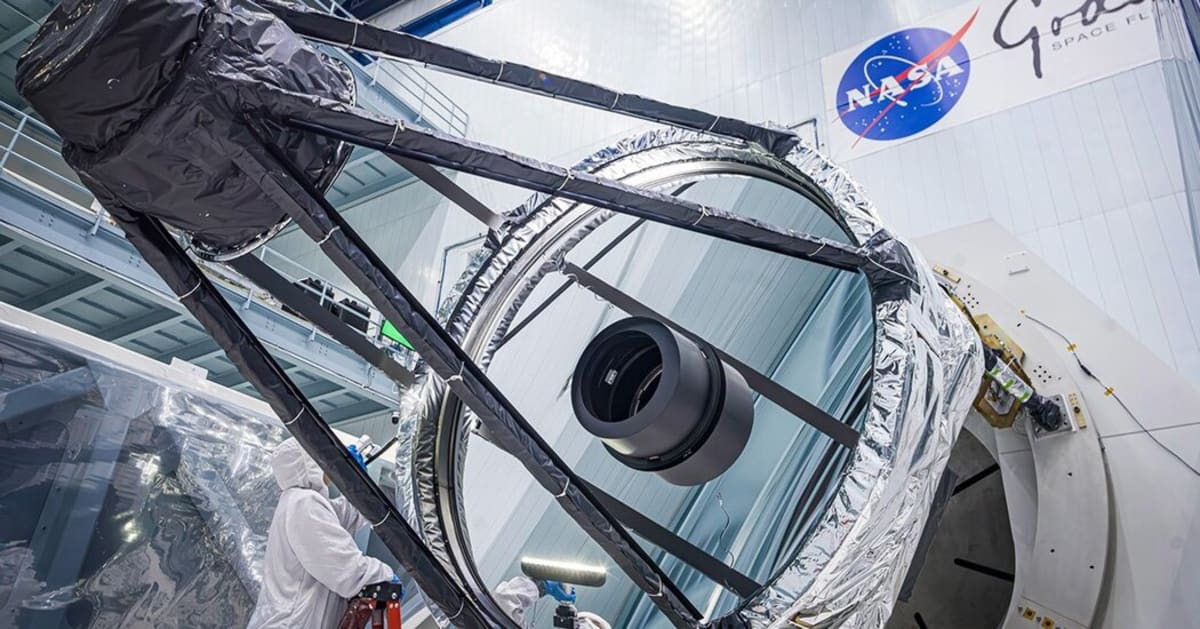
Scientists plan to map dark matter across an area 4,400 times larger using NASA's upcoming Nancy Grace Roman Space Telescope. While Roman won't match Webb's razor-sharp resolution, it will reveal how dark matter's properties may have changed throughout cosmic history.
Every new detail we learn about this invisible scaffolding brings us closer to understanding the universe's deepest mysteries.
More Images

Based on reporting by Google: James Webb telescope
This story was written by BrightWire based on verified news reports.
Spread the positivity!
Share this good news with someone who needs it