Webb Telescope Maps Uranus Auroras in 3D for First Time
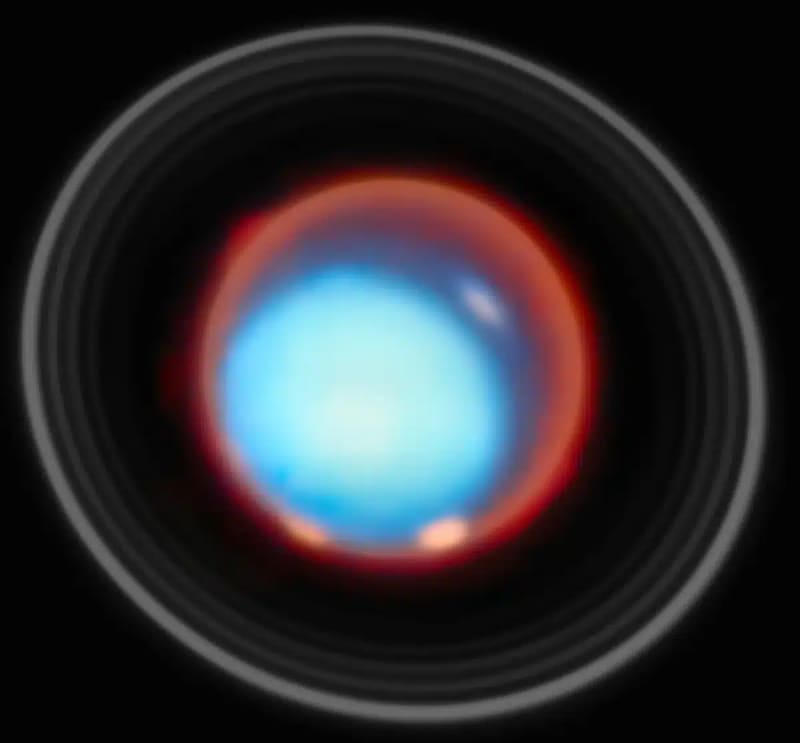
Scientists used the James Webb Space Telescope to create the first 3D maps of Uranus's auroras, revealing how energy moves through the planet's strange, tilted magnetic field. The breakthrough could help us understand distant worlds beyond our solar system.
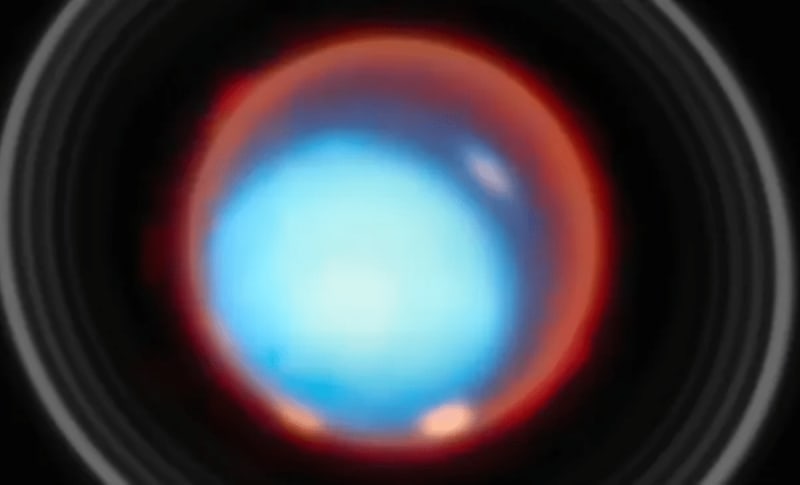
For the first time ever, astronomers have mapped the glowing auroras of Uranus in three dimensions, revealing secrets about one of the solar system's most puzzling planets.
Using the James Webb Space Telescope, researchers at Northumbria University captured unprecedented views of how light dances across Uranus's upper atmosphere. The new 3D maps show exactly how energy travels upward through the planet's sky, something scientists could never see clearly before.
Uranus has always been the odd one out. Its magnetic field tilts at a wild angle and sits off-center from where the planet spins, making its auroras behave in completely unpredictable ways compared to Earth's orderly northern and southern lights.
"Uranus's magnetosphere is one of the strangest in the solar system," said researcher Paola Tiranti. That strangeness has made the ice giant incredibly difficult to study until now.
Webb's powerful infrared vision changed everything. The telescope captured how energy flows through Uranus's lopsided magnetic field in uneven, complex patterns that two-dimensional observations missed entirely.
The team also discovered something unexpected: Uranus is still cooling down. The planet's upper atmosphere measured about 150 degrees Celsius, significantly cooler than previous readings and continuing a cooling trend that started in the early 1990s.
This steady temperature drop could reshape how the planet's weather systems and magnetic field behave over time. It's like watching a slow-motion climate shift on a world nearly two billion miles away.
The Ripple Effect
The breakthrough goes far beyond understanding one unusual planet. These new techniques for mapping atmospheric energy in 3D give scientists a powerful tool for studying distant exoplanets that might have similar magnetic quirks.
Many planets orbiting other stars likely have tilted, offset magnetic fields like Uranus. Now researchers have a proven method to study how those fields shape planetary atmospheres, even across vast cosmic distances.
The findings also fill a crucial gap in our knowledge. Only one spacecraft, Voyager 2, ever visited Uranus during a brief flyby in 1986, leaving scientists hungry for detailed observations.
Webb's data will guide future missions exploring ice giants and help astronomers recognize familiar atmospheric patterns on alien worlds. Every puzzle piece we fit into place about Uranus teaches us something new about planetary science as a whole.
This distant ice giant just became a little less mysterious, and the universe feels a bit more knowable because of it.
More Images

Based on reporting by Google: James Webb telescope
This story was written by BrightWire based on verified news reports.
Spread the positivity!
Share this good news with someone who needs it