Webb Telescope Reveals 10 Never-Before-Seen Cosmic Wonders
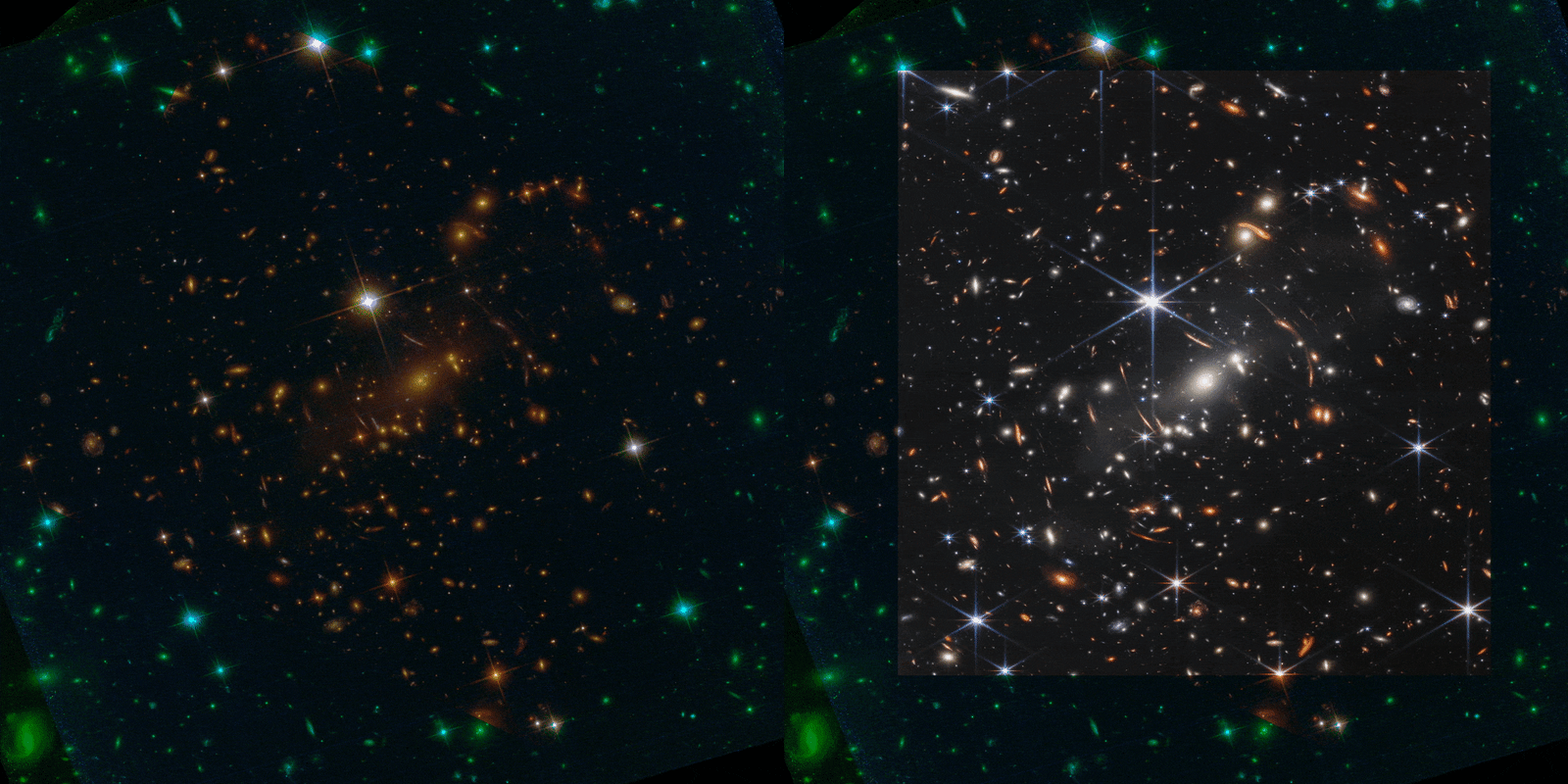
The James Webb Space Telescope continues delivering breathtaking images that transform our understanding of the universe, from colliding galaxies to newborn stars hidden in cosmic dust. These recent snapshots showcase discoveries that were invisible to every telescope that came before. #
The universe just got a whole lot more beautiful, and scientists can't stop smiling about what they're seeing.
Since launching in 2021, the James Webb Space Telescope has been quietly revolutionizing astronomy with images so detailed they're revealing cosmic secrets hidden for billions of years. The latest collection of ten images showcases features that were completely invisible to previous telescopes, including the beloved Hubble.
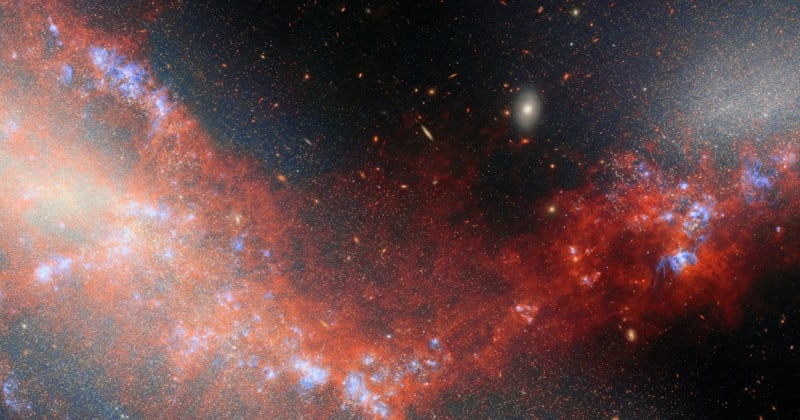
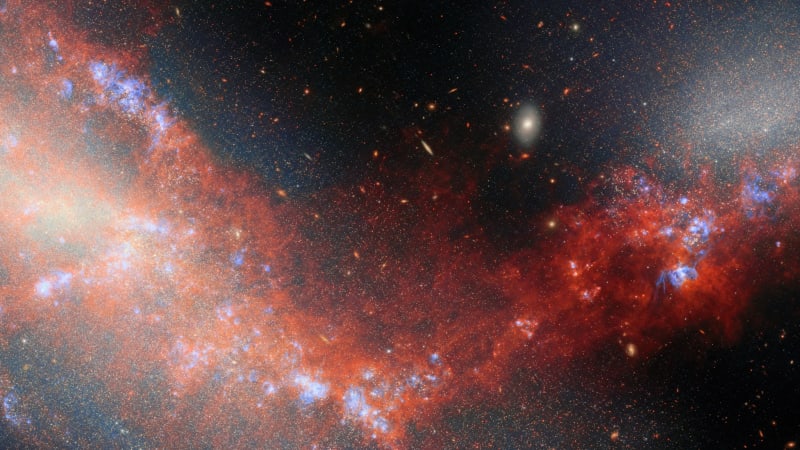
Take the dwarf galaxies NGC 4490 and NGC 4485, photographed many times before. Webb's infrared vision revealed something new: a glowing bridge of stars and gas connecting them, showing exactly where baby stars are forming as these galaxies merge. Scientists can now trace their cosmic dance back 200 million years, with a particularly intense encounter happening just 30 million years ago.
In the Perseus molecular cloud, Webb peered through thick dust to capture NGC 1333, a stellar nursery only 960 light-years away. Where Hubble saw only obscuring haze, Webb found newborn stars, brown dwarfs, and even forming planets, some less than 3 million years old.
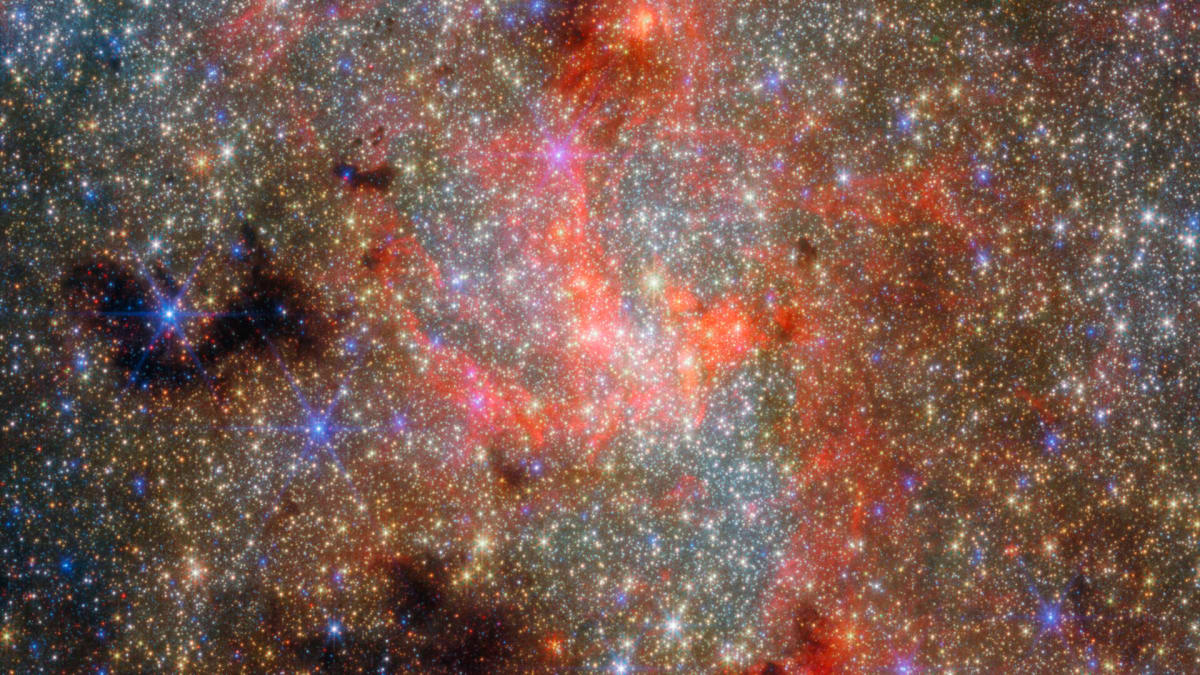
The telescope also captured Westerlund 1, a super star cluster packed with between 50,000 and 100,000 times the mass of our sun. Located 12,000 light-years away, it holds the highest concentration of massive young stars anywhere in the Milky Way. Even a foreground cloud of interstellar dust couldn't hide these stellar giants from Webb's powerful gaze.
Why This Inspires
What makes these images special isn't just their beauty. Each photograph represents a genuine breakthrough in human understanding. Features that astronomers theorized about for decades are now visible in stunning detail, confirming predictions and raising exciting new questions.
Webb's infrared capabilities let it see through cosmic dust and spot cooler objects that glow invisibly to our eyes. This means scientists can now watch stars being born, track how galaxies collide and merge, and study the earliest chapters of cosmic history.
The telescope even captured the sharpest image ever of a quadruply-lensed quasar, where gravity from a foreground galaxy bends light from a distant object into four separate images plus an Einstein ring. Combined with X-ray observations, researchers discovered the central black hole spins at roughly half the speed of light.
Every new image arriving from Webb's position a million miles from Earth reveals details that were simply impossible to see before. From spiral galaxies 76 million light-years away to stellar nurseries in our cosmic backyard, the telescope is rewriting astronomy textbooks in real time.
The best part? Webb just finished its second year of operations, with potentially decades of discoveries still ahead.
#
More Images

Based on reporting by Google News - Science
This story was written by BrightWire based on verified news reports.
Spread the positivity!
Share this good news with someone who needs it
%2Fhttps%3A%2F%2Ftf-cmsv2-smithsonianmag-media.s3.amazonaws.com%2Ffiler_public%2F3f%2F55%2F3f5579c8-c4a7-43a5-bb54-6498478792fd%2Fhelix1940__fitmaxwzk3mcw2ntbd.jpg)